

France
Capital: Paris · Europe
France is a cultural and political heavyweight of Europe, celebrated worldwide for its art, ideas and diplomatic influence. Home to about 68 million people, it is a UN Security Council member and nuclear power, and one of the twin engines of the EU alongside Germany. From Parisian fashion and the treasures of the Louvre to the countryside of Provence, France is among the world's most visited nations. The 'liberty, equality, fraternity' of its revolution profoundly shaped modern democratic thought. On the world stage, France consistently champions strategic autonomy.
France in world rankings
- 20th largest by population in the world (of 219)
- 44th largest by area in the world (of 219)
- 7th largest economy (GDP) in the world (of 178)
- 20th highest GDP per capita in the world (of 178)
- Capital
- Paris
- Population
- 68,605,616
- Area
- 643,801 km²
- Currency
- CFP Franc, euro
- GDP
- $3.37T
- GDP per capita
- $48,986
- Life expectancy
- 83.0 yrs
- Urban population
- 79%
- Calling code
- +33
- Internet users
- 89%
- Forest cover
- 32%
- Languages
- French
France compared with Taiwan
How France measures up against Taiwan — home to 23.3 million people across 36,193 km².
Countries bordering France


Latest news — France
More news →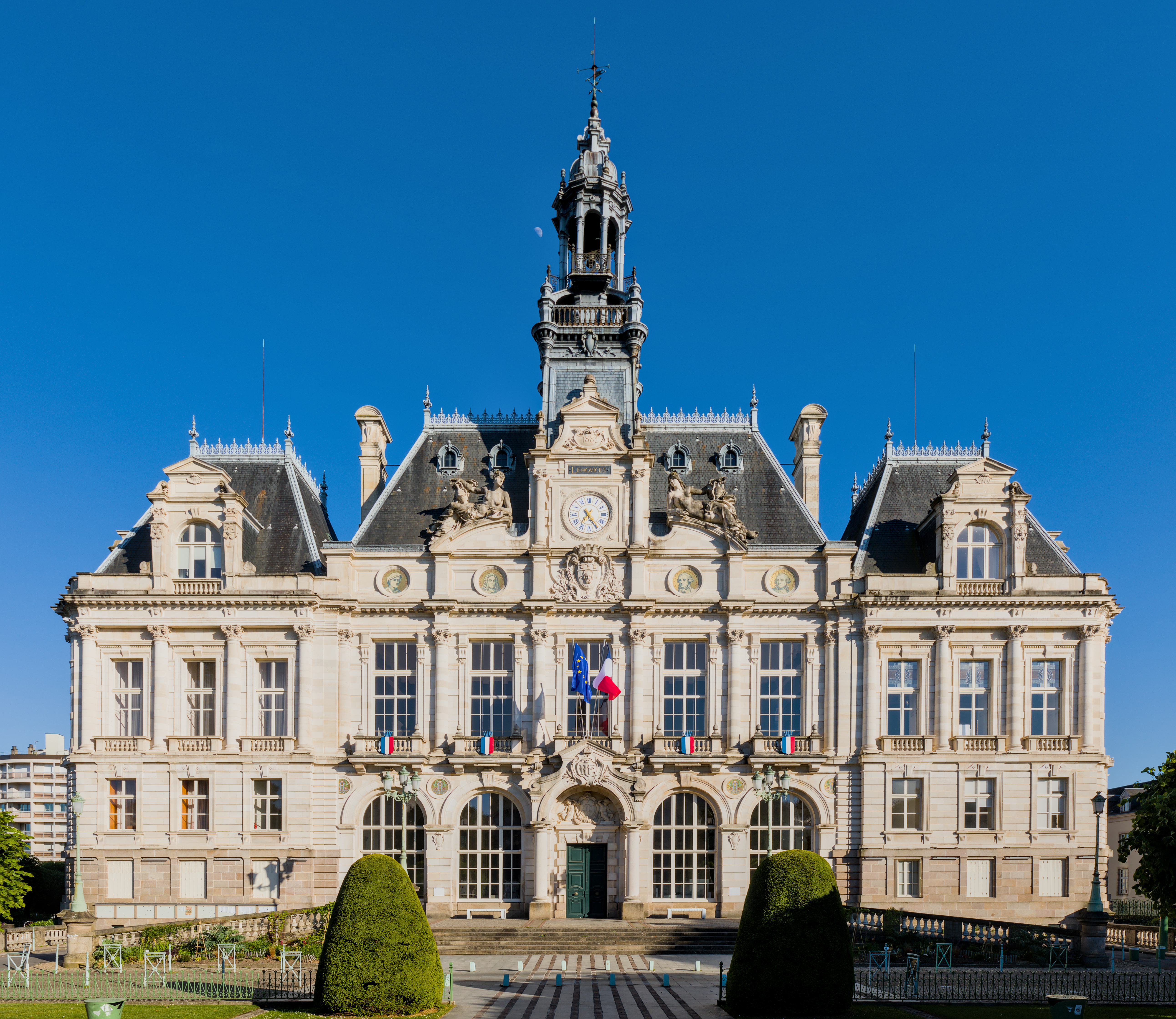
French Police Arrest Man Suspected of Arson at Historic Limoges City Hall
French law enforcement authorities have arrested a 34-year-old male suspect in connection with the severe arson attack that targeted the historic Hôtel de
Andorra and San Marino Sign Historic Association Agreements with the European Union
Andorra and San Marino have officially signed association agreements with the European Union, marking a historic milestone in the integration of Europe’s m
Israeli Police Arrest Ten Suspects Over West Bank Attacks on International Visitors
Israeli law enforcement authorities have arrested ten individuals in the occupied West Bank in connection with a series of violent attacks targeting intern
Arson Suspected After Fire Severely Damages Historic Hôtel de Ville in Limoges
A significant portion of the historic Hôtel de Ville in Limoges, France, suffered severe structural damage following a fire that swept through the landmark
Historic Limoges City Hall Suffers Severe Fire Damage During Student Protests
A major fire has caused significant structural damage to the historic Hôtel de Ville in the French city of Limoges, following an escalation of student-led
Half a Million French Workers Protest Government Policies, Sparking Clashes in Major Cities
More than 500,000 people took to the streets across France on Tuesday in a coordinated wave of demonstrations called by the nation’s leading trade union co
Country profile
Background
France today is one of the most modern countries in the world and is a leader among European nations. It plays an influential global role as a permanent member of the United Nations Security Council, NATO, the G-7, the G-20, the EU, and other multilateral organizations. France rejoined NATO's integrated military command structure in 2009, reversing then President Charles DE GAULLE's 1966 decision to withdraw French forces from NATO. Since 1958, it has constructed a hybrid presidential-parliamentary governing system resistant to the instabilities experienced in earlier, more purely parliamentary administrations. In recent decades, its reconciliation and cooperation with Germany have proved…
Location
metropolitan France: Western Europe, bordering the Bay of Biscay and English Channel, between Belgium and Spain, southeast of the UK; bordering the Mediterranean Sea, between Italy and SpainFrench…
Climate
metropolitan France: generally cool winters and mild summers, but mild winters and hot summers along the Mediterranean; occasional strong, cold, dry, north-to-northwesterly wind known as the mistral
Terrain
metropolitan France: mostly flat plains or gently rolling hills in north and west; remainder is mountainous, especially Pyrenees in south, Alps in eastFrench Guiana: low-lying…
Natural resources
metropolitan France: coal, iron ore, bauxite, zinc, uranium, antimony, arsenic, potash, feldspar, fluorspar, gypsum, timber, arable land, fish; French Guiana: gold deposits, petroleum, kaolin,…
Ethnic groups
Celtic and Latin with Teutonic, Slavic, North African (Algerian, Moroccan, Tunisian), Indochinese, Basque minorities
Religions
Roman Catholic 47%, Muslim 4%, Protestant 2%, Buddhist 2%, Orthodox 1%, Jewish 1%, other 1%, none 33%, unspecified 9% (2021 est.)
Government
semi-presidential republic
Economy
high-income, advanced EU economy and eurozone member; strong tourism, aircraft manufacturing, pharmaceuticals, and industrial sectors; high public debt; ongoing pension reform efforts; transitioning to a green economy via "France 2030" strategy
France · Travel guide
Understand
France is known for its long turbulent history, unique flair and lifestyle, and picturesque old towns, châteaux and fortresses. It is also blessed with its landscapes, where the sun shines gold upon the connectedness of nature.
Climate and terrain
A geographically-diverse country, France has surprising variations of climate for its size. Generally, the climate becomes warmer the more south you go, and wetter the more west you go. Most of the country experiences temperate winters and warm and often humid summers, and this is especially true of Paris and the Loire Valley. Mild, wet winters and cool summers persist in the north and north west (Brittany; Normandy; Hauts-de-France) where the whole climate is similar to that of southern England. Along the eastern border (Grand-Est), there is a continental climate with cool to cold winters and hot summers. The Rhone Valley graduates from this to the warmer south, though the whole region experiences a strong, cold, dry, north-to-northwesterly wind known as the mistral. The Mediterranean (Occitanie; Provence-Alpes-Côte d'Azur; Corsica) enjoys short, mild winters and long, hot summers with high sunshine hours all year round. The south west (Nouvelle-Aquitaine; Occitanie) has similarly hot summers but lots of rain in winter, affected by the Atlantic and mountains. Expect cold winters with lots of the snow in the mountainous regions: the Alps, Pyrenees and Auvergne. However, sometimes the winters can be mild, and business owners who rely on the annual winter sports boom are left staring at the sky hopefully.
The majority of central, western and northern France comprises flat plains or gently rolling hills, punctuated with many long river valleys. This large expanse of arable land, coupled with the near perfect climate, is wha
Getting there
For restrictions on imports, see European Union#Customs.
Entry requirements
France is a member of the Schengen Agreement. See Travelling around the Schengen Area for more information on how the scheme works, what countries are members and what the requirements are for your nationality. In summary:
There are normally no immigration controls between countries that have signed and implemented the treaty; there may be such controls temporarily, such as in connection with important events and various crises. The operators may carry out identity checks before passengers board international flights, ferries or trains, even between Schengen countries. Citizens of the EEA countries and Switzerland do not need visas to travel in the Schengen area, and may stay up to 90 days with no requirements other than having a valid ID card or passport. See European Union#EEA citizens. Normal visas granted by any Schengen member are valid in all countries that have signed and implemented the treaty (with exceptions for some overseas territories). The granting country may offer additional rights (such as longer stays or right to work) that apply only locally. In addition, citizens of Andorra and Monaco may enter and reside in France indefinitely without a visa. Citizens of Albania, Andorra, Antigua and Barbuda, Argentina, Bahamas, Barbados, Bosnia and Herzegovina, Brunei, Canada, Chile, Costa Rica, Croatia, El Salvador, Guatemala, Holy See, Honduras, Israel, Mauritius, Monaco, Montenegro, New Zealand, Nicaragua, North Macedonia, Panama, Paraguay, San Marino, Saint Kitts and Nevis, Seychelles, Taiwan and Uruguay, as well as British Nationals (Overseas), are permitted to work in France without the need to obtain a visa or any further authorisation for the period of their 90 day visa-free st
Getting around
By plane While no longer as ubiquitous as before due to ban on flights if a route is reachable by train within 2 1/2 hours, domestic flying remains a bookable option, especially between Paris and southern France, and if offered as a direct connection from or to an international flight. The following carriers offer domestic flights within France:
Air France has the biggest domestic network in France HOP!, a subsidiary of Air France, operates domestic flights with smaller aircraft easyJet, a low-cost airline, has the second biggest domestic network in France Ryanair, an Irish low-cost airline, serves mainly secondary airports Volotea has a network of domestic flights Air Corsica links Corsica with mainland France Twin Jet operates domestic flights with 19-seat Beech 1900D aircraft Chalair Aviation has a limited network of domestic flig
Cities & destinations in France 220
World Heritage in France 6
Museums in France 6
National parks in France 6
Airports in France 60
Tallest buildings in France 12
Caves in France 12
Nature reserves in France 12
Ports in France 12
Railway stations in France 12
Hospitals in France 12
Hotels in France 12
Shopping malls in France 12
Aquariums in France 12
Stately homes & country houses in France 7
Churches in France 12
Gardens in France 12
City parks in France 12
Notable schools in France 12
Music venues in France 12
Arenas in France 12
Town halls in France 4
Casinos in France 3
Fire stations in France 1
Racecourses in France 12
Breweries in France 8
Windmills in France 6
Cemeteries in France 12
Observatories in France 12
Ski resorts in France 12
Prisons in France 12
Mines in France 12
Amusement parks in France 12
Reservoirs in France 12
Zoos in France 12
Canals in France 12
Palaces in France 12
Botanical gardens in France 12
Squares & plazas in France 12
Monuments & memorials in France 12
Libraries in France 12
Forts & fortresses in France 12
Tunnels in France 12
Power stations in France 12
Glaciers in France 12
Archaeological sites in France 12
Monasteries in France 12
Synagogues in France 12
Mosques in France 12
Cathedrals in France 12
Tallest towers in France 12
Tallest dams in France 12
Explore France by category
Country fields from Wikidata (CC0); flag via Wikimedia Commons; profile from the CIA World Factbook (public domain); travel guide from Wikivoyage (CC BY-SA); GDP, GDP per capita and life expectancy from World Bank Open Data (CC BY 4.0).