

Spain
Capital: Madrid · Europe
Spain is a cultural and tourism powerhouse of southern Europe, known for its passionate character and rich history. On the Iberian Peninsula with about 47 million people, it was once a global empire, and Spanish is now the world's second most spoken native language. From Barcelona's architecture and Madrid's art to flamenco and bullfighting traditions, Spain's cultural allure is distinctive. Its sunny coasts and pilgrimage routes draw huge numbers of visitors, and tourism is an economic pillar. Spain is also a vital bridge linking Europe and Latin America.
Spain in world rankings
- 29th largest by population in the world (of 219)
- 52nd largest by area in the world (of 219)
- 11th largest economy (GDP) in the world (of 178)
- 24th highest GDP per capita in the world (of 178)
- Capital
- Madrid
- Population
- 48,592,909
- Area
- 505,990 km²
- Currency
- euro
- GDP
- $1.91T
- GDP per capita
- $38,627
- Life expectancy
- 83.9 yrs
- Urban population
- 81%
- Calling code
- +34
- Internet users
- 96%
- Forest cover
- 37%
- Languages
- Spanish
Spain compared with Taiwan
How Spain measures up against Taiwan — home to 23.3 million people across 36,193 km².
Countries bordering Spain


.svg%3Fwidth%3D320)

Latest news — Spain
More news →Andorra and San Marino Sign Historic Association Agreements with the European Union
Andorra and San Marino have officially signed association agreements with the European Union, marking a historic milestone in the integration of Europe’s m
Equatorial Guinea Expands Successful Bioko Island Malaria Program to Mainland
Equatorial Guinea has announced a major expansion of its national malaria control initiative, extending a historically successful vector-management program
Equatorial Guinea Expands Malaria Program to Mainland Río Muni and Annobón
Equatorial Guinea’s Ministry of Health announced on Tuesday that it will extend its highly successful malaria‑control programme to the mainland region of R
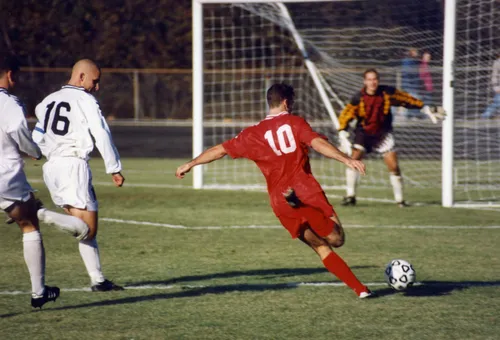
Rayo Vallecano and Athletic Bilbao Match Abandoned Due to Fan Protests
A La Liga fixture between Madrid-based club Rayo Vallecano and visiting Athletic Bilbao was abandoned on Sunday after referee José María Sánchez Martínez h
Spanish Prime Minister Pedro Sánchez Calls Snap General Election Following Housing Decree Defeat
Spanish Prime Minister Pedro Sánchez announced on Monday that he will call a snap general election for November 29, following a dramatic legislative defeat
Sánchez Calls National Election for Nov. 29 After Housing Bill Failures
Spanish Prime Minister Pedro Sánchez announced on Friday that a general election will be held on 29 November, a decision that follows his government’s defe
Country profile
Background
Spain's powerful world empire of the 16th and 17th centuries ultimately yielded command of the seas to England. Spain remained neutral during both World Wars but suffered through a devastating civil war (1936-39) resulting in a dictatorship. A peaceful transition to democracy after the death of dictator Francisco FRANCO in 1975 and rapid economic modernization after Spain joined the EU in 1986 gave Spain a dynamic and rapidly growing economy. After a severe recession in the wake of the global financial crisis in 2008, Spain has posted solid years of GDP growth above the EU average. Unemployment has fallen but remains high, especially among youth. Spain is the euro-zone's fourth-largest…
Location
Southwestern Europe, bordering the Mediterranean Sea, North Atlantic Ocean, Bay of Biscay, and Pyrenees Mountains; southwest of France
Climate
temperate; clear, hot summers in interior, more moderate and cloudy along coast; cloudy, cold winters in interior, partly cloudy and cool along coast
Terrain
large, flat to dissected plateau surrounded by rugged hills; Pyrenees Mountains in north
Natural resources
coal, lignite, iron ore, copper, lead, zinc, uranium, tungsten, mercury, pyrites, magnesite, fluorspar, gypsum, sepiolite, kaolin, potash, hydropower, arable land
Ethnic groups
Spanish 84.8%, Moroccan 1.7%, Romanian 1.2%, other 12.3% (2021 est.)
Religions
Roman Catholic 58.2%, atheist 16.2%, agnostic 10.8%, other 2.7%, non-believer 10.5%, unspecified 1.7% (2021 est.)
Government
parliamentary constitutional monarchy
Economy
high-income, core-EU and eurozone economy; strong growth driven by public consumption, tourism, and other service exports; tight labor market despite high structural unemployment; efforts to narrow persistent fiscal deficits through tax and spending measures; high but declining unemployment supported by job growth and immigration
Spain · Travel guide
Understand
Spain shares the Iberian Peninsula with Andorra, Gibraltar, and Portugal. A country of large geographic and cultural diversity, Spain may come as a surprise to those who only know of its reputation for great beach holidays and almost endless sunshine. There is everything from lush meadows and snowy mountains to huge marshes and deserts in the south east. While summer is the peak season, those who wish to avoid the crowds should consider visiting in the winter as not only is it normally mild and sunny, but attractions such as the Alhambra Palace in Granada and La Gran Mezquita in Cordoba will not be overcrowded. However the ski resorts of Sierra Nevada do get very crowded. The Mediterranean climate that predominates in Southern and Central Spain is noted for its dry summers and (somewhat) wet (ter) winters, so visiting in the winter or spring brings the added benefit of the vegetation looking much more healthy. Northern Spain (e.g. Asturias) on the other hand gets quite a bit of rain year round and is ripe with lush green vegetation even in August.
History
Some of the earliest known remains of Homo of any kind in Europe have been found in Spain (see Prehistoric Europe). Spain is also thought to have been the last refuge of the Neanderthals, and one of the few places that were inhabitable and inhabited throughout the ice ages.
Early Spain and Roman Era
The earliest inhabitants of the Iberian peninsula we have any profound knowledge of were Iberians, Celts (related to the Gaulish; Britannic and Central European Celts in language and culture) and Basques. As most of these groups had little to no written records we only know of them due to the descriptions of the Greek, Punic and later Roman settlers and conquerors, who colonised Spain from the South starting in the 3
Getting there
Entry requirements
Spain is a member of the Schengen Agreement. See Travelling around the Schengen Area for more information on how the scheme works, what countries are members and what the requirements are for your nationality. In summary:
There are normally no immigration controls between countries that have signed and implemented the treaty; there may be such controls temporarily, such as in connection with important events and various crises. The operators may carry out identity checks before passengers board international flights, ferries or trains, even between Schengen countries. Citizens of the EEA countries and Switzerland do not need visas to travel in the Schengen area, and may stay up to 90 days with no requirements other than having a valid ID card or passport. See European Union#EEA citizens. Normal visas granted by any Schengen member are valid in all countries that have signed and implemented the treaty (with exceptions for some overseas territories). The granting country may offer additional rights (such as longer stays or right to work) that apply only locally. In addition, citizens of Andorra may enter and reside in Spain indefinitely without a visa. EU, EEA and Swiss nationals who enter Spain on a national identity card, who are under 18 years old and travelling without their parents are required to have written parental consent. Citizens of Antigua and Barbuda, the Bahamas, Barbados, Mauritius, Saint Kitts and Nevis and Seychelles are permitted to work in Spain without the need to obtain a visa or any further authorisation for the period of their 90-day visa-free stay. However, this ability to work visa-free does not necessarily extend to other Schengen countries. A stay of longer than 90 days for non-EEA or Swiss citizens almost invariably requ
Getting around
By train
Adif is the operator of most rail stations in Spain. Their website has information about stations, departure times & platforms. They have a useful smartphone app with real-time arrivals and departures. They do not run any trains. Renfe is the Spanish national rail carrier, which operates most commuter trains (Cercanías) and regional (Media Distancia) as well as most long-distance ones (AVE and Avlo). They are the most punctual of the three in long-distance, but trail behind other companies that offer commuter trains in some regions. Their website usually accepts foreign credit cards, but if not, try PayPal. Long-distance train tickets need to be purchased in advance, and their prices might change over time like airlines' (dynamic pricing). Spain has the second longest high-speed network in the world, so always consider trains. They are a great way to get around the east coast, around Andalusia, from Madrid to anywhere, and some trips in the interior. Trips from the East to Andalusia or around the North might be easier by bus. Alvia and Intercity are trains that run on conventional lines. They can get you to all cities, and will have similar travel times to driving. The tickets might not be on sale more than a month beforehand. AVE and Iryo are high-speed quality services, which include routes from Madrid to Barcelona, Andalusia and Valencia. AVE trains also go to Navarre, Galicia, Asturias and more regions. Avlo and Ouigo are low-cost high-speed services. Ouigo and Avlo routes include Madrid to Barcelona, Andalusia, Valencia and Murcia, and Avlo also goes to Galicia and Asturias. For daytrips or short trips, consider Media Distancia trains. They can get to most are
Cities & destinations in Spain 223
World Heritage in Spain 6
Museums in Spain 6
National parks in Spain 6
Airports in Spain 59
Tallest buildings in Spain 12
Caves in Spain 12
Nature reserves in Spain 12
Ports in Spain 12
Railway stations in Spain 12
Hospitals in Spain 12
Hotels in Spain 12
Shopping malls in Spain 5
Aquariums in Spain 12
Stately homes & country houses in Spain 9
Churches in Spain 12
Gardens in Spain 12
City parks in Spain 12
Notable schools in Spain 12
Music venues in Spain 12
Arenas in Spain 12
Town halls in Spain 3
Casinos in Spain 5
Racecourses in Spain 12
Breweries in Spain 4
Windmills in Spain 2
Cemeteries in Spain 12
Observatories in Spain 12
Ski resorts in Spain 12
Prisons in Spain 12
Mines in Spain 12
Amusement parks in Spain 12
Reservoirs in Spain 12
Zoos in Spain 12
Canals in Spain 7
Palaces in Spain 12
Botanical gardens in Spain 12
Squares & plazas in Spain 12
Monuments & memorials in Spain 12
Libraries in Spain 12
Forts & fortresses in Spain 12
Tunnels in Spain 12
Power stations in Spain 12
Glaciers in Spain 1
Archaeological sites in Spain 12
Monasteries in Spain 12
Synagogues in Spain 8
Mosques in Spain 12
Cathedrals in Spain 12
Tallest towers in Spain 12
Tallest dams in Spain 12
Explore Spain by category
Country fields from Wikidata (CC0); flag via Wikimedia Commons; profile from the CIA World Factbook (public domain); travel guide from Wikivoyage (CC BY-SA); GDP, GDP per capita and life expectancy from World Bank Open Data (CC BY 4.0).