
Aléria
France · Europe
About Aléria
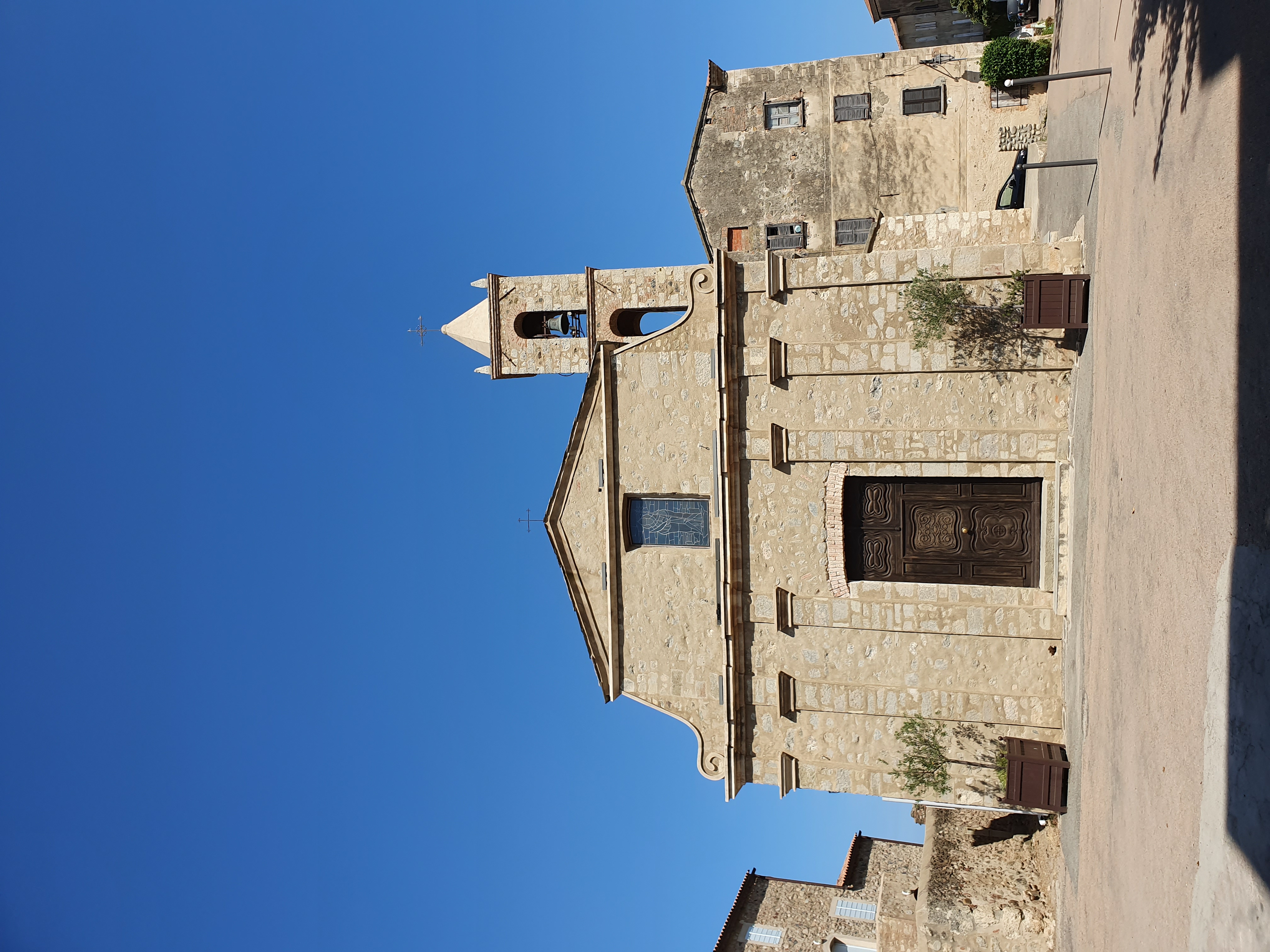
Aléria (Corsican: Aleria) is a village of Corsica in Haute-Corse department. Aléria is especially interesting for its past, of which exactly three monuments have survived: Roman ruins, a Genoese fort and a 16th-century church. Well, and another Genoese tower nearby. The sights of Aléria you can see in a couple of hours. The town's small size and relative remoteness from other centres of civilisation make it a good base both for a beach holiday and for exploring this part of Corsica. Absence of tourist crowds is guaranteed and the sights are quite interesting. In 2019, it was home to 2,200 people.
Aléria travel guide
Understand
History The Tavignano estuary and the nearby natural lagoon, now known as Diana's Pond, have attracted people since prehistoric times. According to archaeological evidence, the area around today's Aléria has been continuously inhabited since 6500 BC. The Greek historian Herodotus mentions the port city of Alalia, founded by the Greeks in 566 BC. Another historian, Diodorus Siculus, calls the city Kalaris. Both Alalia and Kalaris are believed to be Aléria, and the town was thus located on the site of the modern village of Katerajo, at the junction of the T10 and D43 roads. Mostly they were residents of the Greek city of Phocaea, which was destroyed by the Persians soon after the foundation of Alelia. In Corsica the Phocians had problems with the Etruscans and Phoenicians who inhabited Sardinia, so they united and sent a large fleet against the Greeks. Consequently, the Greeks were forced to leave the city, and the Etruscans, who settled further south, on the right bank of the Tavignano, occupied it. Finally, during the First Punic War in 259 BC. Aléria was occupied by the Romans, who gradually assimilated the Etruscans. In 80 BC, the Romans greatly fortified the port, first calling it Aléria, and under Octavian the city became the largest on the island. In 410 there was a catastrophic fire and in 465 the city was devastated by the Vandals. Afterwards, the city gradually fell into decay and dwindled to the size of a small village, which moreover was washed away by rivers, so much so that it had to be moved. The most surprising thing is that when Christianity spread in Corsica in the 6th century, one of the episcopal sees was organised in Aléria. The post of bishop of Aleria existed until 1801. The title was revived in 2002 for the Auxiliary Bishop Emeritus of Turin, who does not live in Aléria. Later, Aléria was reduced to the status of a village, due to its size, and everything depended on the fact that it would remain an unknown village with a great past. However,
Getting there
By plane 1 Bastia Poretta Airport (BIA IATA). (updated Dec 2022)
By car The T10 Bastia-Bonifacio passes through Aléria via Porto-Vecchio, as does the T50 from Corte. Cars are not allowed to drive through the old city (except for residents). You can leave your car in the 2 free car park just off the T10. The turn-off for the car park is just south of the junction for the D43, which is the capital of Aléria, and is well signposted on the tarmac. The museum is a 5-minute walk from the car park.
By train There is a former Corsican Railways station, but it has been abandoned for a long time. The easiest way if you want to take the train is to go up to Corte, then take the famous D43 either with a taxi or by renting a car.
By ferry From the harbours of Bastia and Porto-Vecchio. We strongly advise you to choose the latter for the simple reason that it is the closest to Aléria. But nothing prevents you from choosing to disembark in Bastia and follow the sublime coast of Corsica.
Getting around
The city centre of Aléria, Cateragio, is located at the intersection of the T10 and D43 roads, a couple of kilometres from the sea. You may need it to eat or sleep. The old city, with Roman remains and a Genoese fort, is about a kilometre to the south, you have to take the T10. You can drive to the sea and beaches or walk along the D43.
See
1 Roman city (Site archéologique de la ville antique d'Aléria) (on the edge of the centre; from the museum on the road to the left). A rather complicated timetable, which however is not maintained, but in general in the summer it is open from about 09:00 to 18:00 with a break for lunch. In Roman times, Aléria was a huge city, with an estimated population of around 80,000. Only a small portion of this city has been excavated and is available to the public. Trees now grow on the ruins, so even in the extreme heat it's nice to be there. The road from the entrance leads to the forum, a trapezoidal ruin which was the intellectual centre of the city. On the eastern edge of the forum (to the left of the entrance) are the ruins of a temple, presumably built during the reign of Octavian (beginning of the AD period). To the west is the chapter, dedicated to the gods Jupiter, Juno and Minerva. Finally, from the north, the ruins of a bathroom' and a cistern for water are preserved. In general, of course, the Roman ruins of Aléria are difficult to compare, say, with Rome or El Jem, and not a single wall more than a meter high has been preserved here, but they make an impression and they are mandatory for an inspection, if you pass through Aléria or even Corte or Porto Vecchio. €2.00 (2014), joint ticket with the Jérôme Carcopino Museum, sold at the museum. (updated Dec 2022) 2 Jérôme Carcopino Departmental Museum of Archaeology. From mid-May to the end of September: daily 09:00–12:00 13:00–18:00; during the rest of the year: M–Sa 08:00–12:00 13:00–17:00. Fort Matra was built by the Genoese in the 14th century to control the mouth of the Tavignano: the fort stands on a hill above the river bank. At some point it passed into the private ownership of the Matra family, in which, it seems, it remains. It has been refurbished and is in good condition. Inside the fort is the Jérôme Carcopino Departmental Museum of Archeology (Musée départemental d'archéologie Jérôme Carcopino). The col
Eat
No less than sixteen restaurants to welcome you here is the list:
1 Café de la Place (T10), ☏ +33 4 95 57 02 14. (updated Dec 2022) 2 Pizzeria Le CDO, 300 Avenue Saint Alexandre Sauli, ☏ +33 4 95 57 07 42. (updated Dec 2022) 3 U Spurtinu, 425 Avenue Saint Alexandre Sauli, ☏ +33 4 95 36 27 83, +33 6 12 04 51 20, [email protected]. (updated Dec 2022) 4 L'Ecurie, Domaine de Padulone, ☏ +33 4 95 57 94 26, [email protected]. (updated Dec 2022) 5 Aux Coquillages de Diane, Etang de Diana, ☏ +33 4 95 57 04 55. (updated Dec 2022) 6 Le Bounty, Plage de Padulone, ☏ +33 4 95 57 00 50. (updated Dec 2022) 7 Le 20270 Chez Mathieu, Plage de Padulone, ☏ +33 6 45 68 03 72, [email protected]. (updated Dec 2022)
Sleep
1 L'Atrachjata, 100 Avenue Saint Alexandre Sauli, ☏ +33 4 95 57 03 93, [email protected]. 3 stars hotel & restaurant. (updated Dec 2022) 2 L'Empereur, 320 Avenue Saint Alexandre Sauli, ☏ +33 4 95 57 02 13, fax: +33 4 95 57 02 33, [email protected]. 2-star hotel & restaurant. (updated Dec 2022) 3 Hôtel les Orangers, 95 Route de la Mer, Route du roi Théodore, ☏ +33 4 95 57 00 31, [email protected]. 2-star hotel. (updated Dec 2022) 4 Camping Marina D'Aléria, Plage de Padulone, ☏ +33 4 95 57 01 42, [email protected]. (updated Dec 2022)
Go next
Tavignano Valley Corte Bastia Porto-Vecchio
Overview adapted from Wikipedia, travel guide fromWikivoyage (CC BY-SA). Photography via Wikimedia Commons.