

Hungary
Capital: Budapest · Europe
Hungary is a historic nation of Central Europe, famed for Budapest on the Danube and its distinctive culture. A landlocked country of about 9.6 million people, its Magyar language and identity stand apart from neighbouring Slavic and Germanic peoples. Its capital Budapest straddles the Danube, renowned for grand architecture and thermal baths — a jewel of Central Europe. After communism, Hungary transitioned to democracy and joined the EU and NATO, though its recent political direction has often clashed with Brussels, making it a focal point for debates on European democracy and sovereignty.
Hungary in world rankings
- 94th largest by population in the world (of 219)
- 111th largest by area in the world (of 219)
- 52nd largest economy (GDP) in the world (of 178)
- 44th highest GDP per capita in the world (of 178)
- Capital
- Budapest
- Population
- 9,603,634
- Area
- 93,011 km²
- Currency
- forint
- GDP
- $246.5B
- GDP per capita
- $25,907
- Life expectancy
- 76.7 yrs
- Urban population
- 71%
- Calling code
- +36
- Internet users
- 94%
- Forest cover
- 22%
- Languages
- Hungarian
Hungary compared with Taiwan
How Hungary measures up against Taiwan — home to 23.3 million people across 36,193 km².
Countries bordering Hungary


Latest news — Hungary
More news →
Hungary Lifts Blockade on Ukraine EU Talks After Minority Rights Breakthrough
In a significant diplomatic shift, Hungarian Prime Minister Péter Magyar and Ukrainian President Volodymyr Zelenskyy agreed to improve bilateral relations
Hungary Repeals Majority of Provisions in Controversial 2021 Anti-LGBTQ Law
The Hungarian National Assembly has passed a legislative amendment repealing the majority of provisions contained within the controversial anti-LGBTQ child
Historic Hungarian Daily Népszabadság Returns to Publication as Independent Online Portal
*Népszabadság*, one of Hungary’s most historic and formerly influential daily newspapers, has officially returned to publication as an independent online n
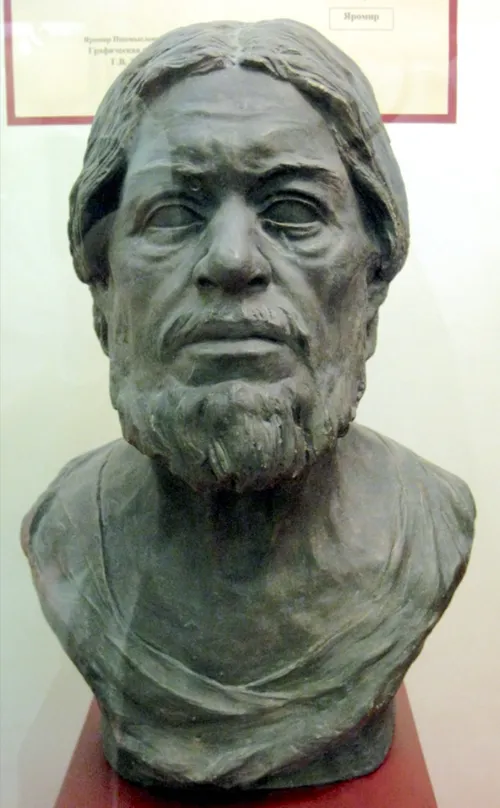
Medieval Bulgarian Tsar Samuil's remains repatriated from Greece after decades.
The remains of Tsar Samuil, one of the most prominent rulers of the medieval First Bulgarian Empire, have been repatriated to Bulgaria after decades of del
Medieval Bulgarian monarch Tsar Samuel's remains returned from Greece after decades
The remains of Tsar Samuel, one of the most prominent monarchs of the First Bulgarian Empire, have returned to Bulgaria after decades of diplomatic and aca
Hungary Reports First EU Detection of Invasive Spotted Lanternfly in Bács‑Kiskun County
Hungary’s food‑chain safety office confirmed on Tuesday that the European Union’s first detection of the invasive spotted lanternfly (Lycorma delicatula) h
Country profile
Background
Hungary became a Christian kingdom in A.D. 1000 and for many centuries served as a bulwark against Ottoman Turkish expansion in Europe. The kingdom eventually became part of the Austro-Hungarian Empire, which collapsed during World War I. The country fell under communist rule after World War II. In 1956, Moscow responded to a Hungarian revolt and announcement of its withdrawal from the Warsaw Pact with a massive military intervention. Under the leadership of Janos KADAR in 1968, Hungary began liberalizing its economy, introducing so-called "Goulash Communism." Hungary held its first multiparty elections in 1990 and initiated a free market economy. It joined NATO in 1999 and the EU five…
Location
Central Europe, northwest of Romania
Climate
temperate; cold, cloudy, humid winters; warm summers
Terrain
mostly flat to rolling plains; hills and low mountains on the Slovakian border
Natural resources
bauxite, coal, natural gas, fertile soils, arable land
Ethnic groups
Hungarian 84.3%, Romani 2.1%, German 1%, other 1.2%, unspecified 13.7% (2022 est.)
Religions
Catholic 30.1% (Roman Catholic 27.5%, Greek Catholic 1.7%, other Catholic 0.9%), Calvinist 9.8%, Lutheran 1.8%, other Christian (includes Orthodox) 1.6%, other 0.4%, none 16.1%, no answer 40.1% (2022 est.)
Government
parliamentary republic
Economy
high-income EU and OECD economy; modest recovery from 2024 recession driven by private consumption and moderated inflation; challenges include high fiscal deficits, frozen access to EU funds, and risks from export reliance; implementing tax exemptions, price controls, and mortgage interest caps ahead of 2026 elections
Hungary · Travel guide
Understand
Hungary is one of the 15 most popular tourist destinations in the world, with a capital regarded as one of the most beautiful in the world. Despite its relatively small size, Hungary is home to numerous World Heritage Sites, UNESCO Biosphere reserves, the second largest thermal lake in the world (Lake Hévíz), the largest lake in Central Europe (Lake Balaton), and the largest natural grassland in Europe (Hortobágy). In terms of buildings, Hungary is home to the largest synagogue in Europe (the Great Synagogue of Budapest), the largest medicinal bath in Europe (Széchenyi Medicinal Bath), the third largest church in Europe (Esztergom Basilica), the second largest territorial abbey in the world (Pannonhalma Archabbey), the second largest Baroque castle in the world (Gödöllő), and the largest Early Christian Necropolis outside Italy (Pécs). You can expect to find safe food and water, good safety and a generally stable political climate. Hungary has been ethnically diverse since its inception, and while today over 90% of the population are ethnically Hungarian, pockets of ethnic and cultural Slovaks, Romanians, Germans, Romani/Sinti people (Gypsies), and others dot the country. Due to the border changes of Hungary after World War I, over 2 million ethnic and cultural Hungarians live in bordering countries, as well. The Hungarians, otherwise known as Magyars, are the descendants of several tribes from Central Asia, who were believed to be fierce, nomadic horsemen and came to Central Europe in the 9th century. Roman Catholicism is the traditional religion of the Hungarian people (except in the east; where many are Calvinists), but modern Hungary is largely a secular society, and less than 20% of Hungarians attend church regularly.
History The region of present-day Hungary wa
See
Hungary has several World Heritage sites. These are:
Budapest, including the Banks of the Danube, the Buda Castle Quarter and Andrássy Avenue Old Village of Hollókő and its Surroundings Caves of Aggtelek National Park — beautiful caves with dripstones and stalagmites Millenary Benedictine Abbey of Pannonhalma and its Natural Environment Hortobágy National Park — the Puszta Early Christian Necropolis of Pécs (Sopianae) Fertő Lake Cultural Landscape common place with Austria more see there Tokaj and Villány Wine Regions and Historic Cultural Landscapes You can also check the National parks in Hungary page. Other major tourist destination is Lake Balaton, with winehills, thermal spa in Hévíz, Hajdúszoboszló and Harkány around. Sopron is one of the most popular place for a si
Getting there
Hungary is a member of the Schengen Agreement. See Travelling around the Schengen Area for more information on how the scheme works, what countries are members and what the requirements are for your nationality. In summary:
There are normally no immigration controls between countries that have signed and implemented the treaty; there may be such controls temporarily, such as in connection with important events and various crises. The operators may carry out identity checks before passengers board international flights, ferries or trains, even between Schengen countries. Citizens of the EEA countries and Switzerland do not need visas to travel in the Schengen area, and may stay up to 90 days with no requirements other than having a valid ID card or passport. See European Union#EEA citizens. Normal visas granted by any Schengen member are valid in all countries that have signed and implemented the treaty (with exceptions for some overseas territories). The granting country may offer additional rights (such as longer stays or right to work) that apply only locally. Recognised refugees and stateless persons in possession of a valid travel document issued by the government of any one of the above countries/territories are exempt from obtaining a visa for Hungary (but no other Schengen country; except Germany and; for refugees; Slovakia) for a maximum stay of 90 days in a 180-day period. Citizens of Antigua and Barbuda are permitted to work in Hungary without the need to obtain a visa for the period of their 90-day visa-free stay. However, this ability to work visa-free does not necessarily extend to other Schengen countries.
By plane
Hungary's international airports are Liszt Ferenc Airport (BUD IATA) in Budapest, Airport Debrecen (DEB IATA) in Debrecen and Hévíz–Balato
Getting around
By plane Hungary has no regular domestic flights. As Budapest lies in the centre of the country and pretty much any point can be reached within three hours by train or bus, there isn't much need for scheduled domestic flights. However there are many opportunities for people with a valid pilot's license to rent a plane and explore by air.
By public transport There are multiple trip planning websites for Hungarian public transport. To buy tickets, plan between stations, and for international routes use jegy.mav.hu. Emma is the most complete domestic route planner that unifies data from multiple operators. It includes lasti-mile routing, live locations of vehicles, delays and distruptions. You can also use menetrendek.hu, Google Maps, KDE Itinerary or the MenetBrand android apps to plan your trip - these all have generally up to date data as well. Some important words in Hungarian that may be helpful are:
“honnan” - from “hová” - to “Autóbusz állomás” - bus station “naponta” - daily “munkanapokon” - on workdays
By train
The Hungarian National Railway is MÁV and GYSEV (some lines in the west of the country). The train network is star-shaped (hub-and-spoke), fanning out from the centre at Budapest. This is caused by history because half of the once complete train system went to the neighbor countries after World War I. If neither the starting or ending point is Budapest, expect to travel for a long time often with change in Budapest. Intercity (IC) trains are the fastest, and they're up-to-date, usually well maintained and clean. They link the major cities with Budapest. Expect to pay about 550 Ft extra fee independently from the distance for the mandatory seat reservation (not in international ICs; ECs). In some cases the extra charge can be lower. Compared to th
Cities & destinations in Hungary 68
World Heritage in Hungary 5
Museums in Hungary 6
National parks in Hungary 6
Airports in Hungary 13
Caves in Hungary 5
Nature reserves in Hungary 12
Railway stations in Hungary 12
Hospitals in Hungary 6
Hotels in Hungary 12
Shopping malls in Hungary 4
Aquariums in Hungary 7
Churches in Hungary 12
Gardens in Hungary 4
City parks in Hungary 12
Music venues in Hungary 12
Arenas in Hungary 12
Racecourses in Hungary 7
Breweries in Hungary 3
Cemeteries in Hungary 10
Observatories in Hungary 4
Ski resorts in Hungary 1
Prisons in Hungary 2
Mines in Hungary 5
Reservoirs in Hungary 3
Zoos in Hungary 4
Canals in Hungary 1
Palaces in Hungary 6
Botanical gardens in Hungary 3
Squares & plazas in Hungary 12
Monuments & memorials in Hungary 12
Libraries in Hungary 11
Forts & fortresses in Hungary 1
Tunnels in Hungary 1
Power stations in Hungary 12
Archaeological sites in Hungary 12
Monasteries in Hungary 10
Synagogues in Hungary 12
Mosques in Hungary 3
Cathedrals in Hungary 12
Tallest towers in Hungary 11
Tallest dams in Hungary 1
Explore Hungary by category
Country fields from Wikidata (CC0); flag via Wikimedia Commons; profile from the CIA World Factbook (public domain); travel guide from Wikivoyage (CC BY-SA); GDP, GDP per capita and life expectancy from World Bank Open Data (CC BY 4.0).