

Serbia
Capital: Belgrade · Europe
Serbia is a core nation of the Balkan Peninsula, at the meeting point of European and Eastern influence. A landlocked country of about 6.8 million people, it was historically a Balkan hub and lived through the turmoil of Yugoslavia's break-up. Its capital Belgrade is a major regional city. While seeking EU membership, Serbia also maintains close ties with Russia and China, striving for balance in its diplomacy. The complex ethnic and historical grievances of the Balkans make Serbia's regional role especially sensitive. Understanding Serbia is key to reading Balkan geopolitics and the situation on Europe's south-eastern flank.
Serbia in world rankings
- 107th largest by population in the world (of 219)
- 114th largest by area in the world (of 219)
- 71st largest economy (GDP) in the world (of 178)
- 58th highest GDP per capita in the world (of 178)
- Capital
- Belgrade
- Population
- 6,605,168
- Area
- 88,499 km²
- Currency
- Serbian dinar
- GDP
- $100.0B
- GDP per capita
- $15,262
- Life expectancy
- 76.0 yrs
- Urban population
- 63%
- Calling code
- +381
- Internet users
- 88%
- Forest cover
- 32%
- Languages
- Serbian
Serbia compared with Taiwan
How Serbia measures up against Taiwan — home to 23.3 million people across 36,193 km².
Countries bordering Serbia


Latest news — Serbia
More news →Montenegro Deports Prominent Russian Military Blogger and Four Others Over Security Concerns
Montenegro has deported prominent Russian military blogger Mikhail Zvinchuk alongside four other Russian nationals, citing severe national security concern
Justina Pula Elected Kosovo President Following Late-Night Parliamentary Voting Session
Kosovo’s unicameral legislature, the Kuvendi, officially initiated the procedure to elect a new head of state on October 6, culminating in a tense voting p
Kosovo Faces Deep Constitutional Crisis as Acting President Exceeds Term Limit
Pristina has entered a critical constitutional crisis as acting President Albulena Haxhiu surpassed the six-month limit in her role, rendering her current
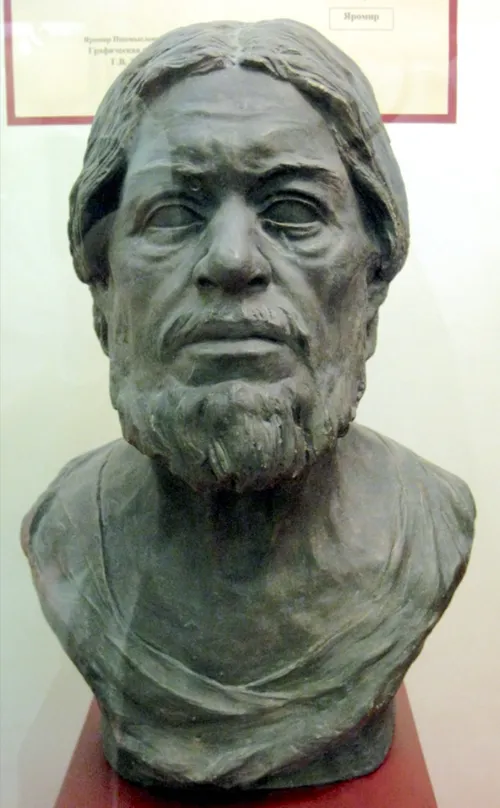
Medieval Bulgarian Tsar Samuil's remains repatriated from Greece after decades.
The remains of Tsar Samuil, one of the most prominent rulers of the medieval First Bulgarian Empire, have been repatriated to Bulgaria after decades of del
Kosovo Acting President Oversteps Term, Court Urges Election in 48 Hours
Albulena Haxhiu, who has been serving as Kosovo’s acting president since 4 April, is now officially deemed to hold the office in a de‑facto sense after exc
Bosnia and Herzegovina Holds Critical General Election Amid Institutional Tensions
Citizens of Bosnia and Herzegovina head to the polls today in a critical general election to choose their tripartite presidency and the 42 members of the s
Country profile
Background
In 1918, the Croats, Serbs, and Slovenes formed a kingdom known after 1929 as Yugoslavia. The monarchy remained in power until 1945, when the communist Partisans headed by Josip Broz (aka TITO) took control of the newly created Socialist Federal Republic of Yugoslavia (SFRY). After TITO died in 1980, communism in Yugoslavia gradually gave way to resurgent nationalism. In 1989, Slobodan MILOSEVIC became president of the Republic of Serbia, and his calls for Serbian domination led to the violent breakup of Yugoslavia along ethnic lines. In 1991, Croatia, Slovenia, and Macedonia declared independence, followed by Bosnia in 1992. The remaining republics of Serbia and Montenegro declared a…
Location
Southeastern Europe, between Macedonia and Hungary
Climate
in the north, continental climate (cold winters and hot, humid summers with well-distributed rainfall); in other parts, continental and Mediterranean climate (relatively cold winters with heavy snowfall and hot, dry summers and autumns)
Terrain
extremely varied; to the north, rich fertile plains; to the east, limestone ranges and basins; to the southeast, ancient mountains and hills
Natural resources
oil, gas, coal, iron ore, copper, zinc, antimony, chromite, gold, silver, magnesium, pyrite, limestone, marble, salt, arable land
Ethnic groups
Serb 83.3%, Hungarian 3.5%, Romani 2.1%, Bosniak 2%, other 5.7%, undeclared or unknown 3.4% (2011 est.)
Religions
Serbian Orthodox 81.1%, unknown 5.3%, Islam 4.2%, Catholic 3.9%, no response 2.5%, atheist 1.1%; less than 1%: other Christians, Protestant, agnostic (2022)
Government
parliamentary republic
Economy
upper middle-income Balkan economy; current EU accession candidate; hit by COVID-19; pursuing green growth development; manageable public debt; new anticorruption efforts; falling unemployment; historic Russian relations; energy import-dependent
Serbia · Travel guide
Understand
Serbs are a warm people and welcoming towards foreigners. Most younger Serbs will speak some English and will be eager to practise it (seniors; however; are more likely to speak German and/or French), so you will be able to find your way around by asking directions. Most tourists come to Serbia in the summer and you can often hear German, Italian, French and English in the streets of Belgrade, while Slovenian tourists pour in for the New Year holidays.
Climate In the north: continental climate (cold winters and hot; humid summers with well distributed rainfall); central portion: moderate continental climate; and to the south: hot, dry summers and autumns and relatively cold winters with heavy snowfall.
Geography Extremely varied: to the north, rich fertile plains; to the east, limestone ranges and basins; to the southeast, ancient mountains and hills. Although the region around the town of Mionica has been known for some earthquakes, these were by no means destructive. The highest point is Đeravica at 2656 m.
History
There were seventeen Roman emperors born in the territory of today's Serbia, more than in Gaul (France and Belgium), Iberia (Spain and Portugal) or indeed any other modern country's territory but Italy, and they all left monuments and built palaces in or close to their birthplaces. It may well be that the oldest ever found human settlements in Europe, if not in the world, can be found in the country of Serbia. The longest stretch of the river Danube, longer than in any other European country is in Serbia. The giant hydroelectric dam of Đerdap has created a lake stretching for many miles out of the Đerdap Canyon with its famous Roman road to the East built by the Emperor Trajan. The first Serbian state under that name was formed in the late 8th cen
Getting there
Entry requirements
Foreign nationals of the following countries/territories can enter Serbia visa-free (Government website):
For up to 90 days in 6 months: Albania, Andorra, Argentina, Armenia, Australia, Austria, Azerbaijan, Bahrain, Belgium, Bolivia, Bosnia and Herzegovina, Brazil, Bulgaria, Canada, Chile, Costa Rica, Croatia, Cuba, Cyprus, Czech Republic, Denmark, Estonia, Finland, France, Germany, Greece, Holy See, Hungary, Iceland, Ireland, Israel, Italy, Japan, Latvia, Liechtenstein, Lithuania, Luxembourg, Macau, Malta, Mexico, Moldova, Monaco, Mongolia, Montenegro, Netherlands, New Zealand, North Macedonia, Norway, Oman, Peru, Poland, Portugal, Qatar, Romania, San Marino, Seychelles, Singapore, Slovakia, Slovenia, South Korea, Spain, Sweden, Switzerland, Tunisia, Turkey, United Arab Emirates, United Kingdom, United States, Uruguay For up to 30 days, extendable up to 90 days within any 180 day period: Belarus, China, Kazakhstan, Russia For up to 30 days within any 60 day period: Ukraine For up to 30 days within one year: Bahamas, Barbados, Colombia, Georgia, Guinea-Bissau, India, Indonesia, Iran, Jamaica, Paraguay, Saint Vincent and the Grenadines, Suriname For up to 14 days: Hong Kong Citizens of the following countries can enter and stay up to 90 days in 6 months with their National ID card: Austria, Belgium, Bosnia and Herzegovina, Bulgaria, Croatia, Cyprus, Czech Republic, Denmark, Estonia, Finland, France, Germany, Greece, Hungary, Iceland, Ireland, Italy, Latvia, Lithuania, Luxembourg, Malta, Montenegro, Netherlands, North Macedonia, Norway, Poland, Portugal, Romania, Slovakia, Slovenia, Spain, Sweden, Switzerland, United Kingdom. Valid visa holders and residents of the European Union and Schengen Area member states and the United States can enter Serbia
Getting around
Public transportation is generally not in very good shape outside of Belgrade. Trams and newer buses are exclusive to the capital, while intercity transport and transport within other smaller cities and towns uses older buses or more expensive minibuses. The coverage, however, is still pretty good in other towns as well. The quality of public transport within Belgrade itself is good and has vastly improved lately as most of the bus fleet was replaced by brand new gas powered buses. The capital itself has around 120 public transport lines which can get you anywhere within the city you might want to go. A majority of these lines are bus lines, but some are trolleybus, tram and minibus lines. Minibuses are way more expensive (~€2 per ride) than regular public transport as they are owned by private companies. For more info check Belgrade#By_public_transport.
By bus The most common and convenient way of getting around Serbia is by bus. See also Bus travel in the former Yugoslavia. Flixbus is the main operator on long distance routes. Polazak is a portal for planning bus travel within Serbia: bus lines include Ozlem, Jugoprevoz Kruševac, Litas, Niš Ekspres, Dunav Prevoz, Severtrans, Lasta, Best Komerc, Božur and Kavim Jedinstvo.
By train
Trains in Serbia are considerably slower than most of Western/Central Europe, but they can be a quite scenic way of seeing the country. On most of the routes trains are also slower than buses, exceptions being the lines running from Belgra
Cities & destinations in Serbia 11
World Heritage in Serbia 3
Museums in Serbia 6
National parks in Serbia 6
Airports in Serbia 26
Tallest buildings in Serbia 4
Caves in Serbia 12
Nature reserves in Serbia 12
Ports in Serbia 2
Railway stations in Serbia 12
Hospitals in Serbia 12
Hotels in Serbia 12
Shopping malls in Serbia 3
Aquariums in Serbia 8
Churches in Serbia 12
Gardens in Serbia 2
City parks in Serbia 12
Notable schools in Serbia 5
Music venues in Serbia 12
Arenas in Serbia 6
Town halls in Serbia 2
Breweries in Serbia 2
Cemeteries in Serbia 11
Observatories in Serbia 1
Ski resorts in Serbia 3
Prisons in Serbia 7
Mines in Serbia 12
Reservoirs in Serbia 12
Zoos in Serbia 2
Canals in Serbia 5
Palaces in Serbia 8
Botanical gardens in Serbia 2
Squares & plazas in Serbia 8
Monuments & memorials in Serbia 12
Libraries in Serbia 5
Forts & fortresses in Serbia 12
Power stations in Serbia 4
Archaeological sites in Serbia 12
Monasteries in Serbia 12
Synagogues in Serbia 3
Mosques in Serbia 3
Cathedrals in Serbia 12
Tallest towers in Serbia 6
Tallest dams in Serbia 2
Explore Serbia by category
Country fields from Wikidata (CC0); flag via Wikimedia Commons; profile from the CIA World Factbook (public domain); travel guide from Wikivoyage (CC BY-SA); GDP, GDP per capita and life expectancy from World Bank Open Data (CC BY 4.0).