South Sudan's Sudd Region Chief Blames Sudan Liberation Movement for Northern Attacks.
Nuba Mountains' Tribal Chief Accuses Northern Sudanese Liberation Movement of Attack Recently, the chief of the Nuba Mountains has accused the Northern sec
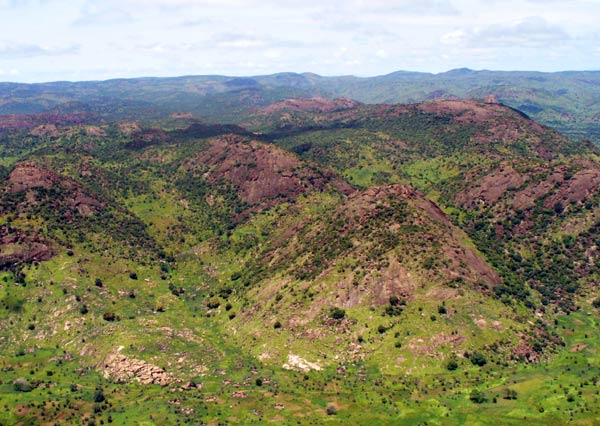
Nuba Mountains' Tribal Chief Accuses Northern Sudanese Liberation Movement of Attack
Recently, the chief of the Nuba Mountains has accused the Northern sector of the Sudan People's Liberation Movement (SPLM-N) of launching attacks against the Otoro villages in the Nuba Mountains, including Kauda. Furthermore, four aid workers have been detained. The Nuba Mountains are located in the southern part of Kordofan State in South Kordofan.
The Nuba Mountains have a rich history, formerly being part of the ancient Kingdom of Kush and in the Middle Ages belonging to the Nubian Alodia Kingdom. In the early 18th century, the Taqali Kingdom controlled the mountainous region until it was defeated by Mahdi Muhammad Ahmad. Following the British defeat of Mahdi's forces, the Taqali Kingdom was restored as a British protectorate. Today, the Nuba Mountains are home to approximately 15,000 people, the majority of whom are Nuba people, with a small minority of Baggara residing in the area. The tribal structure in the Nuba Mountains is complex, with cultural exchange between the Nuba people and the surrounding Arab Baggara population playing a significant role in local conflicts.
The conflict in the Nuba Mountains stems from ethnic and political tensions. The tribal chieftains of the Nuba Mountains have long-standing conflicts with the Sudanese government. In 2003, during the Sixth Civil War, the Nuba Mountains' tribal chieftains supported the Southern Sudanese independence movement, while the Sudanese government considered the Nuba Mountains to be its territory. The ongoing conflict in the Nuba Mountains continues to concern outside observers, who are worried about the detention of foreign aid workers.
The ongoing conflict in the Nuba Mountains has significant implications for peace in South Sudan. Since South Sudan signed a peace agreement with the Sudanese government in 2005, the conflict in the Nuba Mountains has continued, affecting South Sudan's peace process. The tensions between the Nuba Mountains' tribal chieftains and the Sudanese government also have a profound impact on South Sudan's political situation.
The conflict in the Nuba Mountains also affects regional peace processes. The tensions between the Nuba Mountains' tribal chieftains and the Sudanese government also have a significant impact on the regional political situation. The conflict continues to unfold, with outside observers expressing concern about the Nuba Mountains' political situation.
From Taiwan's perspective, this incident highlights the significant impact of the conflict in the Nuba Mountains on regional peace processes. The tensions between the Nuba Mountains' tribal chieftains and the Sudanese government also have a profound impact on regional politics. Taiwan continues to monitor the situation in the Nuba Mountains and hopes that the conflict can be resolved through dialogue between the Nuba Mountains' tribal chieftains and the Sudanese government, providing support for South Sudan's peace process.
Produced by our editorial team, with AI assistance in editing.