Drone attack kills three soldiers at Colombian army outpost in Santa Rosa.
A drone launched from an undisclosed source struck a Colombian army outpost in Santa Rosa del Sur, Bolívar Department, on Tuesday, killing three soldiers a
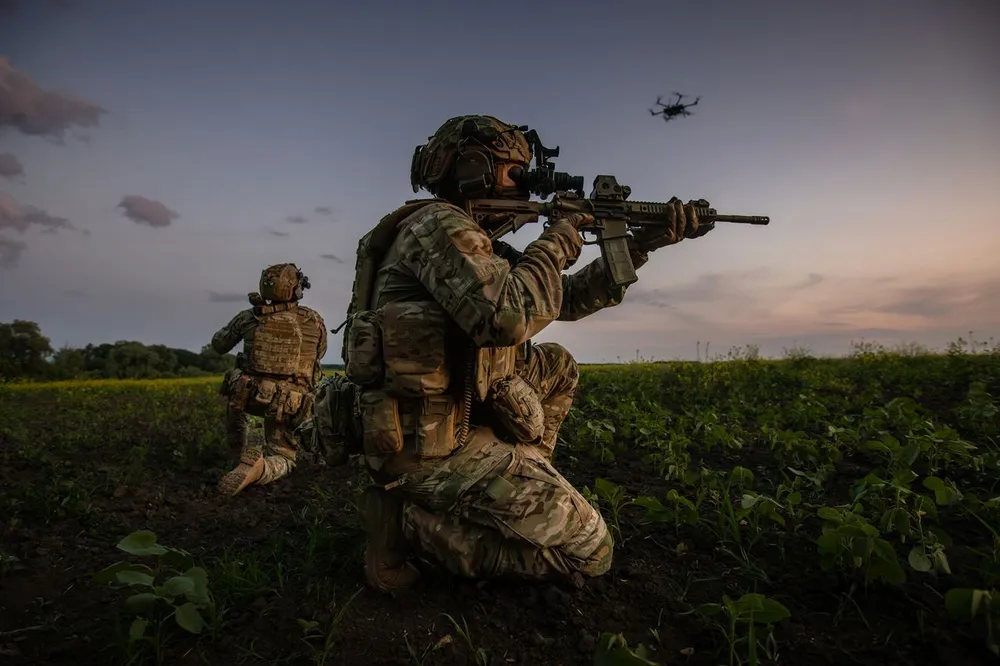
A drone launched from an undisclosed source struck a Colombian army outpost in Santa Rosa del Sur, Bolívar Department, on Tuesday, killing three soldiers and leaving 16 others wounded. The attack, confirmed by the army’s public affairs office, occurred at approximately 10:30 a.m. local time and involved a small unmanned aerial vehicle that was intercepted and destroyed by the base’s air defense system.
The incident underscores the growing use of unmanned systems in conflicts worldwide. Drones range from simple, man‑portable platforms used for short‑range surveillance to fully autonomous combat aircraft that can carry out strike missions without human intervention. In recent years, a broad coalition of states—including the United States, China, Russia, Israel, India, and several European powers—have fielded operational unmanned combat aerial vehicles (UCAVs). In addition, non‑state actors have increasingly adopted commercial UAVs for reconnaissance, target acquisition, and even direct attacks. Colombian military officials have not yet identified the operator of the drone, but speculation points to either left‑wing guerrilla groups, drug‑trafficking cartels, or foreign mercenaries, all of which have sporadically employed small drones in the country’s interior.
The Colombian army has been battling the Revolutionary Armed Forces of Colombia (FARC‑EP) and the National Liberation Army (ELN) since the 1960s, while also confronting powerful narcotics cartels that control large swaths of the eastern plains. Over the past decade, the military has intensified its anti‑insurgency and anti‑cartel campaigns, often relying on rapid‑deployment units and advanced surveillance technologies. The use of drones has become a key component of these operations, providing real‑time intelligence and, in some cases, precision strike capability. However, the technology’s proliferation has also made it a double‑edged sword: the same platforms that enable quick, low‑cost surveillance can be appropriated by hostile actors to conduct attacks against military and civilian targets.
In the wake of the strike, Bogotá’s Defense Ministry released a statement calling for a thorough investigation and reaffirming its commitment to protecting troops and civilians from emerging threats. The ministry also urged international partners to cooperate on counter‑drone measures, citing the increasing frequency of drone‑related incidents across Latin America. Meanwhile, the Colombian Army’s spokesperson emphasized that the base had been on high alert, citing recent intelligence reports of drone activity in the region. The air defense system reportedly engaged the intruder at an altitude of 500 m, preventing the drone from reaching its target.
The incident highlights a broader trend in contemporary warfare: the shift toward technology‑driven force multipliers that can reduce human casualties while amplifying operational reach. Autonomous drones, whether remotely piloted or self‑directed, are now part of the arsenals of both state and non‑state actors. Their small size and relatively low cost make them attractive for groups that lack the resources to field conventional aircraft. Conversely, militaries worldwide are racing to develop counter‑drone tactics and technologies—such as electronic jamming, directed‑energy weapons, and specialized interceptor aircraft—to safeguard their forces and infrastructure.
For Colombia, the attack serves as a stark reminder of the evolving threat landscape. As the nation continues to grapple with internal security challenges, the proliferation of drone technology poses new risks to troop safety and operational security. The incident also underscores the importance of regional cooperation on cyber‑security, intelligence sharing, and technology regulation, as neighboring countries face similar threats from illicit drone use. In the broader context of Latin America, the incident signals that the region’s security dynamics are becoming more complex, with technology playing an increasingly central role in both offensive and defensive operations.
Produced by our editorial team, with AI assistance in editing.