5.7‑Magnitude Earthquake Hits Central Japan, Injures 22, Shuts Shinkansen.
A magnitude 5.7 tremor struck central Japan early on Thursday, with its hypocenter recorded at a depth of roughly 10 kilometres beneath Shizuoka Prefecture
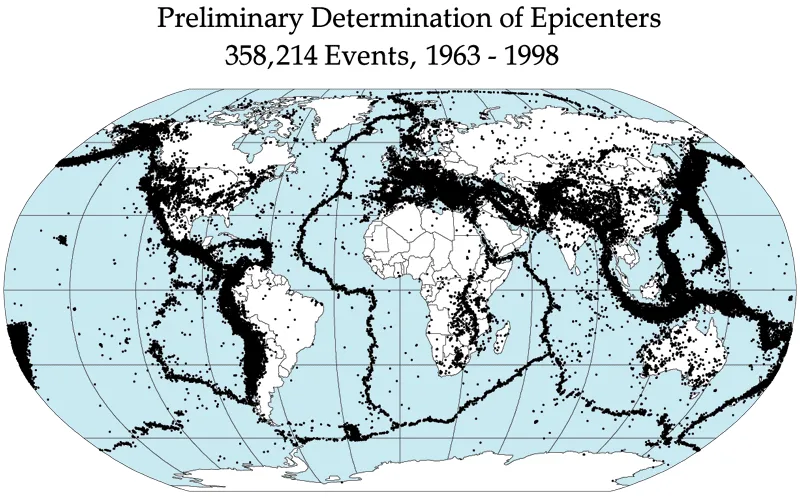
A magnitude 5.7 tremor struck central Japan early on Thursday, with its hypocenter recorded at a depth of roughly 10 kilometres beneath Shizuoka Prefecture. The quake’s epicentre lay near the border of Shizuoka and Aichi, and the shaking was felt most strongly in the neighbouring prefectures of Aichi, Gifu, Nagano and Yamanashi. Local authorities reported 22 people injured, most of them with minor cuts and bruises, and confirmed that no fatalities occurred. Transportation networks, including parts of the Tokaido Shinkansen line, were temporarily halted as safety inspections were carried out, and power outages were reported in isolated sections of the affected area.
Japan sits at the convergence of several major tectonic plates – the Pacific, Philippine Sea, Eurasian and North American plates – a configuration that generates frequent seismic activity. The relative motion of these plates creates a network of faults that release built‑up stress in sudden ruptures, producing the earthquakes that the country experiences on a regular basis. The Shizuoka region, located along the Nankai Trough where the Philippine Sea Plate subducts beneath the Eurasian Plate, has long been identified as a high‑risk zone for moderate to strong quakes. Seismic monitoring agencies, such as the Japan Meteorological Agency, continuously record ground motions and issue early‑warning alerts that help mitigate damage when events occur.
Japan’s modern building codes and disaster‑prevention infrastructure stem from a long history of destructive earthquakes, most notably the 1995 Great Hanshin (Kobe) quake and the 2011 Tōhoku tsunami and magnitude 9.1 mainshock. After those events, the government tightened construction standards, mandated seismic retrofitting for older structures, and expanded public education on emergency procedures. In the wake of the Thursday tremor, emergency responders from prefectural fire departments, the Self‑Defense Forces and the Japan Red Cross were dispatched to assess damage, assist the injured and secure potentially unstable buildings. Preliminary reports indicated that the shaking caused only limited structural damage, with a few cracked walls and minor landslide activity in mountainous sections, and authorities warned that aftershocks could continue for several days.
The incident underscores the challenges that even well‑prepared societies face when dealing with natural hazards. While the immediate human toll was relatively low, the temporary suspension of high‑speed rail services and localized power cuts highlighted the vulnerability of critical infrastructure to seismic disruption. Japanese officials have pledged to conduct thorough inspections of transport corridors, power substations and water supply lines before restoring full operations, and they have urged residents to remain vigilant for possible secondary tremors.
For Taiwan and the broader East Asian region, the quake carries several implications. Both Taiwan and Japan are integral nodes in the global semiconductor supply chain; disruptions to Japan’s manufacturing facilities, logistics hubs or energy networks can ripple through to Taiwanese chipmakers that rely on Japanese equipment and raw materials. Moreover, the event serves as a reminder of shared geological risks; Taiwan sits atop the complex boundary between the Philippine Sea and Eurasian plates and experiences frequent seismic activity of its own. Collaborative disaster‑response drills, data‑sharing agreements and joint research on earthquake‑resistant technologies could therefore enhance resilience across the region, safeguarding not only public safety but also the economic interdependence that underpins the high‑tech industry.
Produced by our editorial team, with AI assistance in editing.