Six dead, 19 Japanese encephalitis cases confirmed in Nepal's Madhesh Province
Nineteen cases of Japanese encephalitis (JE) have been confirmed in Nepal’s Madhesh Province, with six of the patients dying, health officials said on Mond
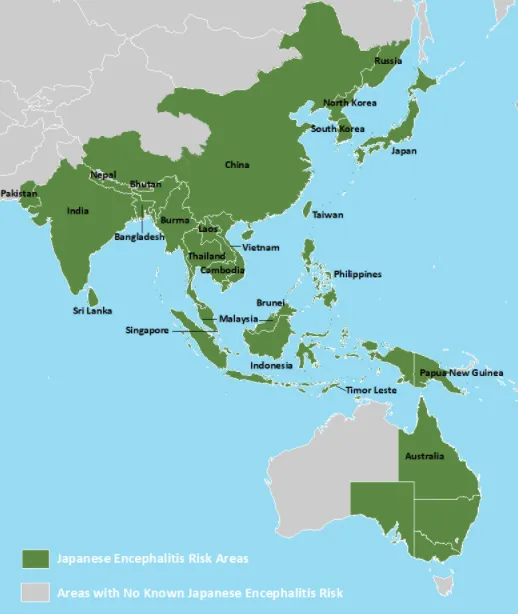
Nineteen cases of Japanese encephalitis (JE) have been confirmed in Nepal’s Madhesh Province, with six of the patients dying, health officials said on Monday. The Ministry of Health and Population announced that the cases were identified through laboratory testing of blood and cerebrospinal fluid samples collected over the past two weeks, and that the victims were all residents of rural villages near the India‑border. The province’s public health director, Dr. Ramesh Prasad, warned that the outbreak could expand if mosquito control measures are not intensified promptly.
Japanese encephalitis is a viral infection of the brain transmitted primarily by Culex mosquitoes that breed in rice paddies, irrigation canals and other standing water common in agricultural zones. Pigs and wild birds act as amplifying hosts, allowing the virus to circulate in the environment even when human cases are few. Most infections are asymptomatic, but a small proportion progress to encephalitis within five to fifteen days after the bite, producing fever, headache, vomiting, confusion and, in severe cases, seizures. Mortality rates among symptomatic patients range from 20 to 30 percent, and up to half of survivors may suffer lasting neurological deficits.
The Nepalese government’s response has focused on three fronts: rapid case identification, vector control, and vaccination. Teams from the provincial health office have begun door‑to‑door surveys to locate additional suspected cases and to educate families about protective measures such as using insecticide‑treated nets and wearing long sleeves during dusk and dawn when Culex mosquitoes are most active. The Ministry is also coordinating with the World Health Organization, which has supplied diagnostic kits and technical guidance for outbreak management. While a JE vaccine exists and is considered safe and effective, it is not part of Nepal’s routine immunisation schedule; instead, it is administered only in targeted campaigns during outbreaks or in high‑risk districts. The current outbreak has prompted officials to request emergency vaccine doses from the Global Alliance for Vaccines and Immunisation (Gavi), though logistical challenges in reaching remote settlements could delay mass immunisation.
Public health experts caution that the situation underscores longstanding gaps in disease surveillance and preventive infrastructure across South Asia’s agrarian heartlands. Dr. Anita Sharma, an epidemiologist with the International Centre for Diarrhoeal Disease Research, Bangladesh (ICDDR‑B), noted that the concentration of cases in Madhesh mirrors patterns seen in neighbouring Indian states, where seasonal spikes in JE follow monsoon‑driven mosquito proliferation. “Without sustained vector control and routine vaccination, these border regions remain vulnerable to cross‑border transmission,” she said. The provincial government has therefore appealed for coordinated action with Indian health authorities, seeking to align mosquito‑larvae reduction programs and share epidemiological data.
The outbreak’s implications extend beyond Nepal’s borders, particularly for countries such as Taiwan that maintain extensive trade and travel links throughout the region. Although Taiwan has incorporated JE vaccination into its national immunisation programme for children and high‑risk adults, the emergence of new clusters in adjacent territories heightens the need for vigilance among travelers, expatriates and migrant workers. Moreover, the disease’s reliance on pig farming and rice cultivation ties it to broader food‑security and agricultural policies; disruptions in these sectors can affect supply chains that feed into Taiwan’s markets. Enhanced regional surveillance, joint vector‑control initiatives, and timely vaccine deployment therefore serve not only public‑health interests but also economic and diplomatic stability across South and East Asia.
Produced by our editorial team, with AI assistance in editing.