
Norway's King Harald V dies at 89, Crown Prince Haakon ascends throne
The Kingdom of Norway announced on 28 August 2026 that King Harald V, aged 89, died in Oslo. By law the throne passes to his eldest son, Crown Prince Haako
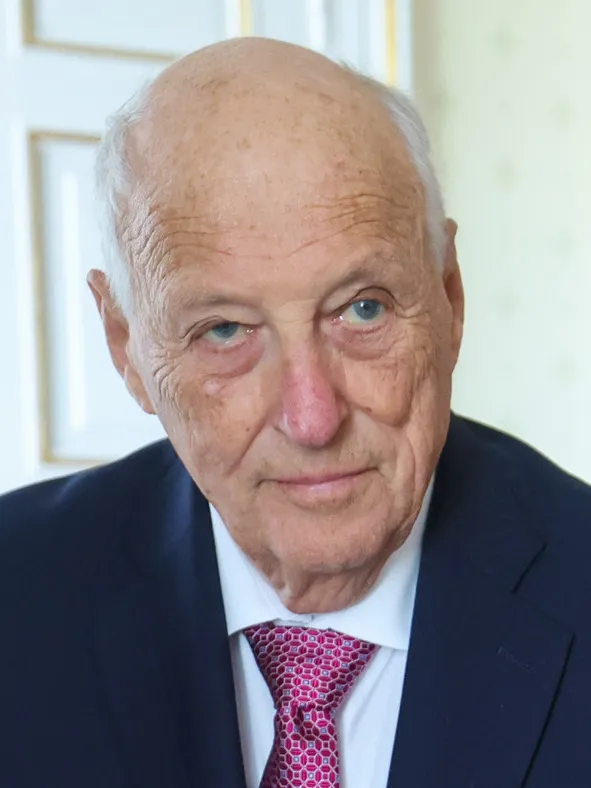
The Kingdom of Norway announced on 28 August 2026 that King Harald V, aged 89, died in Oslo. By law the throne passes to his eldest son, Crown Prince Haakon, who was proclaimed King Haakon II on the same day.
Harald V ascended the throne in 1991 and reigned for more than three decades, becoming the seventh monarch of the House of Glücksburg. He had been heir apparent since 1957, when his grandfather Haakon VII died, and his father Olav V passed away in 1990. During World War II the royal family lived in exile abroad; Harald spent his childhood in Sweden and the United States before studying at the University of Oslo, the Norwegian Military Academy and Balliol College, Oxford. In addition to his constitutional duties, he was an avid sportsman, representing Norway three times in Olympic sailing. After retiring from competition he served as honorary president of World Sailing and was a long‑time advocate of maritime safety and environmental protection.
Under Harald’s reign Norway maintained the stable operation of its constitutional monarchy, with the royal family playing a symbolic role in domestic and foreign affairs and enjoying popular approval for its approachable image. His public statements on energy policy, Arctic issues and humanitarian assistance were often cited as examples of Norway’s soft power. Harald also witnessed Norway’s transition from an oil‑rich nation to a leader in green energy, promoting the development of offshore wind farms and carbon‑capture technologies.
Crown Prince Haakon, born in 1973, was educated at the Norwegian Military Academy, the Britannia Royal Naval College in the United Kingdom and the Harvard Kennedy School. He served as Minister of Defence from 2001 to 2009 before becoming Minister of Foreign Affairs. His diplomatic portfolio focused on Arctic cooperation, climate change and international development aid, and he became known for advancing sustainable fisheries and maritime transport safety. Upon his accession, King Haakon II said he would continue to place “service” at the core of the monarchy and would strengthen Norway’s leadership in global environmental governance and innovative technology.
Domestic and foreign leaders expressed condolences and best wishes. Norway’s prime minister and parliamentary leaders praised Harald’s dedication and voiced confidence that Haakon II will preserve national unity while deepening cooperation with the European Union, NATO and the Arctic Council. Heads of state from the United States, United Kingdom, Sweden and China also issued statements affirming Norway’s constructive role on the world stage and looking forward to a continuation of stable, open foreign policy under the new king.
For Taiwan, Norway’s experience in maritime safety, green energy and Arctic resource development offers useful reference points for offshore wind, sustainable fisheries and international maritime collaboration. With Haakon II’s accession, Norway may increase technological and environmental exchanges with Asian countries, providing opportunities for Taiwanese firms in offshore wind equipment, carbon‑capture technology and sustainable fisheries management to seek cooperation and knowledge‑sharing on bilateral or multilateral platforms. Although the two nations are geographically distant, the transition underscores for Taiwan that a stable constitutional monarchy can contribute to domestic consensus and an enhanced international image, offering a governance model worthy of consideration.
Produced by our editorial team, with AI assistance in editing.
