
Cambodian King Norodom Sihamoni finishes China treatment, returns home.
Cambodian King Norodom Sihamoni has returned to Cambodia from Beijing, China, concluding a multi-week course of prostate cancer treatment and surgery. Acco
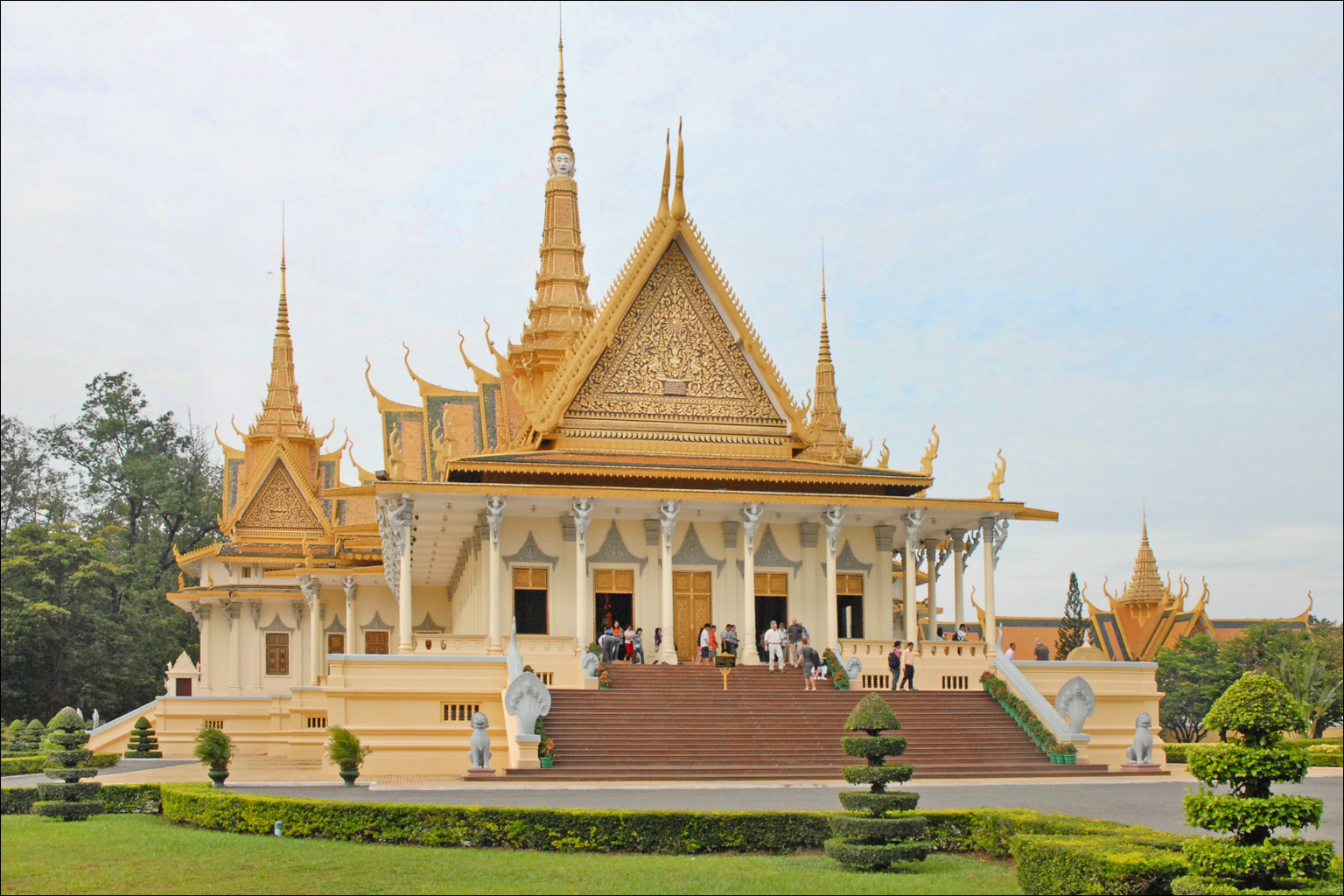
Cambodian King Norodom Sihamoni has returned to Cambodia from Beijing, China, concluding a multi-week course of prostate cancer treatment and surgery. According to official announcements from the Royal Palace of Cambodia, the King’s health is steadily recovering as he currently rests and undergoes rehabilitation at the Royal Palace.
The Royal Palace of Cambodia serves as the official royal residence of the Cambodian monarch and is located in the heart of Phnom Penh, near the confluence of the Tonle Sap and Mekong rivers. Steeped in history, the palace was originally built between 1866 and 1870 by Cambodian King Norodom, before undergoing a major reconstruction between 1912 and 1932. The architecture of the palace blends traditional Khmer design with French colonial influences, carrying profound cultural and historical significance.
Cambodia’s monarchy has a long history dating back to the 1st century AD. However, the institution faced major challenges during the mid-20th century, particularly under the rule of the Khmer Rouge. The Khmer Rouge regime governed Cambodia from 1975 to 1979, a period marked by mass human rights violations and atrocities. Regime leader Pol Pot attempted to transform Cambodia into a classless, atheistic agrarian society, resulting in the deaths of millions of people.
In 1993, Cambodia restored its monarchy, and Norodom Sihamoni’s father, Norodom Sihanouk, reascended the throne. Sihanouk subsequently abdicated in 2004, passing the crown to his son, Norodom Sihamoni. As the current King of Cambodia, Sihamoni plays a vital role in preserving the nation's cultural and historical heritage while remaining dedicated to advancing Cambodia's economic and social development.
In recent years, Cambodia’s economy has experienced rapid growth, primarily driven by the expansion of the textile and tourism industries. Nevertheless, the country continues to face numerous challenges, including corruption, human rights violations, and environmental degradation. Consequently, the Cambodian government must implement effective measures to address these issues while safeguarding national stability and security.
For Taiwan, Cambodia’s royal palace and monarchy hold significant cultural and historical importance. Close cultural and economic ties exist between Taiwan and Cambodia, with numerous Taiwanese enterprises investing and establishing factories in Cambodia, alongside increasingly thriving bilateral tourism. At the same time, Cambodia’s experiences offer valuable lessons for Taiwan, particularly in the preservation of cultural heritage and the promotion of economic development. Therefore, Taiwan can foster joint promotion of development and prosperity in the Asia-Pacific region by strengthening cooperation and exchanges with Cambodia.
Produced by our editorial team, with AI assistance in editing.
