
At Least Two Killed in Myanmar's Rakhine State as Government Airstrikes Hit Port City.
A recent government airstrike in Rakhine State, western Myanmar, has resulted in the deaths of two civilians and significant damage to multiple buildings.
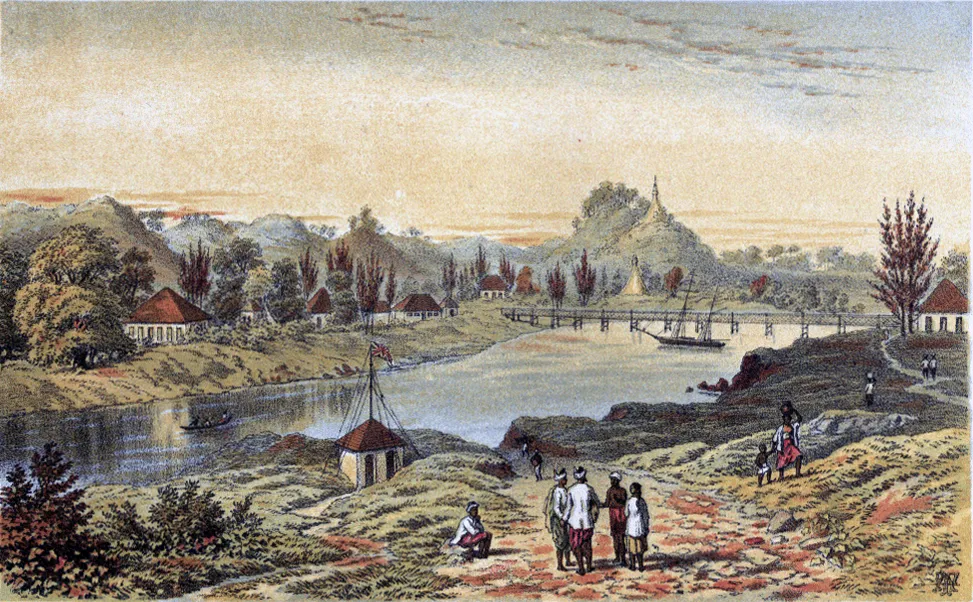
A recent government airstrike in Rakhine State, western Myanmar, has resulted in the deaths of two civilians and significant damage to multiple buildings. The incident occurred in the town of Dan Taw, a strategically located port town on Rakhine State's west coast, which has a rich historical background and was formerly known as Dvaravatī, a significant commercial center.
Dan Taw's strategic location has made it a crucial economic and trading hub in Rakhine State. However, the region has been plagued by ongoing conflict between the government military and the Arakan Army in recent years, with the airstrike once again sparking concerns and criticism over the military's actions. The government military claims its target was the Arakan Army's base, but in reality, many unarmed civilians have been caught in the crossfire.
For residents of Dan Taw, the airstrike is a further devastating blow, as many have already endured years of conflict and displacement. The international community has expressed concern over the incident, calling for all parties to work towards peace and prevent further bloodshed and destruction.
The conflict in Rakhine State is a complex issue, involving multiple factors including ethnic, religious, and political tensions. The animosity between the government military and the Arakan Army has persisted for decades, resulting in countless casualties and displacements. A resolution to this crisis requires a genuine commitment from all parties, including a halt to violence, dialogue, and a search for peaceful solutions.
For the Myanmar government, a first step would be to stop the airstrikes and military operations. Subsequent to this, negotiations should be held with the Arakan Army and representatives of other ethnic groups to find a solution that addresses the underlying issues. Meanwhile, the international community must provide support and assistance, including humanitarian aid and efforts to promote peace talks.
Although Taiwan is not directly connected to the incident, it reflects the complex political and social landscape of Southeast Asia. As a country that values human rights and humanitarianism, Taiwan can play a role in the international community, urging all parties to work towards peace and prevent further bloodshed and destruction. Additionally, Taiwan can draw valuable lessons from this incident about the importance of regional security and stability, and subsequently take a more active interest in regional affairs.
Produced by our editorial team, with AI assistance in editing.
