
Hidden in the Pacific, the Enchanting Island Nation of Palau Holds Ancient Secrets and Tra
In the heart of the Pacific Ocean, where the sun dips into the horizon and paints the sky with hues of crimson and gold, lies the enchanting island nation
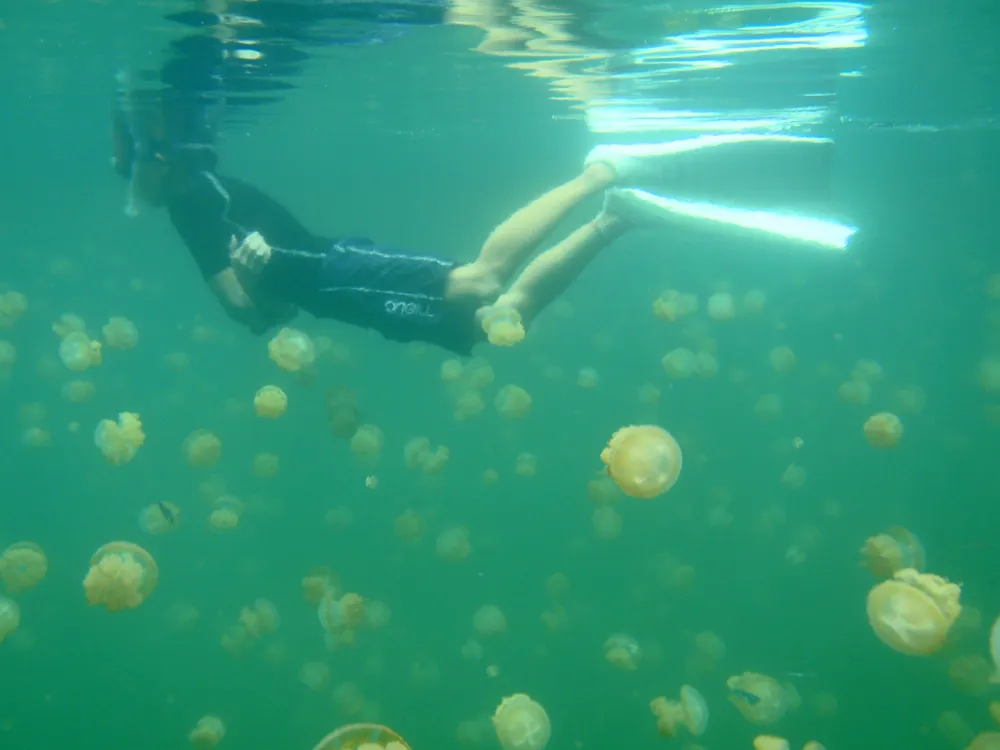
In the heart of the Pacific Ocean, where the sun dips into the horizon and paints the sky with hues of crimson and gold, lies the enchanting island nation of Palau. This tiny archipelago, comprising over 300 islands, is a haven of breathtaking beauty and unique cultural heritage. With a population of just 21,729 people, Palau is one of the smallest countries in the world, but its rich history, stunning landscapes, and resilient people make it a treasure trove waiting to be discovered.
Palau's story begins around 1000 B.C., when humans first arrived from Southeast Asia, bringing with them their complex and highly organized matrilineal society. The islands were ruled by high-ranking women who selected the chiefs, a system that remained in place for centuries. The arrival of Spanish explorers in the 17th century marked the beginning of external influence, followed by periods of occupation by Spain, Germany, and Japan. Today, Palau is a presidential republic in free association with the United States, enjoying a high standard of living and low unemployment rates. The country's economy, though fragile due to its reliance on tourism and services, is rebounding post-pandemic, thanks to its commitment to environmental sustainability and responsible tourism practices.
Palau's unique cultural identity is reflected in its people, who are predominantly Palauan (70.6%), with significant Asian (26.5%) and Carolinian (1.2%) populations. The official languages are Palauan, English, and Japanese, a testament to the country's history of external influences. The majority of the population practices Roman Catholicism (46.9%), followed by Protestantism (30.9%) and the indigenous Modekngei faith (5.1%). The country's resilience and adaptability are evident in its ability to balance traditional values with modern practices, making it an fascinating destination for cultural enthusiasts.
The island nation's stunning natural beauty is its most striking feature. Palau's terrain varies from the high, mountainous main island of Babelthuap to low, coral islands surrounded by vast barrier reefs. The tropical climate, characterized by hot and humid weather, is punctuated by a wet season from May to November. The country's rich marine resources have made fishing a significant industry, while its forests and minerals, particularly gold, offer additional economic opportunities. Despite its small size, Palau has made a significant commitment to environmental conservation, recognizing the importance of preserving its unique ecosystem for future generations.
Tourism has become a vital sector of Palau's economy, with the country seeking to balance its growth with sustainable practices. The recent post-pandemic rebound of the tourism industry has brought new opportunities for visitors to experience the country's natural beauty, unique culture, and rich history. From snorkeling and diving in the crystal-clear waters of the Rock Islands to exploring the ancient stone monoliths of the Ngarchelong State Monument, Palau offers an unforgettable experience for travelers. As the country continues to evolve and grow, it remains committed to preserving its delicate environment and promoting its unique cultural heritage to the world.
In a world where small, remote nations often struggle to be heard, Palau stands out as a shining example of resilience, adaptability, and determination. This tiny Pacific island nation has navigated centuries of external influence, preserved its unique cultural identity, and committed to environmental sustainability. As we learn more about Palau, we are reminded of the importance of respecting and preserving the world's diverse cultural and natural heritage. Palau may be small, but its impact on our collective understanding of the world is enormous, and its beauty, resilience, and spirit inspire us all to cherish and protect our planet's precious resources.
Produced by our editorial team, with AI assistance in editing.


.jpg%3Fwidth%3D1000)