
Villenave-d'Ornon
France · Europe
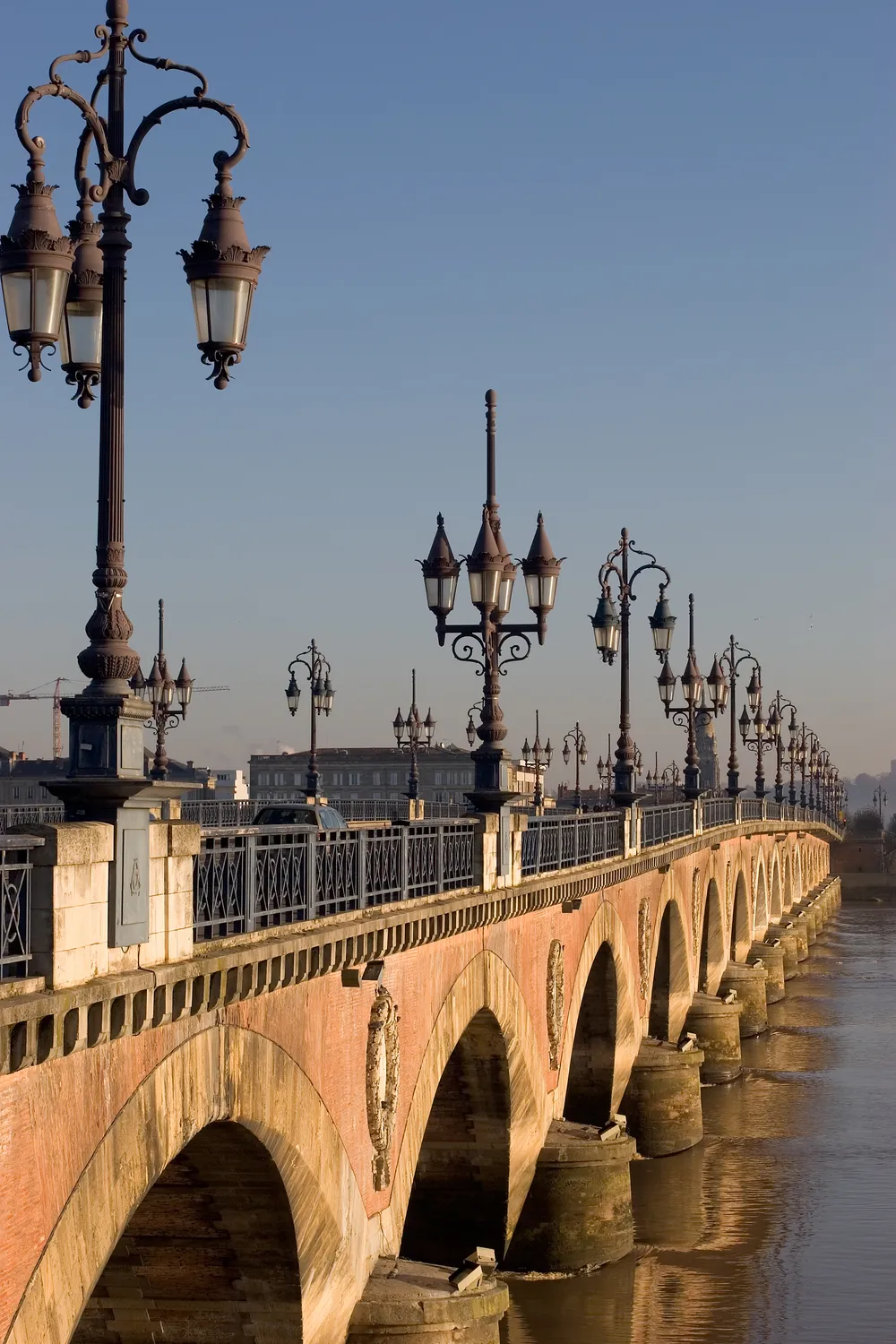
About Villenave-d'Ornon
Bordeaux is a city in the Gironde region of southwest France, standing on the River Garonne. It's the country's fifth largest city, with a population of 259,809 in 2020, and another million living in its associated towns. Bordeaux is famous for its wines and deserves to be equally famous for its magnificent neo-classical waterfront and old town, a UNESCO World Heritage Site.
Villenave-d'Ornon travel guide
Understand
Bordeaux and the whole province of Aquitaine came under English rule for 300 years from 1154, when Eleanor of Aquitaine married the future King Henry II. The English rulers enjoyed drinking the wines of Bordeaux, but they enjoyed the profits even more – trade with Bordeaux was their largest source of income. Most wine came from the Graves region just upriver from the city, and this was a clear, deep rosé called clairet, still produced today. The English came to call any Bordeaux red wine “claret”. In 1453 France took control of Aquitaine and cut off the supply to England, who ceased to drink wine for the next 500 years, turning to beer and gin. This caused a slump in Bordeaux, which only revived from the 16th century through trans-Atlantic trade. The city then prospered through the 18th century, when most of its fine buildings were erected, and it provided the model for Baron Haussmann's 19th-century remodelling of Paris. Bordeaux also came to eclipse other French Atlantic ports such as Bayonne and La Rochelle. Much of the wealth was based on the triangular slave trade: sugar, rum and other plantation products were shipped to France from the Americas and Caribbean, France shipped industrial wares to Africa, whence the slaves were sent west to work those plantations. Bordeaux suffered a human cost in later turmoils: the French Revolution, Napoleonic wars, and First and Second World Wars. But the damage to buildings was small enough to be repaired, rather than needing whole-scale rebuilding. The 18th-century grandeur was thus preserved. It helped that the limestone and gravel subsoil wouldn't take the weight of high-rise buildings. Credit is also due to the Mayor of Bordeaux (and former French prime minister) Alain Juppé, for keeping out modern intrusions while revitalising the inner city, with pedestrian precincts and a revamped transport system. Office de Tourisme is the TIC, at 12 Cours du 30 Juillet, southwest corner of Place des Quinconces, tel +33 5 5600 6600. I
Getting there
By plane It has many connections from other cities in west Europe, UK and Ireland, and North Africa (Tunis; Algers; Agadir; Casablanca; Marrakesh; Oujda and Fez). Other destinations include Istanbul and Tel Aviv. Air Transat have seasonal transatlantic flights. For the time being there are domestic flights from Paris Orly and CDG, but these will fall foul of the law banning flights between cities reached overland in under 2½ hours. Other domestic routes are from Ajaccio, Lyon, Lille, Marseille, Montpellier, Nice and Strasbourg. 1 Bordeaux-Mérignac Airport (BOD IATA) (15 km west of city centre). There are in effect 2½ terminals, side by side. Air France uses Terminal B, the budget airlines use Terminal "Billi" which is the half, an add-on to B. Other flights use A and B; these two are modern spacious terminals with the usual land- and air-side facilities including car hire. "Billi" has a poky, cramped check-in area, but shops and restaurants once you get airside. It is notoriously badly managed and understaffed which results in long queues, and not infrequently passengers missing their flights. Allow extra time for check-in and security. (updated Jul 2023) Getting to the centre:
Tram A runs to city centre daily 05:00–00:00 every 10 min, taking 35 minutes. Change at Porte de Bourgogne for the railway station and other tram and bus lines. You pay the standard city bus fare of €1.70, see below for other ticket options. Outbound, alternate trams branch north to Mérignac and Le Haillan Rostand and don't go to the airport. Bus 30’ Direct runs to the railway station non-stop, daily 07:00-20:00 every 30 min M–Sa and hourly on Sunday. The single fare is €8 (concessions €7) and you can pay on the bus by card or cash. Bus 39 skirts the west edge of the city from Pessac in the south to the airport, Le Haillan Rostand and Les Pins in Mérignac. It goes nowhere near downtown.
By train TGV trains speed hourly from Paris Montparnasse, taking just over two hours non-stop. A co
Getting around
Orientation Bordeaux's centrepiece is the elegant riverfront and former port, where fine 18th-century buildings stretch for 3 km (2 mi) along the west bank of the Garonne, from Quinconces in the north to St Croix in the south. The old central districts of St Pierre and St Michel extend inland for about 1 km. Most city sights are in this area. The railway station is south, at the foot of Cours de la Marne. To the north, Quai des Chartrons has been redeveloped as the “City of Wine”, and has the wine museum. The main university campus is in the suburb of Talence, 10 km southwest. The districts east of the river are modern: the main reasons to cross are for the view back west in morning sunshine, and to visit the Botanic Gardens.
On foot Although Bordeaux is a big city, the sights of interest are fairly close together in the old centre, and much of it is pedestrianised. A car here would be a handicap.
By bus TBM re-organised the city network in Sep 2023. Beware outdated information in tourist guides, even on this page. All public transport information is posted on the TBM website. Maps and times can also be easily accessed with Google Maps, just select route "By public transport" when getting directions. The city bus routes fan out from four hubs:
The main railway station, Gare Saint-Jean, has buses to city centre, university, and north side. Place de la Victoire has buses to the centre, railway station, University, and north and south-west sides of the city. Place Gambetta has buses to la Victoire, the railway station, and west, north-west, and north sides. Quinconces is a main interchange between trams and buses. A small electric bus la navette du centre-ville potters around the pedestrian areas. It has no bus stops, just wave your hand to be let on, and tell the driver when you want to get off. Single tickets can be purchased from the bus driver, for €1.80 in 2023; a return is €3.20. If you're likely to make eight or more journeys, buy a package of ten tick
See
1 Place des Quinconces is the broad leafy square at the focus of the west riverbank. The ornate Girondins Memorial commemorates those guillotined here after that faction lost the power struggle with the Montagnards in 1793, and the Revolution descended into a "Reign of Terror". The square is nowadays a transport hub - just about every city bus and tram route passes through it. Port of the Moon is the elegant waterfront crescent centred on Place des Quinconces that earned Bordeaux its UNESCO citation. You get a sublime view from the opposite riverbank at dusk.
South of Quinconces 2 Place Gambetta, with upmarket mansions, is just outside the former walls, with Porte Dijeaux the city gate. Musée des Arts décoratifs et du Design on Rue Bouffard is closed until 2025. 3 Cathédrale St-André, Place Pey Berland, ☏ +33 5 5544 6729. M 15:00-19:00, Tu-Sa 10:30-12:00, 14:00-19:00, Su 09:30-12:00, 14:00-19:00. Grand church built from 1170 in Gothic style. It was trashed during the Revolution but
Overview adapted from Wikipedia, travel guide fromWikivoyage (CC BY-SA). Photography via Wikimedia Commons.