
Metz
France · Europe
About Metz
Metz is in the Lorraine region of France that borders Luxembourg and Germany. Metz and the rest of the region offer much to view of historical interest, as well as a well-rounded shopping scene, ranging from the low- to high-end and including a great Saturday farmers' market.
Metz travel guide
Understand
Due to its German heritage and military tradition, Metz has yet to earn much respect in the eyes of the French. Most of the criticism about Metz is clichéd and unwarranted; in fact, Strasbourg has stronger German heritage yet has been overwhelmingly embraced by the French and visitors alike.
History and name This location has been inhabited from the days of early man, and was subsequently settled and fought over too many times to name. The first known permanent settlers in the area were a Celtic tribe known as the Mediomatrici. They found that the area was rich in resources, and supposed it easier to defend, as the confluence of the Seille and Moselle rivers created several islands at this spot. The area became known as the Oppidum of the Medioatrici until the Greco-Roman times, when the city was incorporated into the Roman Empire and become known as Divodurum Mediomatricum, meaning the "Holy Fortress of the Mediomatric". Later, the name evolved to Mediometrix. In the 5th century the name evolved into 'Mettis', which evolved into 'Metz'. Metz was the birthplace of the Carolingian Dynasty before becoming the capital of the burgeoning Kingdom of Lotharingia (855-958 AD); then it was the capital of the Duchy of Upper Lorraine (959-1233), before breaking away to form an independent city state during the high Middle Ages (1234-1552). As such, Metz was one of the most powerful cities in feudal Europe, and this rich cultural history can still be seen, particularly in its grand Cathedral and its beautiful old town built using the "pierre de Jaumont", a local yellow-coloured limestone.
Tourist information Metz Tourist Office Metz city website]
Getting there
By car Metz lies along the A31, north of Nancy and south of Luxembourg. From Paris or Strasbourg, take the A4 to the A31; Metz is just to the south.
By plane 1 Metz–Nancy–Lorraine Airport (ETZ IATA) (southeast of Metz). A small regional airport for Metz and Nancy. Once a decent mid-sized airport, its golden years are long gone. Most destinations served are in France. (updated Feb 2023) Luxembourg Airport. Located nearby in Luxembourg, this airport is small compared to other 'international' European hubs, but it serves most major destinations around the continent. From Metz, you can drive there in less than an hour. Otherwise, you can take a train to Luxembourg-City, then take a bus to the airport; expect this journey to take about 1.5 hours (updated Feb 2023) If you are feeling adventurous or do not mind taking your time, you can also fly from Paris-Charles de Gaulle, Strasbourg, and Saarbrücken airports.
By train 2 Railway Station (Gare de Metz-Ville) (at the southern edge of the city center). Built in 1908, its imperial area built during the German occupation. It has connections to Paris, Luxembourg, and Strasbourg, including TGV. If you have a Eurail pass you will probably not be able to leave for a few weeks (you must make reservations way in advance). The train from Luxembourg costs €16.50.
Getting around
By car Driving in the centre of town is not recommended. Park in one of the parking areas (well-marked from the main roads in) and walk or use public transport. Be aware of immigrant beggars in parking areas offering to watch your car and approaching you at ticket machines when your wallet is in your hand. Local police refuse to prevent this activity even though they accept it is illegal and keeps visitors away.
By bus 1 Main ticket sales office and info (Espace Mobilité LE MET'), Place de la République 1, avenue Robert Schuman. M-Sa 08:30-18:30;. (updated Jun 2025) Bus lines
Metis M A: Borny -- Woippy P+R St.Eloy Metis M B: Hôpital Mercy -- Université Saulcy L1: La Corchade - Moulins Tournebride L2: République -- Marly L3: Woippy -- Costes et Bellonte L4: Grange-aux-Bois -- Devant-les-Ponts Plappeville L5: Magny -- Maison Neuve C11: St-Julien-lès-Metz -- Devant-les-Ponts C12: République -- Grange-aux-Bois C13: Noisseville -- Costes et Bellonte C14: Hôpital Schuman -- Moulins Mairie C15: Plappeville -- Montigny Blory C16: Woippy -- Intendants Joba C17: Hôpital Schuman -- Moulins Tournebride For more detailed information check the official web site: Le Met' bus timetables
On foot This is an easy city to navigate on foot as most any-place is a short walk and it takes less time to walk than to spend time looking for parking. Take a downtown map if you do not know your way around, however, you will find it easy to learn the layout and will very soon be comfortable on your own. Take your time and enjoy the varied sights and sounds of this city. Its buildings are varied in design, style and age with fun and fanciful details you will miss if you are not looking. Everything in the city centre is easily accessible on foot, and much of the main downtown/shopping area is pedestrian. There are a few hills, though!
By bicycle Bikes are also a great way to get around, though the same comment about hills applies here too. If the
See
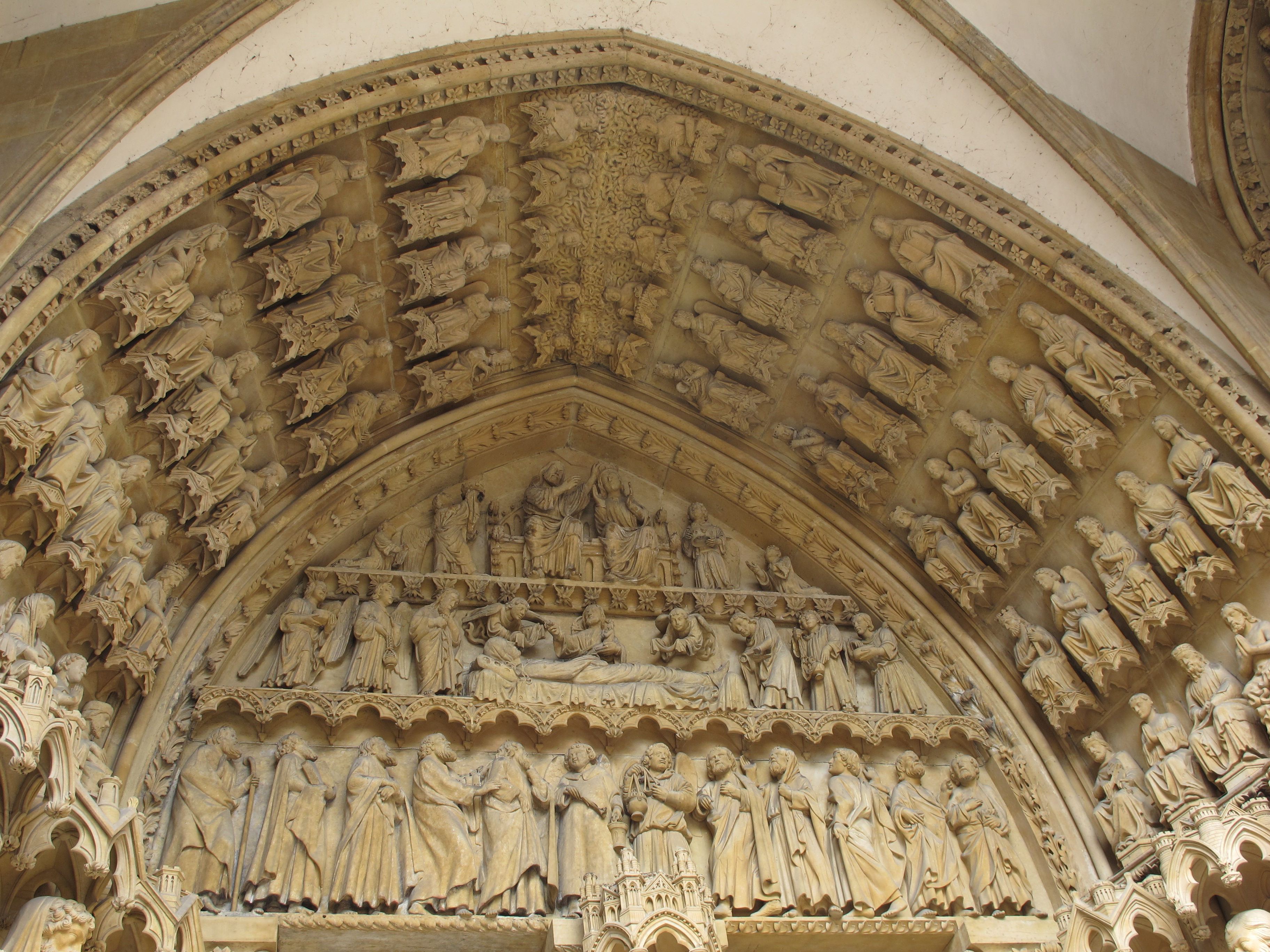
Landmarks 1 Cathedrale St-Etienne, place d'Armes. The Cathedral is a truly impressive structure, overlooking the river and the city. Inside, both its height (the third-tallest nave in France) and its stained glass windows, reportedly the largest surface area in France, with several by Marc Chagall, will impress visitors. 2 Place d'Armes (next to the cathedral). This square is notable for the four buildings that surround it. They were specifically designed to show the balance between the various local powers: religion (the cathedral), the military (now converted to the tourist office), civil government (the town hall) and justice (the court building). Place d'Armes also hosts a regular market for produce and other local goods. The tourist office is along one side of Place d'Armes. 3 Covered Market (Marché Couvert), 15 Rue d'Estrées (opposite the cathedral). Historically it was the bishops' palace, today it hosts stalls selling meats, cheeses, and other regional specialities. 4 Opera-Théâtre (not far from the Cathedral). Theatre and opera house, built between 1732 and 1752 and the oldest in France. 5 Place Saint-Jacques. Formerly the main crossroads of Divodurum (rue Taison and En Fournirue), it's correspondent with the placement of the ancient Roman Forum. Today the square is known for its numerous coffeehouses and restaurants, with outdoor seating whenever the weather is fine. (updated Oct 2018) 6 Basilica of Saint-Pierre-aux-Nonnains. It was built in 380 AD as a Roman bath, and in the 7th century, it was converted into a chapel of a Benedictine nunnery. A new nave was constructed in the 11th century with further interior renovations. In the 16th century, it became a warehouse, and remained so until the 1970s, when it was restored and opened for concerts and exhibitions. (updated Oct 2018)
Museums and galleries
7 Centre Pompidou-Metz (near the Central Station). A modern art gallery in Metz. €7. 8 Musée de la Cour d'Or (Golden Courtyard museum), 2, rue du
Do
In D
Overview adapted from Wikipedia, travel guide fromWikivoyage (CC BY-SA). Photography via Wikimedia Commons.