
Merano
Italy · Europe
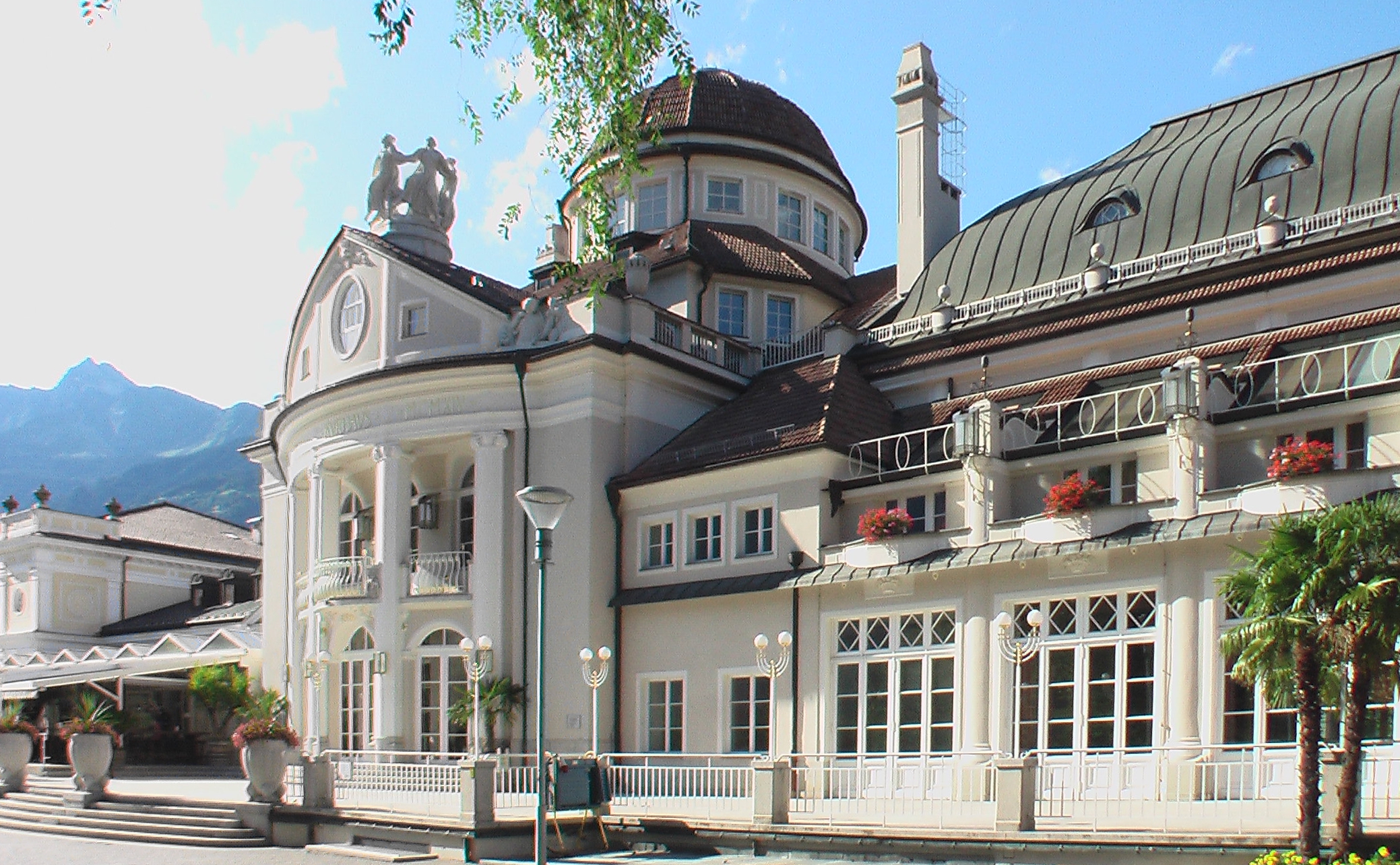
About Merano
Merano (German: Meran) is the second largest town in South Tyrol with a population of about 41,000 (2025). A slight majority (51.4%) of the population is Italian-speaking, while the others are German-speaking.
Merano, with its delightfully mild climate, lovely surroundings and rich, varied vegetation, is a famous health spa resort. It is protected from the winds and bad weather by high mountains to the north, east and west and lies in a valley open towards the sunny south. 324 m above sea-level, Merano attracts holiday-makers, mainly Germans, throughout the year, with local hotels having 4,739 rooms and known for their high standards of comfort, service and good food. There are 52 romantic, old castles in and around the town, some used as hotels or museums while others are still private residences.
Merano travel guide
Understand
History The name of the town of Merano, once known as Mairania, made its first appearance in history in the year 857 but, as late as the thirteenth century we know that it was little more than a village at the foot of Mount St. Benedetto, precisely where the old town houses of Steinach now are. During the Middle Ages it was governed by the Bishops of Trento, a larger town to the south, and then, later, by the Counts of Tirol. It gradually assumed a greater political importance and became quite a busy centre, as can be seen from the large number of castles and manor houses still to be visited in the surrounding area. The counts of Tirol chose the town for their capital in 1317 but, on the death of the last member of the Tirol ruling family, the famous Margaret Maultasch, Merano was handed over to the Habsburg family. It gradually became less and less important until, in the fifteenth century, Innsbruck was named as the capital of Tirol. Even the Merano mint, where the well-known “Tirol” coins had been minted in the past, was moved to Hall near Innsbruck and Merano was no longer the home of princes but just a small and insignificant country town, surrounded by Medieval walls. Merano first earned its reputation as a health spa resort in the 1830s and its exceptionally mild climate, lovely surroundings and varied and lush vegetation all contributed to its development in this field. Members of European royal families, nobility and aristocrats were in the habit of holidaying in Merano. The Austrian Empress, Elisabeth, for example, spent many happy times in the town and there is, in fact, a statue dedicated to her in one of the beautiful parks. Merano is still today a particularly pleasant holiday resort, attracting guests throughout the year, although spring and autumn are perhaps the busiest seasons. The mountains to the north of the town, some of which are over 3,000 m high, help protect it from the cold winds and the orchard-covered Adige/Etsch river valley extends d
Getting there
Merano is outside of the Brenner line and whether you want to reach the town by plane, by train, by bus or by car you have likely to reach before Bolzano and from this point Merano. Merano is 33 km (21 mi) northwest from Bolzano.
By plane The nearest airport is in Bolzano.
By train In order to get in Merano by train you have to arrive in Bolzano first and from here you can take the train to Merano (every 40 minutes). When you buy the ticket at the departure station you can have the ticket from Bolzano to Merano included, saying that your destination is Merano. The Merano Central Rail Station is close to the town centre.
By bus Some German, Austrian and Swiss travel agencies offer direct bus connection to Merano. Normally international bus lines stop in Bolzano and from here you can take the bus Bolzano-Merano at the Bolzano Bus Station or other stops inside Bolzano (like Dominikanerplatz). Buses are run by SASA, which uses the same orange buses you can find inside cities, and SAD, with grey-coloured buses (they operate on the same line). There is a departure every hour. A fare from Bolzano to Merano costs €4 (only 2.61 with value card).
By car You have to exit at Bolzano South on motorway A22 and taking the modern freeway, called MeBo. It is named MeBo because it's the fastest connection between MErano and BOlzano. In Merano there are three exits: Sinich/Meran Süd, Meran Zentrum and Algund (freeway end). If you are coming from Landeck in Austria or Engadin, Switzerland, you can follow the signs along the road.
Getting around
The best way in order to discover Merano is by foot, but it's covered by an excellent public transport system, which is composed by buses and a chair lift to the village of Tirol.
By bus In Merano there are 9 bus lines (generally 06:00-21:00) run by SASA and 1 of this have also a night service (21:00-01:00). Buses pass frequently (every 15–25 minutes). Buses run always on time. Stamp your ticket at the start of its first use (there are green - on new buses yellow - stamping machines). You have to buy another ticket if you stop and you catch a bus after 45 minutes after the printing (only with single trip ticket or spent value card). Payment is by the honor system and inspectors check for valid tickets. If you don't have one, it's an instant €25 fine (plus the fare you were supposed to have paid). All timetables and bus maps you can find free in the tourist offices or in the bus station. All urban buses stops are request stops (except end of the line): If you want to get off, press the red (in some blue) button, while if you want to get on a bus, you have to wave your hand.
By chair lift Merano is connected with the village of Tirol, on a hill above the town, by a chair lift, which is in service between April and November.
By taxi Taxis are only on call available. Merano's taxi service is powered by Radio Taxi 24 hr calling 0473 21 20 13. or by private services called "NCC - Noleggio con conducente" Tel +39 3477523424
By bike Merano has a good bike trail system - but not so developed as in Bolzano, though - but around the town it's excellent. Maps are available in tourist offices and online. Rentals are available in the following places:
Rail Station Spa Building Tennis Centre The service is available from April until mid of October (M-Sa 09:00-19:00) and it's free. You only have to pay a €5 deposit, which is returned if the bike has not been damaged.
By car The public transportation or your own feet should be enough in order to travel inside Merano
See
Museums, galleries, and memorials Touriseum - South Tyrol Museum of Tourism. Admission is included with tickets for Trauttmansdorff Castle & Gardens (see below). It's a very interesting highlight. The Museum hosted at Trauttmansdorff Castle reports the long history of tourist tradition in South Tyrol. The Museum is open only from the first April to November, given that the Botanical Garden is closed during the cold season. 1 Trauttmansdorff Castle & Gardens, St.-Valentin-Str. 51A, ☏ +39 0473 255600, [email protected]. Extensive and beautiful botanical gardens surrounding an old castle. The site of the Tourism Museum (see separate entry). There is a restaurant and café. Open 1 April to 15 November. Admission €15 (students/handicapped people €12, over 65 €13, juniors (6-18) €12, children up to 6 years free, family ticket €32). (updated Oct 2022) City Museum - admission €2.00 (reduced €1.50) It's located in a former hotel, it shows interesting archaeological and historical founds. Princely Castle Museum - admission €2.00 (reduced €1.50) de, it Building from the 15th century in the old town with an interesting exhibition for lovers of medieval history. Jewish Museum - free entry. The small museum at the only South Tyrol's Synagogue reports the history and documentation about the Jewish community in South Tyrol. Women's Museum Evelyn Ortner. Free entry. Unique museum about women specialized in culture of women's everyda
Overview adapted from Wikipedia, travel guide fromWikivoyage (CC BY-SA). Photography via Wikimedia Commons.