
Liguria
Italy · Europe
About Liguria
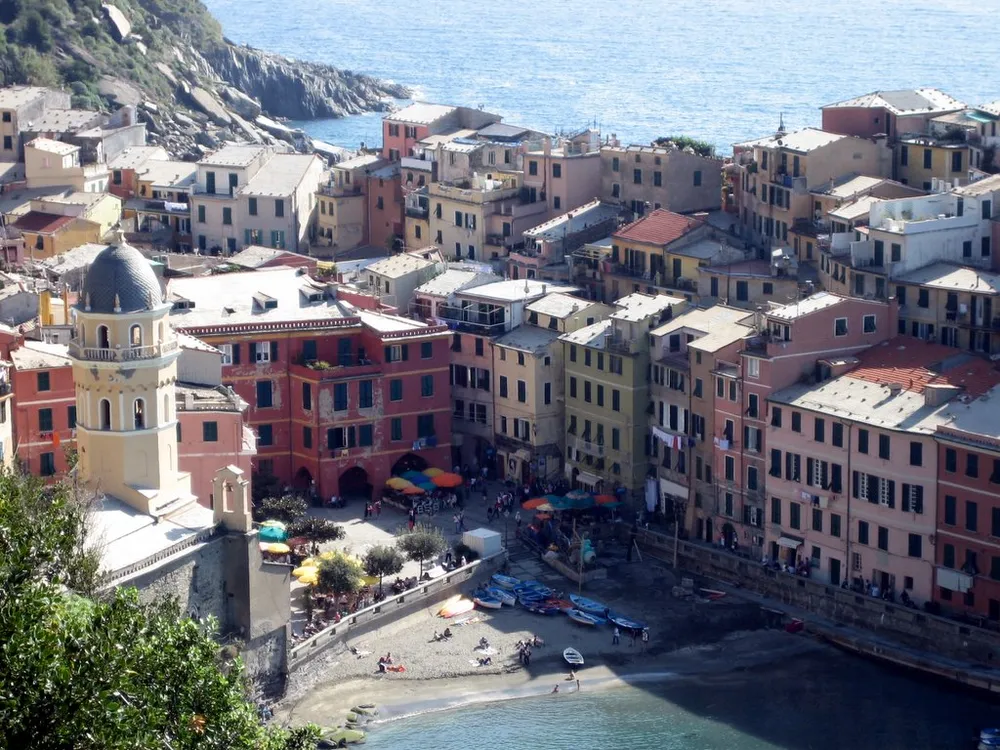
Liguria is a region of Northwest Italy, on the Ligurian Sea. There are wonderful cities that start from the border with France (Ventimiglia) to the border with the Tuscany region (La Spezia). There are small and rocky beaches, like those in the Cinque Terre, and long sandy beaches like those in Alassio. Furthermore, the entire hinterland, thanks to the medieval villages like Triora, represents a hidden treasure where at every bend in the road there is a new surprise.
Liguria travel guide
Understand
2,000 years ago the whole northwestern part of Italy, including what are now Piedmont and Lombardy, were inhabited by the Liguris, the people from whom this region gets its name. Liguria is home to seaside resort towns in the style of Cannes and Monaco, dozens of sandy, rocky and pebbly beaches, in Genoa the country's largest commercial and naval port, some of its most desolate stretches of coast, and terraced hillsides that produce olive oil considered to be more delicate even than that grown in Tuscany. Liguria is made up of two coasts (Riviera di Ponente and Riviera di Levante) with the capital Genoa at the centre. Both rivieras are made up of a narrow coastal strip backed by the mountains and short valleys of the Maritime Alps to the west, and the Ligurian Apennines in the rest of the region.
Climate The climate is generally very mild, except in the mountains in winter, so Liguria can easily be visited at any time of the year.
Tourist information Liguria Tourism website
Getting there
Roads and railways run the length of the coast, linking the Riviere with France and the rest of Italy.
By train National lines: from Turin to Savona and Genoa, Milan to Genoa, Parma to La Spezia, and it connects to the Tyrrhenian route to Rome, Naples and the south. International lines: Liguria borders the French province of the Côte d'Azur to the west. Thello4 operates a service from Italy to France from almost all stations on the Riviera, without changing at Ventimiglia.
By car Liguria is connected along the entire coast by the Ventimiglia - La Spezia motorway axis or alternatively by the State Road no. 1 - Aurelia.
A6 Turin - Savona A7 Milan - Genoa A10 Genoa - Ventimiglia A12 Genoa - Livorno A15 Parma - La Spezia A26 Genoa - Alexandria
By plane 4 Genoa Cristoforo Colombo Airport (GOA IATA). 5 Riviera Airport (ALL IATA Albenga Airport).
By ship The ports of Imperia, Genoa, Savona and La Spezia served from Sardinia, Sicily and Corsica by Moby, Tyrrhenia, and Corsica ferries.
Getting around
Whether travelling by train or by car, the spectacular journey along the Ligurian coast takes you through tunnel after tunnel, bursting out from darkness into sunlight, the sea sparkling at your side.
See
Portofino and the Gulf of Tigullio: the reserved beauty of Portofino, Santa Margherita Ligure, Rapallo, Sestri Levante, and Chiavari immersed in the embrace between land and sea. It is a small paradise that has become synonymous with elegance over the years. Cinque Terre and Gulf of the Poets: Reveals the charm of the Cinque Terre with panoramas suspended between sky and sea, hiking trails, vineyards and strips of olive trees, in a corner of Liguria which contains a unique landscape. The unmistakable Art Nouveau style of the gardens and of La Spezia museums, or the charm of the villages of Lerici, Portovenere, Tellaro, famous for poets and writers such as Byron and Shelley and the local beauty in which they found inspiration for their works. Bussana Vecchia: an old village near San Remo (Province of Imperia) destroyed in the 19th century by a strong earthquake and now inhabited by artists. Genoa has a treasure chest of ancient art hidden inside historic buildings, and noble villas. It ancient port has been renewed with museum spaces, prestigious theaters, and the largest aquarium in Europe.
Do
Those who are fond of a good walk will love the Via Del Amore, a long and winding path along the coast which connects the five villages of the Cinque Terre. Stunning views of the sea make for a memorable trek, but it's not for those of a nervous disposition - the path can be quite high above the sea in certain stretches, so if you don't like heights perhaps this won't be for you.
Eat
Traditional Ligurian food is some of the most refined in all of Italy. Tagliatelle is served in various forms here, and torta di verdura is a local speciality, a vegetable pie made with borage and other wild late-winter herbs. Seafood is very popular, as the sea around Liguria is abundant with life. Some typical dishes are:
Mushroom pie Mussels stuffed with cheese and herbs Orata (a local fish) cooked with olives and potatoes Gattafin (pasta stuffed with beetroot; onion and Parmesan) Soviore rice pie Liguria is also the birthplace of pesto sauce. In all Liguria provinces there's a speciality called ‘Farinata’, which consists of a thin, salty pie made with chick-pea flour which is cooked in a wood oven, similar to those used for pizza. It’s eaten as antipasto or as a nutritious snack and can be topped with Gorgonzola, onion or Salsiccia.
Drink & nightlife
White and passito grapes are given to the Cooperativa del Gruppo Di Riomaggiore, a modern organization that has streamlined the winemaking process. Sciacchetrà is a prestigious sweet, white passito wine (not too sweet; however), produced in the Cinque Terre. Other white wines are Pigato and Vermentino (of which you can also find a variation of in Sardinia) which suffer from a bit from the salty sea climate in which the grapes grow, giving the wine a particular if not unique taste. Red wines are not so common and the only one worth mentioning is Rossese di Dolceacqua.
Go next
Liguria stretches east in a narrow ribbon along the coast from France. Mountains separate it from Piedmont to the north, Emilia-Romagna to the east and Tuscany to the south.
Overview adapted from Wikipedia, travel guide fromWikivoyage (CC BY-SA). Photography via Wikimedia Commons.