
Asti
Italy · Europe
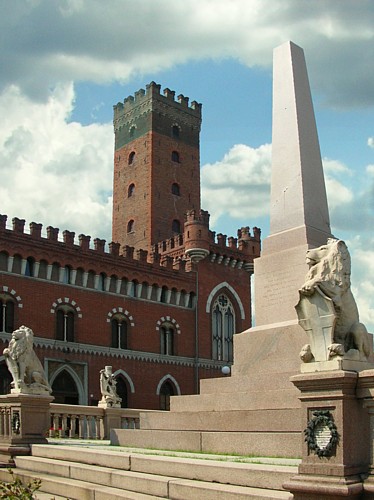
About Asti
Asti is the capital of the province of Asti, one of the most important wine areas in Italy, and lends its name to some illustrious wines, such as Moscato d'Asti. Asti is the main commercial centre of Piedmont's wine area, but still retains a friendly, small town feel and is a good base for touring Piedmont.
Asti travel guide
Understand
The city dates to pre-Roman times and a few ruins remain. In the 10th-13th centuries, Asti rose economically and politically to become one of the most powerful independent cities in Western Italy, with extensive trading rights granted by the Holy Roman Empire. The old medieval town still maintains many of the historic palaces and towers built by the rich families -Asti was known as the "city of 100 towers" (in fact there were 120 of which about 15 survive). Eventually power struggles between Turin and Milan led to Asti's demise as an independent city and the city changed hands frequently over a 300-year period until it fell under control of the House of Savoy in 1575, regaining some of its former glory. The city is divided into the new Baroque (1700s) town centred around the Piazza Alfieri named after one of Italy's most famous poets who was born in Asti and the medieval town centred on the Piazza San Secondo with the Romanesque San Secondo Church and Crypt. Asti is 40 minutes drive from Turin and one hour from Milan.
Office of Tourism 1 Asti Turismo, Piazza Alfieri 34, ☏ +39 0141 530 357, fax: +39 0141 538 200, [email protected].
Getting there
By plane Turin Caselle (one hour), Genoa Cristoforo Colombo (one hour), Milan Malpensa or Linate (one and half hours). Better to rent a car, (useful for touring around Asti area) or take shuttle to main station and train to Asti.
By car Asti is on the A21 Torino-Piacenza autostrada; other (scenic) routes are via SS231 from Ventimiglia via Cuneo, Bra and Alba; via SS457 from Casale Monferrato (and Vercelli); via SS458 from Ivrea and Chivasso; Asti can be reached from the A21 Turin - Piacenza motorway, Asti Est, Asti Ovest and Villanova exits. For those coming from Milan, take the A7 up to Tortona, then take the A21 towards Asti-Turin. For those arriving from Genoa, you can take the A26 from Voltri to Alessandria and then the A21. Coming from Cuneo or Alba, the section of the A33 motorway is open. - From Milan: A7 motorway to Tortona; connection with the A21 motorway towards Turin with the Asti Est exit. - From Bologna: From the A14 Adriatica Motorway continue on the A1 Autostrada del Sole, near Piacenza continue on the A21 Motorway towards Turin with the Asti Est exit. - From Turin: A21 motorway towards Asti and exit at Asti Ovest. - From Genoa: From the A7 motorway continue on the A21 motorway with the Asti Est exit. - From Aosta: A5 Aosta - Turin motorway, continue on the A21 motorway with the Asti Ovest exit. - From Alessandria: State Road 10 or Highway A21, direction Turin, with the Asti Est exit.
By train Asti is a principal station on the main Turin to Rome line. Frequent trains from Turin (30 minutes) or Genoa (one hour). From Milan you need to change in Alessandria or Voghera.
Getting around
Central Asti is quite compact and there is a large and reasonably well preserved historical centre which is easy to walk around. The train station is close to the centre and there are 2 large and convenient parking spaces in the centre (except on market days) at Piazza Alfieri and Campo del Palio. Also parking in the old city at Piazza Roma and Piazza Catena, but be cautious of restricted streets.
See
There are several medieval churches in Asti, the oldest dating back to the 11th century. Most are open to visitors during normal hours, including:
1 Collegiata di San Secondo, Piazza San Secondo (in the old market piazza). Built on the site of Asti’s patron saint’s martyrdom (119 AD), rebuilt in the 13th century, and houses the bones of the sacred saint of Asti in the crypt and the Palio d’Asti banners in a chapel. 2 Cattedrale di Santa Maria Assunta, Piazza Cattedrale. Built in the 14th century, one of Piedmont’s most important Gothic churches. 3 Torre Troyana, Piazza Medici. 13th-century Asti was known as the “city of 100 towers” – in fact there were 120 of these fortified family bolt-holes, of which about 12 still survive. This tower is open to visitors on weekends to walk up the summit. Closed in winter months from November to March. 4 Torre Rossa, end of Corso Alfieri. Oldest surviving tower dating back to Roman era (1st century), formerly part of the old gate. 5 Palazzo Civico, Piazza San Secondo. An old palace, used as the mayor's office and other Asti commune offices. Visitors allowed on the first floor halls. 6 Historical Archives (Palazzo Mazzola), Via Cardinal Massaia, opposite Cathedral. It houses a large collection of historical documents and maps, including a room dedicated to Palio di Asti. Open weekdays in normal hours, €2.50 admission. 7 Teatro Alfieri, Via Teatro Alfieri. Asti’s theatre, built in 1860, resembles an opera house and was renovated in 2002. Often if someone is there they will let you wander around.
Museums 8 Museum and Crypt of Sant’Anastasio, Corso Alfieri 365. Mondays closed. 8th-century. Admission €2.50. (updated Aug 2019) 9 Battistero di San Pietro (Baptistery of Saint Peter), Piazza 1º Maggio. Closed Monday. Romanesque church and museum complex (palaeontological and archaeological) built in the 12th century, modelled on Church of Holy Sepulchre in Jerusalem, with cloisters, tower and pilgrims hospice. €2.50. (updated Au
Do
1 Palio di Asti. This historic bareback horse race is the oldest one of its type in Italy originating in 1273, when the Astigiani staged a race beneath the walls of the enemy city of Alba causing great devastation to their vineyards. Wars between Asti and Alba have long since ceased, although to this day there is intense rivalry between the cities, and the Palio horse race is now held every 1st Sunday in September. All the ancient borgo (boroughs) of Asti, and many nearby towns enter both a horse and a contingent for the medieval parade preceding the Palio. The parade starts at the Cathedral and winds through the historical medieval town ending up on the Palio arena on Piazza Alfieri. There are 3 heats, followed by an interlude for the flag-throwers to show their skills; then the final is raced (usually after several deliberate false starts) and the winner claims his prize - the precious banner with the picture of Asti’s patron saint, the "Palio di Asti". 2 Festival delle Sagre. It holds every second weekend in September. Every small town and commune in Piedmont holds a “Sagre” festival celebrating their special food dish and local wines. The Asti Sagre is the “Sagre of Sagres” where some 50 or so provincial towns and communes build a thematic stand in the Campo Del Palio and for two days over the weekend hold an eating festival. Tickets are bought directly at each stand and typically cost €3-4 a plate, plus €1-2 for a glass of wine. On the Sunday morning all the participants sponsor a float depicting traditional rural themes, such as wine making, truffle hunting, distilling grappa, old threshing machines, laundry day, etc. (there’s even one depicting the local bordello). The staging area is in the Campo del Palio and the parade goes through the medieval town, pulled by antique tractors lovingly
Overview adapted from Wikipedia, travel guide fromWikivoyage (CC BY-SA). Photography via Wikimedia Commons.