

Nepal
Capital: Kathmandu · Asia
Nepal is a landlocked Himalayan nation, home to the world's highest peak, Mount Everest. Between China and India, with about 30 million people, its majestic high mountains draw climbers and trekkers from around the globe. The Kathmandu Valley preserves rich Hindu and Buddhist heritage, and Lumbini, the Buddha's birthplace, lies within its borders. Wedged between two giant neighbours, its diplomacy requires delicate balance, and its economy of tourism and agriculture is still developing. From Everest to millennia-old temples, Nepal blends natural grandeur with religious and cultural depth.
Nepal in world rankings
- 51st largest by population in the world (of 219)
- 96th largest by area in the world (of 219)
- 97th largest economy (GDP) in the world (of 178)
- 152nd highest GDP per capita in the world (of 178)
- Capital
- Kathmandu
- Population
- 29,164,578
- Area
- 147,181 km²
- Currency
- Nepalese rupee
- GDP
- $45.5B
- GDP per capita
- $1,536
- Life expectancy
- 70.6 yrs
- Urban population
- 67%
- Calling code
- +977
- Internet users
- 46%
- Forest cover
- 42%
- Languages
- Nepali
Nepal compared with Taiwan
How Nepal measures up against Taiwan — home to 23.3 million people across 36,193 km².
Countries bordering Nepal


Latest news — Nepal
More news →
Flash Floods Destroy 35 Homes, Six Bridges in Nepal’s Gorkha District.
A sudden, high‑speed torrent swept through Nepal’s Gorkha District in Gandaki Province early this week, leaving at least 35 homes and six bridges obliterat
Monsoon Floods and Landslides Leave Over 100 Dead in India and Nepal
At least 102 people have been confirmed dead across northern India and neighboring Nepal following a destructive series of heavy monsoon downpours, severe
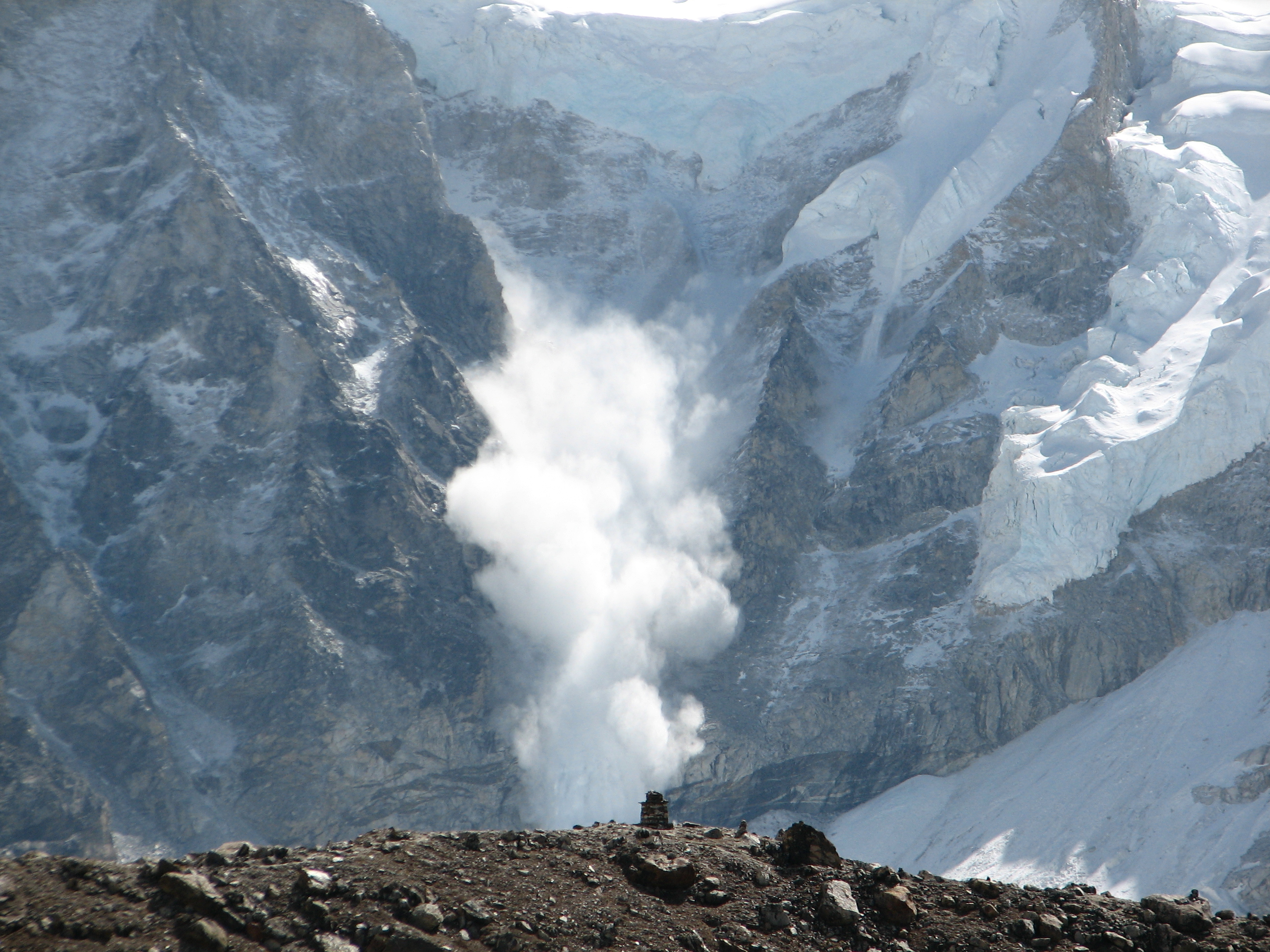
Severe Weather Hampers Rescue Efforts After Fatal Avalanche Strikes Mount Nemjung Base Camp
Rescue operations faced severe impediments in Nepal’s Manang District on Tuesday after a massive avalanche struck the base camp of Mount Nemjung, leaving f
Nepal Announces Resettlement Plans for Flood-Displaced Residents in Bhotekoshi Rural Municipality
The central government of Nepal has announced that it is actively formulating plans to relocate and permanently resettle residents displaced by severe floo
Over 13,000 Rescued After Nepal Flash Flood; Rescue Ongoing in Remote Valleys
On Tuesday this week, Nepal’s National Disaster Risk Reduction and Management Authority (NDRRMA) announced that, since the sudden flash flood and heavy rai
Nepal Army Rescues Two Workers Trapped in Upper Trishuli Tunnel.
The Nepali Army rescued two workers trapped inside a tunnel at the Upper Trishuli 3A hydropower plant in Rasuwa District on Tuesday, a week after the monso
Country profile
Background
During the late 18th and early 19th centuries, the principality of Gorkha united many of the other principalities and states of the sub-Himalayan region into a Nepali Kingdom. Nepal retained its independence after the Anglo-Nepalese War of 1814-16, and the subsequent peace treaty laid the foundations for two centuries of amicable relations between Britain and Nepal. In 1951, the Nepali monarch ended the century-old system of hereditary rule and instituted a cabinet system that brought political parties into the government. That arrangement lasted until 1960, when political parties were again banned, but it was reinstated in 1990 with the establishment of a multiparty democracy within the…
Location
Southern Asia, between China and India
Climate
varies from cool summers and severe winters in north to subtropical summers and mild winters in south
Terrain
Tarai or flat river plain of the Ganges in south; central hill region with rugged Himalayas in north
Natural resources
quartz, water, timber, hydropower, scenic beauty, small deposits of lignite, copper, cobalt, iron ore
Ethnic groups
Chhettri 16.5%, Brahman-Hill 11.3%, Magar 6.9%, Tharu 6.2%, Tamang 5.6%, Bishwokarma 5%, Musalman 4.9%, Newar 4.6%, Yadav 4.2%, Rai 2.2%, Pariyar 1.9%, Gurung 1.9%, Thakuri 1.7%, Mijar 1.6%, Teli 1.5%, Yakthung/Limbu 1.4%, Chamar/Harijan/Ram 1.4%,…
Religions
Hindu 81.2%, Buddhist 8.2%, Muslim 5.1%, Kirat 3.2%, Christian 1.8%; less than 1%: Prakriti, Bon, Jains, Sikh (2021 est.)
Government
federal parliamentary republic
Economy
low-income South Asian economy; post-conflict fiscal federalism increasing stability; COVID-19 hurt trade and tourism; widening current account deficits; environmentally fragile economy from earthquakes; growing Chinese relations and investments
Nepal · Travel guide
Understand
Geography
Nepal can be divided into the follwoing geographic regions, south to north:
Outer Tarai — Level plains, a cultural and linguistic extension of northern India. Here Nepali speakers are outnumbered by Awadhi, Bhojpuri and Maithili languages. Lumbini and Janakpur are major tourist and pilgrimage spots here, with most other cities being transport hubs for travel between India and Nepal. It offer opportunities for intimate exposure to traditional Indian culture that have become less available in India itself. Sivalik Range or Churia Hills — the outermost and lowest range of the Himalayas, about 600 m (2; 000 ft) high. Extends across the country east to west but with significant gaps and many subranges. The area is largely undeveloped due to poor soil and no agriculture, and is home to primitive hunter-gatherers. Inner Tarai — Large valleys between the Sivaliks and the higher mountain ranges. The Dang and Deukhuri valleys in the Mid West are the largest, offering opportunities to experience Tharu art and culture. Chitwan south of Kathmandu is another of these valleys, known for the Chitwan National Park, a UNESCO World Heritage Site where tigers, rhinos, crocodiles, deer and birds can be observed. Originally these valleys were malarial and lightly populated by Tharus who had evolved resistance and developed architectural and behavioural adaptations limiting exposure to the most dangerous nocturnal mosquitoes. Suppression of mosquitoes with DDT in the 1960s opened these valleys to settlers from the hills who cleared forests and displaced and exploited Tharus. Nevertheless, more remote parts of these valleys still have the Garden of Eden quality - forests broken by indefinite fields, lazy rivers, fascinating aboriginal peoples. Mahabharat Range — A prominent conti
See
Mount Everest, the highest mountain in the world is probably Nepal's most famous sight, and much of the country consists of very high mountains. There are four UNESCO World Heritage Sites in Nepal:
The Kathmandu Valley, obviously including the capital but also the cities of Bhaktapur and Patan. Sagarmatha National Park. Chitwan National Park. Lumbini, the birthplace of Buddha.
Do
Trekking
Since 2023, solo trekking in many reg
Getting there
Entry requirements
Visas
Citizens of India may stay in Nepal indefinitely without a visa. Citizens of Bangladesh, Bhutan, the Maldives, Pakistan and Sri Lanka may obtain a free visa-on-arrival for stays of up to 30 days regardless of reason of visit. citizens of China (mainland), Hong Kong and Macau are also eligible for a free visa-on-arrival for stays of up to 30 days, but are only permitted to visit for tourism. Nationals of Nigeria, Ghana, Zimbabwe, Cameroon, Eswatini, Somalia, Liberia, Ethiopia, Iraq, Palestine and Afghanistan are required to obtain visas before arrival. Tourist Visas are available on arrival for citizens of many countries at Kathmandu airport and designated frontier posts (see below) and cost:
US$30 for 15 days US$50 for 30 days US$125 for 90 days Tourist visas can be granted for a maximum of 150 days in a visa year. You can also pay this on arrival in other convertible currencies such as euros, pounds sterling, Chinese reminbi and Australian dollars, although US dollars are always preferred and some smaller entry points (like Birgunj) may only accept US dollars, and Kodari only accepts US dollars and Chinese reminbi. All tourist visas are the "multiple entry" type and allow multiple entries and exits during the period of validity. Volunteering while on a tourist visa without permission is strictly prohibited. More details are available on the official website of Nepal Immigration Visa Application Visas can be applied for online at nepalimmigration.gov.np, but as the online application form requires information about the intended place of stay in Nepal that is difficult to acquire (such as ward number; municipality; district etc.), it generally more convenient to complete the visa application after arrival. To extend your tourist visa, visi
Getting around
By plane There are a number of domestic airlines in Nepal such as Yeti Air, Tara Air and Nepal Airlines that offer frequent flights to many destinations around the country. Destinations to and from Kathmandu include places like Biratnagar, Nepalganj, Lukla, Pokhara, Simikot, Jomsom, Janakpur and Bharatpur. To arrange flights from outside Nepal, there are a number of on-line booking agents who can make bookings, take payment (credit/debit cards/PayPal) and then send e-tickets. If you are buying tickets while in Nepal or if you are flying at short notice, it is necessary to be flexible on flight times and dates as the planes often get fully booked in advance. Cancellations and delays due to severe weather conditions do occur. If you have time, just board the next plane.
By bus
Micro bus – They are 10-12 seaters with very fast and popular service. It has almost replaced local bus service given its fast service. However, apart from previous few routes, Micro Bus has come up with many other alternate routes and now has good coverage. The fare is more expensive than local buses. Tourists should be aware that microbuses are often driven with great speed and very little care and have unfortunately been the cause of a large percentage of the road accidents in Nepal. Use microbuses with caution. Tempo – These come in two types. One is a three-wheeled electric or propane powered micro-bus for 10-13 passengers. They run in different routes around Kathmandu and cost Rs5-12. The other type is a newer Toyota van running the same routes at a higher price and a bit faster and safer. Be prepared for a crowd. Local bus – Although the system can be confusing, they are cheap. They can be crowded at times both with people and domestic animals such as goats, ducks etc. Some buses will n
Cities & destinations in Nepal 38
World Heritage in Nepal 3
Museums in Nepal 6
National parks in Nepal 6
Airports in Nepal 43
Caves in Nepal 10
Nature reserves in Nepal 12
Railway stations in Nepal 2
Hospitals in Nepal 12
Hotels in Nepal 3
Aquariums in Nepal 3
Churches in Nepal 2
Gardens in Nepal 2
City parks in Nepal 12
Notable schools in Nepal 7
Observatories in Nepal 1
Prisons in Nepal 2
Mines in Nepal 2
Amusement parks in Nepal 1
Reservoirs in Nepal 3
Zoos in Nepal 1
Canals in Nepal 1
Palaces in Nepal 9
Squares & plazas in Nepal 6
Monuments & memorials in Nepal 5
Libraries in Nepal 4
Forts & fortresses in Nepal 3
Tunnels in Nepal 3
Power stations in Nepal 12
Glaciers in Nepal 12
Archaeological sites in Nepal 3
Monasteries in Nepal 6
Hindu temples in Nepal 12
Mosques in Nepal 2
Cathedrals in Nepal 1
Tallest towers in Nepal 4
Tallest dams in Nepal 6
Explore Nepal by category
Country fields from Wikidata (CC0); flag via Wikimedia Commons; profile from the CIA World Factbook (public domain); travel guide from Wikivoyage (CC BY-SA); GDP, GDP per capita and life expectancy from World Bank Open Data (CC BY 4.0).