

Iran
Capital: Tehran · Asia
Iran is a regional power of the Middle East, with an ancient Persian civilisation and vast oil and gas reserves. A nation of about 88 million people, it is the heart of the Shia Islamic world, and its nuclear programme and foreign policy are long-running international concerns. From Tehran to the historic city of Isfahan, Iran carries thousands of years of history and culture. Long under Western sanctions, it nonetheless wields deep influence across several Middle Eastern conflicts. Iran's tensions with the US and Israel, and its role in regional proxy struggles, are key variables moving the Middle East and global oil prices.
Iran in world rankings
- 17th largest by population in the world (of 219)
- 19th largest by area in the world (of 219)
- 41st largest economy (GDP) in the world (of 178)
- 122nd highest GDP per capita in the world (of 178)
- Capital
- Tehran
- Population
- 92,417,700
- Area
- 1,648,195 km²
- Currency
- Iranian rial
- GDP
- $362.7B
- GDP per capita
- $3,924
- Life expectancy
- 77.8 yrs
- Urban population
- 77%
- Calling code
- +98
- Internet users
- 85%
- Forest cover
- 7%
- Languages
- Persian
Iran compared with Taiwan
How Iran measures up against Taiwan — home to 23.3 million people across 36,193 km².
Countries bordering Iran


Latest news — Iran
More news →U.S. Envoy Witkoff Arrives in St. Petersburg for Private Talks with Putin
The United States special envoy for Ukraine, Steve Witkoff, landed in Saint Petersburg on Tuesday for a series of private meetings with Russian President V
UAE‑registered tanker explodes after striking Iranian mine near Hormuz Strait.
An oil tanker was reported to have caught fire and subsequently exploded in the southern part of the Strait of Hormuz after striking a naval mine, accordin
Iran's Parliament Confirms Mehrdad Akhlaghi as New Minister of Defence
Iran’s unicameral national legislative body, the Islamic Consultative Assembly, has officially appointed Mehrdad Akhlaghi as the country’s new Minister of
Egypt’s Sisi vows to defend Saudi Arabia if called upon.
On Tuesday, Egyptian President Abdel Fattah el‑Sisi announced that Cairo would take “all necessary steps” to protect and defend Saudi Arabia if the kingdom
Hamburg Court Sentences Two Men Over Iranian-Directed Plot Against Jewish Leader
A court in Hamburg has handed down prison sentences to a Danish national and an Afghan national for plotting to assassinate Josef Schuster, the president o
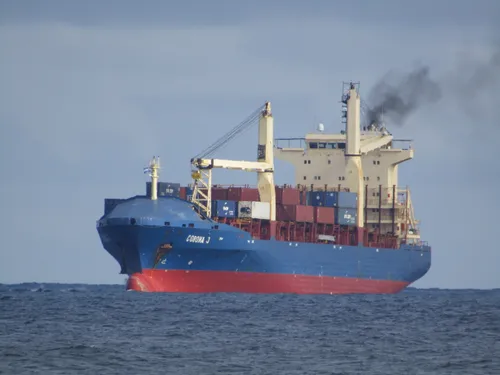
Two cargo ships sink after projectile attacks near Strait of Hormuz.
Two cargo vessels, the Singapore‑flagged container ship *GFS Pride* and the Antigua and Barbuda‑flagged dry bulk carrier *Cape Dao*, sank after both were s
Country profile
Background
Known as Persia until 1935, Iran became an Islamic republic in 1979 after the ruling monarchy was overthrown and Shah Mohammad Reza PAHLAVI was forced into exile. Conservative clerical forces led by Ayatollah Ruhollah KHOMEINI established a theocratic system of government with ultimate political authority vested in a religious scholar known as the Supreme Leader, who is accountable only to the Assembly of Experts -- an elected 88-member body of clerics. US-Iran relations became strained when Iranian students seized the US Embassy in Tehran in November 1979 and held embassy personnel hostage until mid-January 1981. The US cut off diplomatic relations with Iran in April 1980. From 1980 to…
Location
Middle East, bordering the Gulf of Oman, the Persian Gulf, and the Caspian Sea, between Iraq and Pakistan
Climate
mostly arid or semiarid, subtropical along Caspian coast
Terrain
rugged, mountainous rim; high, central basin with deserts, mountains; small, discontinuous plains along both coasts
Natural resources
petroleum, natural gas, coal, chromium, copper, iron ore, lead, manganese, zinc, sulfur
Ethnic groups
Persian, Azeri, Kurd, Lur, Baloch, Arab, Turkmen, and Turkic tribes
Religions
Muslim (official) 98.5%, Christian 0.7%, Baha'i 0.3%, agnostic 0.3%, other (includes Zoroastrian, Jewish, Hindu) 0.2% (2020 est.)
Government
theocratic republic
Economy
traditionally state-controlled economy but reforming state-owned financial entities; strong oil/gas, agricultural, and service sectors; recent massive inflation due to exchange rate depreciation, international sanctions, and investor uncertainty; increasing poverty
Iran · Travel guide
Understand
People Humans have inhabited the area that makes up modern Iran since the Stone Age. There are paintings in Dusheh cave that date back to 15,000 BC. The ancient Persians arrived about 1500 BC, one branch of the great movement of people that also brought northern India and most of Europe their modern populations. The name Iran is from the same root as "Aryan" which, until Hitler perverted it, was just an ancient name for those arriving peoples. Persian (natively known as Farsi) is an Indo-European language; ancient Persian was related to Sanskrit, ancient Greek, and all the others in that family. Persians are ethnically and linguistically unrelated to their neighbours on the west, the Arabs and Turks, but are related to various groups to the east and north. Iran has many people other than ethnic Persians; there are substantial minorities with their own languages, Minorities with Indo-European languages related to Persian include Kurds in parts of the west and northwest, Baluchis in parts of the southeast, and Armenians in the north and in Isfahan where one of the Shahs transported them a few centuries back. Minorities with Turkic languages include the Azeris who make up much of the population of Iranian Azerbaijan in the northwest and the Qashqai, a nomadic people in the region around Shiraz. There are also Arabs, who are mostly concentrated Khuzestan province, Assyrians and, last but not least, Jews, who have been living in Iran peacefully for centuries. Despite being a minority, Iran's Azeri population is larger than that of independent Azerbaijan. There are also two substantial communities of people of Iranian descent in India and Pakistan - Parsis who have been there for over 1,000 years, and Iranis who arrived in the 19th and 20th centuries - both Zoroastrians who
See
Ancient cities
Hegmatane (or Ekbatana) - The capital of the ancient Medes. In modern-day Hamedan. Persepolis - Probably the most important historical site in Iran. The capital of the Achaemenid (Persian) Empire built by Darius. Near Shiraz. Pasargad (or P
Getting there
Dual citizens of Iran and a second country may only enter Iran on their Iranian passport, as the country does not normally recognize dual citizenships. Your bags probably will not be searched for salacious material, but if any is found, it will be confiscated and will complicate your arrival. Don't try to bring in any magazines or books that might offend strict Islamic sensibilities or criticise the government.
Visa-free entry Citizens of the following countries do not need a visa to visit Iran provided their stay does not exceed a certain number of days:
90 days: Armenia, Oman, Syria, Turkey 45 days: Georgia 30 days: Bolivia, Lebanon, Iraq 21 days: China (mainland), Hong Kong, Macau 20 days: Egypt 15 days: Malaysia, Venezuela 14 days: Azerbaijan, Kazakhstan In addition, citizens of Bahrain, Belarus, Bosnia and Herzegovina, Brazil, Brunei, Cambodia, Croatia, Cuba, India (for entry by air only), Indonesia, Japan, Kuwait, Kyrgyzstan, Mauritania, Mauritius, Mexico, Peru, Qatar, Saudi Arabia, Serbia, Seychelles, Singapore, Tanzania, Tunisia, the United Arab Emirates, Uzbekistan, Vietnam and Zimbabwe may visit Iran without a visa for up to 15 days, but are limited to a maximum of one visit every six months. Citizens of Russia may visit Iran without a visa for up to 15 days provided they join an approved group tour, with a minimum group size of 5, and a maximum group size of 50. Everyone else needs to apply for a visa from an Iranian diplomatic mission.
Visa
Normally, all tourist visas issued by Iranian consulates have a "3-month" validity. The visa allows you to stay in Iran for up to 30 days (sometimes you can get the tourist visa up to 90 days), although the duration of your visa is at the discretion of the MFA. All tourist visas will be issued as a single entry, u
Getting around
Iranian transport is of high quality, and is very affordable. There are few places the very cheap buses don't travel to, the train network is limited but comfortable and reasonably priced and travel by air is not expensive. The ticket prices are always fixed and you don't have benefits of early bookings. However, train stations and bus terminals are often located on the outskirts of their cities. As an extreme example, Shiraz Station is located farther away from the city center than Shiraz International Airport. Since city transport is notably underdeveloped, the cost of an intercity trip could mostly consist of taxi fares.
By plane
For anyone on a tight deadline, affordable domestic air services are a blessing. The major national carrier Iran Air, and its semi-private competitors such as Iran Aseman Airlines - Aseman meaning "sky" in Persian, Mahan Air and Kish Air link Tehran with most regional capitals and offer inter-regional flights for no more than US$60. Their services are frequent, reliable and are definitely worth considering to skip the large distances within Iran. Planes may be old as American sanctions have restricted the airlines' ability to renew fleets, and maintenance and safety procedures are sometimes well below western standards, but flying remains the safest way to get around Iran, given the huge death toll on the roads. Tickets can be bought at airports or travel agents dotted through the most major cities. Book early during the summer months of August and September since finding seats at short notice is virtually impossible. It is possible to pay extra to get onto a booked flight by bribing someone or paying them to take their seat on the plane. Some flights will auction off the last few seats to the highest bidder. For westerners, the conversi
Cities & destinations in Iran 74
World Heritage in Iran 6
Museums in Iran 6
National parks in Iran 6
Airports in Iran 60
Tallest buildings in Iran 11
Caves in Iran 12
Nature reserves in Iran 12
Ports in Iran 9
Railway stations in Iran 12
Hospitals in Iran 12
Hotels in Iran 12
Shopping malls in Iran 4
Aquariums in Iran 12
Stately homes & country houses in Iran 12
Churches in Iran 12
Gardens in Iran 12
City parks in Iran 12
Notable schools in Iran 12
Music venues in Iran 4
Arenas in Iran 5
Breweries in Iran 1
Cemeteries in Iran 12
Observatories in Iran 2
Ski resorts in Iran 9
Prisons in Iran 12
Mines in Iran 8
Amusement parks in Iran 4
Reservoirs in Iran 7
Zoos in Iran 2
Canals in Iran 6
Palaces in Iran 12
Botanical gardens in Iran 1
Squares & plazas in Iran 12
Monuments & memorials in Iran 12
Libraries in Iran 9
Forts & fortresses in Iran 4
Tunnels in Iran 9
Power stations in Iran 12
Glaciers in Iran 1
Archaeological sites in Iran 12
Monasteries in Iran 5
Synagogues in Iran 12
Hindu temples in Iran 1
Mosques in Iran 12
Cathedrals in Iran 4
Tallest towers in Iran 12
Tallest dams in Iran 12
Explore Iran by category
Country fields from Wikidata (CC0); flag via Wikimedia Commons; profile from the CIA World Factbook (public domain); travel guide from Wikivoyage (CC BY-SA); GDP, GDP per capita and life expectancy from World Bank Open Data (CC BY 4.0).