

Brazil
Capital: Brasília · Americas
Brazil is the largest and most populous country in South America, and a leading voice of the 'Global South'. Occupying nearly half the continent, with over 200 million people, it holds the Amazon rainforest — the 'lungs of the Earth' — giving it huge weight in global ecology and climate. Abundant farm and mineral resources make it a major exporter, and it is a member of the BRICS grouping. From Rio's carnival and football fervour to its fused ethnic cultures, Brazil radiates a distinct vitality, and is a key window onto Latin America and the emerging economies.
Brazil in world rankings
- 6th largest by population in the world (of 219)
- 5th largest by area in the world (of 219)
- 10th largest economy (GDP) in the world (of 178)
- 74th highest GDP per capita in the world (of 178)
- Capital
- Brasília
- Population
- 213,421,037
- Area
- 8,515,767 km²
- Currency
- Brazilian real
- GDP
- $2.28T
- GDP per capita
- $10,713
- Life expectancy
- 76.0 yrs
- Urban population
- 88%
- Calling code
- +55
- Internet users
- 84%
- Forest cover
- 59%
- Languages
- Portuguese
Brazil compared with Taiwan
How Brazil measures up against Taiwan — home to 23.3 million people across 36,193 km².
Countries bordering Brazil


Latest news — Brazil
More news →Brazil Records Lowest Amazon Deforestation Since 1988, 5,796 km² Declared
Brazil’s environment minister, João Paulo Capobianco, announced on 30 September 2026 that the Amazon rainforest suffered 5,796 km² of deforestation in the

Armed Intruders Shot Dead After Seizing Thirteen Hostages at Brazilian School
A tragic standoff at an educational facility in Curitiba, in the southern Brazilian state of Paraná, ended late yesterday after tactical police units inter
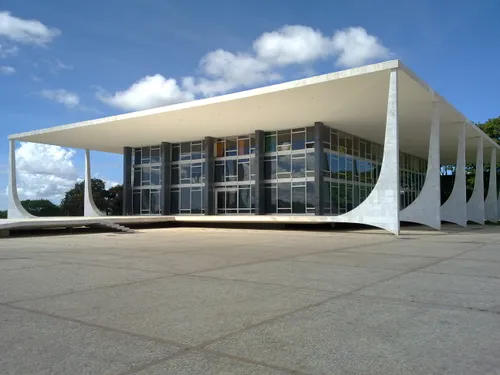
Brazil Supreme Court Issues Arrest Warrant for Eduardo Bolsonaro Over US Lobbying
The Supreme Federal Court of Brazil has issued an arrest warrant for Eduardo Bolsonaro, escalating a high-stakes legal and political confrontation surround
Nigerian Air Force Transport Aircraft Crash in Ondo State Kills 25
A Nigerian Air Force ATR 42-500 transport aircraft has crashed in Ondo State, southwestern Nigeria, resulting in the deaths of all 25 people on board. Emer
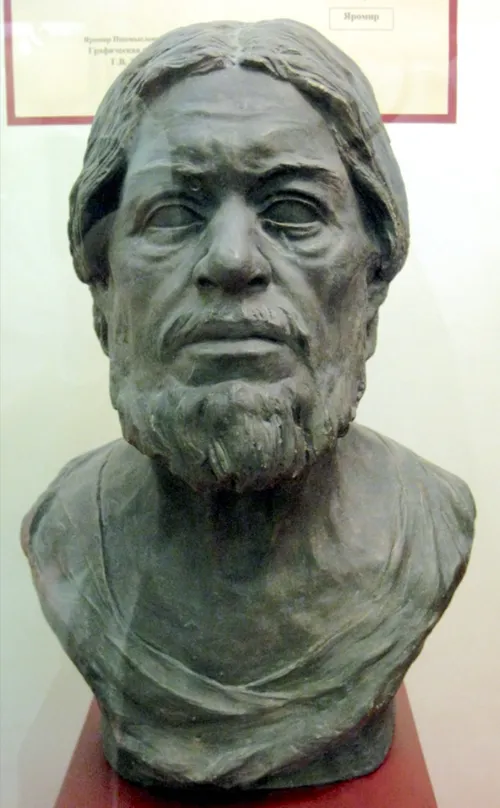
Medieval Bulgarian Tsar Samuil's remains repatriated from Greece after decades.
The remains of Tsar Samuil, one of the most prominent rulers of the medieval First Bulgarian Empire, have been repatriated to Bulgaria after decades of del
Brazilians Vote in High-Stakes General Election Testing Deep Political Polarization
Brazilians headed to the polls on Sunday to cast their ballots in a high-stakes general election, deciding the composition of the executive and legislative
Country profile
Background
After more than three centuries under Portuguese rule, Brazil gained its independence in 1822, maintaining a monarchical system of government until the abolition of slavery in 1888 and the subsequent proclamation of a republic by the military in 1889. Brazilian coffee exporters politically dominated the country until populist leader Getúlio VARGAS rose to power in 1930. VARGAS governed through various versions of democratic and authoritarian regimes from 1930 to 1945. Democratic rule returned in 1945 -- including a democratically elected VARGAS administration from 1951 to 1954 -- and lasted until 1964, when the military overthrew President João GOULART. The military regime censored…
Location
Eastern South America, bordering the Atlantic Ocean
Climate
mostly tropical, but temperate in south
Terrain
mostly flat to rolling lowlands in north; some plains, hills, mountains, and narrow coastal belt
Natural resources
alumina, bauxite, beryllium, gold, iron ore, manganese, nickel, niobium, phosphates, platinum, tantalum, tin, rare earth elements, uranium, petroleum, hydropower, timber
Ethnic groups
mixed 45.3%, White 43.5%, Black 10.2%, Indigenous 0.6%, Asian 0.4% (2022 est.)
Religions
Roman Catholic 56.8%, Evangelical 26.9%, none 9.3%, other 4%, Spirtism (Espírita) 1.8%, unspecified 1.4%, Umbanda and Candomblé 1.1%, Indigenous religions .06%, undeclared 0.2% (2022)
Government
federal presidential republic
Economy
upper-middle-income, largest Latin American economy; Mercosur, BRICS, G20 member and OECD accession candidate; growth driven by strong domestic consumption; monetary tightening helping curb inflation rate; high inequality in income and access to health and education
Brazil · Travel guide
Understand
Brazil is the largest country in South America. The country has a soul of history and culture and includes nightlife, scenic beauty, white sandy beaches, inland waterways and lush green forests that are among the largest in the world.
History Before Columbus arrived in the Americas, the area now known as Brazil was home to people mainly of the Tupi and Guarani ethnic groups. Colonization by the Portuguese began late in the 16th century, with the extraction of valuable wood from the pau brasil tree, from which the country draws its name. Brazil was colonized and developed by the Portuguese and not the Spanish, who claimed most of the rest of the Americas. Eastern Brazil was a waypoint on the Cape Route between Europe and Asia. Some parts of Brazil formed a Dutch colony between 1630 and 1654. The Dutch founded several cities, such as Mauritsville, and many sugar cane plantations. The Dutch fought a grim jungle war with the Portuguese, and without the support of their homeland due to a war with England, the Dutch surrendered to the Portuguese, though they did not officially recognize Portuguese rule, which led to an all-out war with Portugal off the coast of Portugal in 1656. In 1665 the Peace Treaty of The Hague was signed, Portugal lost most of its Asian colonies and had to pay 63 tons of gold to compensate the Dutch Republic for the loss of its colony. The following four centuries saw continued exploitation of the country's natural resources such as gold and rubber, alongside the rise of an economy based largely on sugar, coffee and African slave labor. Christianizing and exploitation of natives continued, and the 19th and 20th centuries saw a second wave of immigration, mainly Portuguese, Italian, Spanish, German (in southern Brazil), Japanese, American (in São Paul
Getting there
Visa requirements
Brazil has a reciprocal visa policy with many countries, meaning that when visa fees and restrictions are applied to Brazilian visiting a country, Brazil generally adopts the same measures for that country's visitors.
Citizens from Argentina, Bolivia, Chile, Colombia, Ecuador, Paraguay, Peru, Uruguay and Venezuela may enter the country with a valid ID card and stay up to 90 days. No visa is required for stays of up to 90 days from holders of passports counting from all countries marked in green on the map except the following: all European Union member countries (90 days within a 180-day period except for Croatia; Finland; France; Ireland; Poland; Portugal; Romania; Slovakia; and Spain), Albania (90 days within a 180-day period), Dominica (90 days within a 180-day period), Georgia (90 days within a 180-day period), Indonesia (30 days), Kazakhstan (30 days), Montenegro (90 days within a 180-day period), North Macedonia (90 days within a 180-day period), Seychelles (90 days within a 180-day period), Singapore (30 days), Ukraine (90 days within a 180-day period), Venezuela (60 days) and the United Kingdom. The immigration officer has the right to restrict your visa to less than 90 days, if they deem fit. (This has been done routinely for lone male travellers arriving in Fortaleza; allegedly to combat prostitution tourism.) The officer will then state the number of days (e.g. 60 or 30) in pen writing inside the stamp just given in your passport; if not, it remains as 90 days.
Citizens from all other countries do require a visa. The fees vary depending on reciprocity: Cost of Brazil visa for citizens of Taiwan or Taiwanese passport holder pay US$20 (Reference from Embassy of Brazil in Lima; Peru) and 5 days to process. Citizens from the United States
Getting around
Travelling between major cities in Brazil can take a lot of time.
By plane
Air service covers most of Brazil. Many flights make many stops en route, particularly in hubs such as São Paulo, Rio de Janeiro or Brasilia. Some airports with regular passenger traffic are still operated by state-owned company Infraero, although many international airports already had their operation privatized. There are now several Brazilian booking engines that are good (although not perfect) for comparing flights and prices between different companies. They will mostly include an extra fee, hence it is cheaper to book on the airline's own site. The Brazilian airline scene changes surprisingly often. The largest Brazilian carriers are the flag carrier LATAM Airlines and low-cost airlines Gol and Azul. These airlines have flights that serve all capitals and major cities in the country. Azul's subsidiary Azul Conecta and VoePass offer short-haul flights to smaller regional airports throughout the country. There are also regional carriers. Many domestic flights have so many stops that some, including yours, may be missing from the listings in the airports. Double check your flight number and confirm with ground staff. Certain domestic flights in Brazil are "international", meaning that the flight has arrived from abroad and is continuing without clearing all passengers through customs and immigration. This me
Cities & destinations in Brazil 324
World Heritage in Brazil 6
Museums in Brazil 6
National parks in Brazil 6
Airports in Brazil 60
Tallest buildings in Brazil 12
Caves in Brazil 12
Nature reserves in Brazil 12
Ports in Brazil 12
Railway stations in Brazil 12
Hospitals in Brazil 12
Hotels in Brazil 12
Shopping malls in Brazil 12
Aquariums in Brazil 12
Stately homes & country houses in Brazil 8
Churches in Brazil 12
Gardens in Brazil 9
City parks in Brazil 12
Notable schools in Brazil 10
Music venues in Brazil 12
Arenas in Brazil 12
Town halls in Brazil 3
Casinos in Brazil 1
Racecourses in Brazil 12
Breweries in Brazil 4
Cemeteries in Brazil 12
Observatories in Brazil 7
Prisons in Brazil 10
Mines in Brazil 12
Amusement parks in Brazil 10
Reservoirs in Brazil 8
Zoos in Brazil 7
Canals in Brazil 2
Palaces in Brazil 12
Botanical gardens in Brazil 7
Squares & plazas in Brazil 12
Monuments & memorials in Brazil 12
Libraries in Brazil 12
Forts & fortresses in Brazil 12
Power stations in Brazil 12
Archaeological sites in Brazil 12
Monasteries in Brazil 12
Synagogues in Brazil 5
Mosques in Brazil 3
Cathedrals in Brazil 12
Tallest towers in Brazil 7
Tallest dams in Brazil 12
Explore Brazil by category
Country fields from Wikidata (CC0); flag via Wikimedia Commons; profile from the CIA World Factbook (public domain); travel guide from Wikivoyage (CC BY-SA); GDP, GDP per capita and life expectancy from World Bank Open Data (CC BY 4.0).