

Venezuela
Capital: Caracas · Americas
Venezuela is an oil nation of South America, holding the world's largest reserves yet mired in crisis. In northern South America, with about 28 million people, it has the largest proven oil reserves on Earth, yet economic collapse and political turmoil have caused hyperinflation and mass emigration. From Caribbean coasts to the Andes, its natural resources are abundant. Its fall from wealthy oil producer to economic crisis is a stark lesson in the 'resource curse' and governance failure. Venezuela's situation shapes Latin America's political map and regional stability, drawing constant international attention.
Venezuela in world rankings
- 48th largest by population in the world (of 219)
- 34th largest by area in the world (of 219)
- 73rd largest economy (GDP) in the world (of 178)
- 125th highest GDP per capita in the world (of 178)
- Capital
- Caracas
- Population
- 31,250,306
- Area
- 912,050 km²
- Currency
- sovereign bolivar
- GDP
- $99.7B
- GDP per capita
- $3,495
- Life expectancy
- 72.7 yrs
- Urban population
- 89%
- Calling code
- +58
- Internet users
- 77%
- Forest cover
- 52%
- Languages
- Venezuelan Sign Language, Spanish
Venezuela compared with Taiwan
How Venezuela measures up against Taiwan — home to 23.3 million people across 36,193 km².
Countries bordering Venezuela


Latest news — Venezuela
More news →Venezuelan Authorities Release At Least 29 Political Prisoners Following Talks with Opposition
CARACAS — Venezuelan authorities have released at least 29 individuals classified by human rights organizations as political prisoners, following the concl
US and Venezuelan Leaders Meet at UN Following 2026 Military Intervention
United States President Donald Trump and Venezuelan Interim President Delcy Rodríguez met on the sidelines of the United Nations General Assembly in New Yo
Venezuela Restores Access to Seventeen Blocked News Websites Amid Political Talks
In a significant development for regional media freedom, Venezuela’s interim government and opposition factions have restored access to 17 prominent news w
Peru joins Shield Americas Alliance to fight transnational drug smuggling
On September 11 2024, President Kiyoko Fujiwara of Peru announced in Lima that the country would formally join the U.S.-led Shield America Alliance to coun
US, Venezuela Sign 20‑Year Oil Partnership, Granting Limited Sanctions Relief
On Monday, the United States and Venezuela announced a new agreement that will expand U.S. access to Venezuelan oil reserves under a private‑investment fra
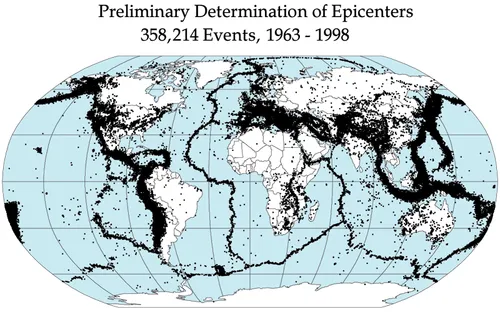
Venezuela quake death toll climbs to 6,509 after June 7.0 mainshock.
The death toll from the series of powerful quakes that rocked Venezuela in early June has risen to 6,509, the highest figure reported by the country’s civi
Country profile
Background
Venezuela was one of three countries that emerged from the collapse of Gran Colombia in 1830, the others being Ecuador and New Granada (Colombia). For most of the first half of the 20th century, military strongmen ruled Venezuela and promoted the oil industry while allowing some social reforms. Democratically elected governments largely held sway until 1999, but Hugo CHAVEZ, who was president from 1999 to 2013, exercised authoritarian control over other branches of government. This trend continued in 2018 when Nicolas MADURO claimed the presidency for his second term in an election boycotted by most opposition parties and widely viewed as fraudulent. The legislative elections in 2020…
Location
Northern South America, bordering the Caribbean Sea and the North Atlantic Ocean, between Colombia and Guyana
Climate
tropical; hot, humid; more moderate in highlands
Terrain
Andes Mountains and Maracaibo Lowlands in northwest; central plains (llanos); Guiana Highlands in southeast
Natural resources
petroleum, natural gas, iron ore, gold, bauxite, other minerals, hydropower, diamonds
Ethnic groups
unspecified Spanish, Italian, Portuguese, Arab, German, African, Indigenous
Religions
Roman Catholic 48.1%, Protestant 31.6% (Evangelical 31.4%, Adventist 0.2%), Jehovah's Witness 1.4%, African American/umbanda 0.7%, other 0.1%, believer 3.5%, agnostic 0.1%, atheist, 0.4%, none 13.6%, unspecified 0.6%…
Government
federal presidential republic
Economy
South American economy; ongoing hyperinflation since mid-2010s; chaotic economy due to political corruption, infrastructure cuts, and human rights abuses; in debt default; oil exporter; hydropower consumer; rising Chinese relations
Venezuela · Travel guide
Understand
Venezuela is home to the world's highest waterfall, Angel Falls and the second longest river in South America, the Orinoco. It also has the longest coastline to the Caribbean sea. Venezuela is the world's fifth-largest oil exporter and also has vast untapped reserves of natural gas. Ecologically, Venezuela is considered among the 20 Megadiverse countries of the planet; more than 40% of its national territory is covered by protected areas. Although geologically diverse, the effects of climate change have gravely affected Venezuela's ecodiversity. May 2024 marked the date of when the country became the first Andean country and one of the first in the modern world to lose all of its glaciers.
Terrain Andes Mountains and Maracaibo Lowlands in the northwest; central plains (llanos); Guiana Highlands in the southeast. Nueva Esparta islands in the northeast
highest point Pico Bolivar (La Columna) 5,007 m.
History Venezuela was inhabited by Pre-Columbian peoples when it was claimed as a possession of the Spanish Empire by Christopher Columbus during his third voyage in 1498. Venezuela was one of the three countries that emerged from the collapse of Gran Colombia in 1830 (the others being Colombia and Ecuador). For most of the first half of the 20th century, Venezuela was ruled by military strongmen and the country was largely underdeveloped, depending mainly on agriculture.
Venezuela in the 20th century During World War I, large, massive, and plentiful oil and gas reserves were discovered in Lake Maracaibo. This proved to be pivotal for the country — standards of living markedly improved, the country became more industrialised, the country received a great deal of immigrants from all over the world, and it enjoyed an economic boom that lasted well over several decade
See
Angel Falls in the Guiana Highlands and Canaima National Park Los Roques with its crystalline beaches. Los Llanos and its spectacular wildlife. Mérida and its breathtaking Andes scenery. Caracas, the true urban jungle.
Buy
Money
The country has been ongoing record breaking inflation and hyperinflation for more than 20 years, while
Getting there
Visa requirements Citizens of the following countries may not require a visa to visit Venezuela for tourist purposes only for up to 90 days (a tourist-card will be issued instead): Andorra, Antigua & Barbuda, Argentina, Australia, Austria, Barbados, Belgium, Belize, Brazil, Bulgaria, Canada, Chile, Costa Rica, Denmark, Dominica, Estonia, Finland, France, Germany, Greece, Grenada, Hong Kong, Iceland, Iran (max. 15 days), Ireland, Italy, Jamaica, Japan, South Korea, Latvia, Lithuania, Liechtenstein, Luxembourg, Malaysia, Mexico, Monaco, Netherlands, Netherlands Antilles, Nevis, New Zealand, Norway, Paraguay, Poland, Portugal, Russia, San Marino, Spain, St. Kitts, St. Lucia, St. Vincent & The Grenadines, Sweden, Switzerland, Taiwan, Trinidad & Tobago, United Kingdom, and Uruguay. Business travelers almost invariably require a visa to be issued before entry. In Caracas, passengers pass through immigration in the arrivals hall before going to baggage claim. Officers will check your passport and may ask questions. If a customs officer or anyone asks about your purpose of visit, tell them you are only there to visit, tourism. At baggage claim you will be required to match the baggage sticker on your flight ticket to the bar code on your bag before you hand over your tax form to customs officials. There will be many individuals who approach you after your arrival offering assistance with locating a taxi or trading currency. It is best to not interact with anyone who approaches you. Even airport officials with proper identification may attempt to lead you to other areas of the airport to trade currency on the black market. When taking a taxi from the airport, always settle on a price before getting into the cab, and only use taxis that have the official yellow oval seal.
Getting around
General Travelers in Venezuela are obliged to carry identification. There are military checkpoints on many roads, so while traveling by car or bus keep your passport handy, ideally you should keep a color photocopy of your passport. Should your passport be stolen, this will facilitate procedures with your local consulate. The military presence is constant, yet is not usually cause for concern. That having been said, there are corrupt officials. It is wise to keep a close eye on your belongings when, for instance, bags are being checked for drugs. A soldier of the Guardia Nacional (National Guard) sometimes plants drugs to solicit a bribe or steal valuables. Penalties for drug use are severe, and the burden of proof falls on the accused, the police may also demand bribes using the same modus operandi. There is only one rather short intercity rail line in Venezuela, which leaves three options for travel inside the country: car rental, using buses, and using cars-for-hire. Drivers in Venezuela are generally aggressive and unconcerned by traffic regulations. The traffic in Venezuela is very bad, the drivers are aggressive and all drivers want to be the first. Thus, car rental is not recommended in general. The very cheap fuel prices make this option fairly economical. The expensive part of renting a car will be the insurance. Fuel prices as of Aug 2018 remained fixed at 1 BsF per litre, which meant that a million Imperial gallons (4; 500; 000 L) was worth about US$1 at black-market currency exchange rates. The Venezuelan government is looking to eliminate these generous subsidies, but any change to the status quo will incur strong political backlash. Do not underestimate the sheer chaos of Venezuela's traffic. The often ignored road rules state that you must drive on the ri
Cities & destinations in Venezuela 48
World Heritage in Venezuela 3
Museums in Venezuela 6
National parks in Venezuela 6
Airports in Venezuela 60
Tallest buildings in Venezuela 4
Caves in Venezuela 5
Nature reserves in Venezuela 12
Ports in Venezuela 2
Railway stations in Venezuela 12
Hospitals in Venezuela 1
Hotels in Venezuela 4
Shopping malls in Venezuela 4
Aquariums in Venezuela 5
Churches in Venezuela 12
Gardens in Venezuela 3
City parks in Venezuela 12
Notable schools in Venezuela 3
Music venues in Venezuela 7
Racecourses in Venezuela 3
Breweries in Venezuela 2
Cemeteries in Venezuela 3
Observatories in Venezuela 1
Prisons in Venezuela 6
Mines in Venezuela 3
Amusement parks in Venezuela 1
Reservoirs in Venezuela 2
Zoos in Venezuela 3
Palaces in Venezuela 1
Botanical gardens in Venezuela 4
Squares & plazas in Venezuela 3
Monuments & memorials in Venezuela 5
Libraries in Venezuela 4
Forts & fortresses in Venezuela 4
Tunnels in Venezuela 2
Power stations in Venezuela 4
Glaciers in Venezuela 1
Archaeological sites in Venezuela 2
Monasteries in Venezuela 1
Synagogues in Venezuela 2
Mosques in Venezuela 2
Cathedrals in Venezuela 12
Tallest towers in Venezuela 1
Tallest dams in Venezuela 5
Explore Venezuela by category
Country fields from Wikidata (CC0); flag via Wikimedia Commons; profile from the CIA World Factbook (public domain); travel guide from Wikivoyage (CC BY-SA); GDP, GDP per capita and life expectancy from World Bank Open Data (CC BY 4.0).