
Via Pontica
Itinerary
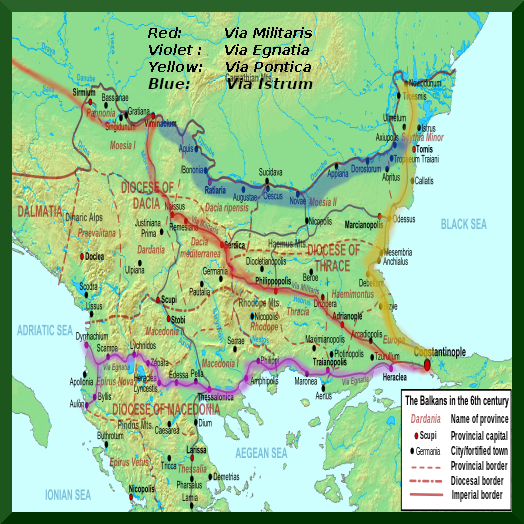
The Via Pontica was an ancient Roman road link on the western shore of the Black Sea (ancient Greek Pontos Euxeinos) and led from Byzantium (Istanbul) to the Danube Delta. It connected Byzantium via the Danube (Via Istrum) and Via Militaris with Rome.
Understand
Today, the Via Pontica is from a touristic point of view a part of a Balkan roundtrip, if you start for example from Belgrade, take the Danube or Via Istrum and then take the Via Pontica towards Istanbul and follow the Via Egnatia or Via Militaris for the return journey. On this tour, culture, nature and beach holiday can be well combined and is ideal for motorhome drivers. The Via Pontica passes by the best and most famous beaches and seaside resorts of Bulgaria and Romania (Black Sea). Today, a north-south migration route of migratory birds along the ancient road also bears the name Via Pontica.
Get around
Because of the many border crossings, it is important to inform yourself in advance about customs and traffic regulations when traveling with your own vehicle. A few basic knowledge of the Cyrillic script facilitates much on the ground, as not all signs are also available in Latin script, especially off the main roads.
Car or RV: It is recommended to drive this tour with your own car. Because of the many border crossings, it is very problematic with a rental car, as few companies allow border crossings. Bus or train: You can take the train bus to the larger towns and drive from there with a rental car to the outlying attractions and nature parks. Intercity buses connect all major towns in Bulgaria and also drive along the coast.
See
Turkey
The path goes along the coast past many beautiful seaside resorts. There are few visible relics of Roman times on this route because most have been replaced by new buildings and there is low esteem of the Greek-Roman antiquarians in Turkey anyway.
1 Istanbul (Constantinople). Byzantium was the starting or ending point of the route via the Via Pontica to Rome. Istanbul is one of the most interesting cities in Europe and you should plan several days for the visit. (updated Nov 2019) 2 Rumelifeneri (Thimea). Right on the mouth of the Bosphorus into the Black Sea, the village has remarkable ruins of a fortress, a lighthouse (after which the modern village is named) and wonderful views of the Bosphorus. According to the ancient Greek myths, this place happens to be the site of the Symplegades, "the Clashing Rocks", a pair of rocks which constantly change place, and crashing and crushing any ship unlucky enough to strive passing through in the process. According to the myth, Jason and the Argonauts became the first sailors managing to pass through into the Black Sea during their pursuit of the Golden Fleece. The steep rocky islet just off the village, now firmly secured to the mainland by the harbour jetty, is often thought to be the European one of the duo. (updated Nov 2019) 3 Kumköy (Kilios, Kilyos). A small quiet seaside resort. It has good bathing facilities and became popular as a tourist destination in the 2010s among the inhabitants of Istanbul. In the village is a Genoese castle from the 14th century, which was restored at the time of the Ottoman Sultan Mahmud II. However, it is not publicly available because it is in the military zone. (updated Nov 2019) 4 Karaburun (Philea). Seaside resort with many good beaches, but no real sights. (updated Nov 2019) 5 Yalıköy (Podima). Approximately 8 km east of the village, near the beach of Evcik Plajı you can still see remnants of the Anastasius Wall, which served to protect the capital Constantinople. It stretched from the Marmara Sea to the Black Sea, although only bits in the northern parts resemble anything in its original construct. Yalıköy itself is a nice seaside resort without other attractions. (upd
Stay safe
see corresponding country article: Turkey, Bulgaria, Romania.
Go next
Just off the route of Via Pontica are some very well-known sights or nature reserves.
Turkey 1 Yoros Castle. Yoros Castle is a Byzantine castle ruin at the confluence of the Bosphorus and Black Sea north of Joshua's hill. It is also commonly referred to as the Genoese castle, since Genoa had it in the mid-15th century (updated Nov 2019) 2 Çilingoz Nature Park. The region was declared a nature reserve in 2005 because of its rich flora and fauna. The nature park is a combination of beach, forest, lake and reeds. (updated Nov 2019) 3 İğneada Swamp National Park. The landscape is mainly covered by oak forests, the typical flora of Yıldız mountains. It is home to one of the few remaining large alluvial forests in Europe, home to many different species of birds. (updated Nov 2019)
Bulgaria 4 Strandzha Nature Park. 5 Mishkova niva. The Sanctuary is part of a large Thracian complex consisting of a fortress on top of the Golyamo Gradishte peak, mines in the foothills, a hill necropolis, fortified buildings and remnants of dwellings. The remains of a large, round Thracian fortress are located on the highest point of the Bulgarian Strandzha Mountains - the Golyamo Gradishte peak (710 m above sea level), next to the Mishkova Niva area. 6 Beglik Tash. Beglik Tash is a prehistoric rock sanctuary and was reused by the Thracian tribes in the Iron Age. Most megaliths have traces of rock carvings for Thracian rituals. Remains of a labyrinth through which visitors can walk, and a Thracian sundial consisting of huge stones, a 150-tonne rock that rests on the ground in only two places, and a "uterine cavity" are other attractions. Every day at noon, a ray of sun enters the narrow entrance of the cave and radiates to the back of the cave and was considered the Thracians symbolic fertilization of the womb or the mother goddess by the solar phallus of the sun god. Beglik Tash is located near two other Thracian sites: the city of Ranuli and the Pharmakida Fort in the Strandhza Mountains. About 3 km away is the rock formation Lion head, which resembles a lion's head. The lion's head is best seen from the Ropotamo River. It is a place where the Thracians had their fortress called
Adapted from Wikivoyage (CC BY-SA)