
Stockholm labour tour
Itinerary
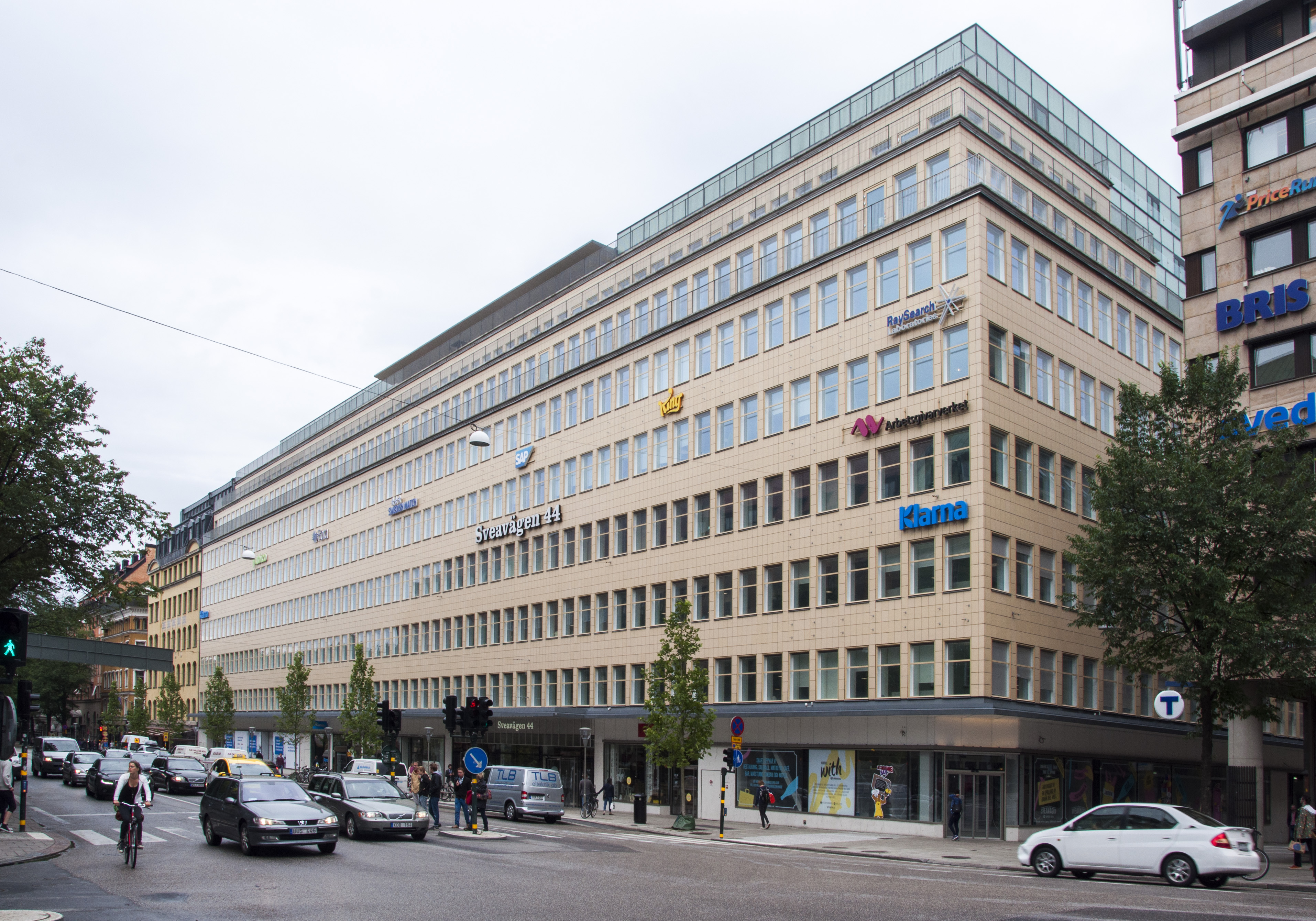
Stockholm, being the capital of Sweden, has been the birthplace of the Swedish labour movement, including Landsorganisationen (LO) and the Social Democratic Party.
Understand
See Stockholm history tour part 3–5 for Stockholm's modern history. From the early 19th century, Sweden had a constitutional government with gradually expanding civil rights and vote franchise, with male farmers holding much of the vote, while women and labourers (including many white-collar workers) could not vote. Still, government and business leaders saw the labour unions with suspicion. While Sweden stayed neutral through World War I, both the arms race before the war, and the war itself (and its food shortages) created a political crisis in Sweden; violent revolts were avoided, as the king's power was limited, and suffrage became near-universal in 1921. Since then, the Social Democrats have been in government for most of the time, with a notable streak from 1932 to 1976 (with a grand coalition during World War II; see Stockholm military tour for details around Stockholm during the war). As of the 21st century, the party has lost their dominant role, but has remained the largest party in the Swedish parliament up to the 2020s. Union membership in Sweden remains high. Many workers' rights which are mandated by law in other countries (such as minimum wage) are in Sweden upheld through collective bargaining. Strikes and other labour conflicts have been few since the 1938 Saltsjöbaden agreement.
Destinations
1 Stockholm's northern rail station. Stockholm's main freight station opened here in 1866, just before the central station and the connection across lake Mälaren were finished in 1871. The preserved brick station building was finished in 1893, and is today used as an office building. Sweden has had an extensive mining industry in the Bergslagen district since the Middle Ages, but the country as a whole did not industrialize until the late 19th century, with the Norrbotten Megasystem as a notable example of a metallurgic supply chain from the Arctic to southern Sweden. Stockholm, being a port city between the Baltic Sea and lake Mälaren, was a centre of manufacturing up to the mid-20th century. Since then, the rise of the service sector and increased property costs have caused most industries to relocate to other cities, with industrial buildings torn down or repurposed. Many factories remain in cities such as Södertälje, Västerås and Gothenburg. 2 Norra bantorget. From 1902 to 1940, this square was the gathering place for May Day protests. The park has several monuments for politicians and activists; August Palm, Anna Sterk, Hjalmar Branting, and Olof Palme. 3 August Palm statue. August Palm (1849–1922) known as Mäster Palm, was a tailor and one of the founders of the Social Democratic movement. He had studied socialism during his journeyman years in Denmark and Germany, and in 1881 he wrote Sweden's first social democratic manifesto. 4 Anna Sterky statue. Born in Copenhagen, Denmark in 1856, Anna Sterky was a tailor, and a pioneer for women's trade unions. She chaired several organization, including the Social Democratic Women's League. She died in Stockholm in 1939. The statue was erected in 1988. 5 LO-borgen. Designed by Ferdinand Boberg (see Stockholm environmentalist tour for more ofh his architecture) and finished in 1899, this national romantic castle-like building was initially used for the Royal Science Academy's Nobel committées and libraries. LO purchased the building in 1926 for use as their headquarters. 6 Norra Latin. A secondary school opened in 1880, built in neo-Renaissance style. It was a boy school, which became co-educational in 1961. Fr
Go next
Stockholm environmentalist tour, for the green movement, which has been cooperating and at odds with the Social Democrats and the unions 1 Grand Hotel Saltsjöbaden (Stockholm archipelago, Sweden). A Grand Old Hotel, remembered in Swedish history for the 1938 Saltsjöbaden Agreement, Saltsjöbadsavtalet, an agreement between employers and unions to ensure peace on the labour market. Since that year, most workplaces in Sweden have had collective bargains, and strikes have been few and far between.
Adapted from Wikivoyage (CC BY-SA)