
Vallbona de les Monges
Spain · Europe
About Vallbona de les Monges
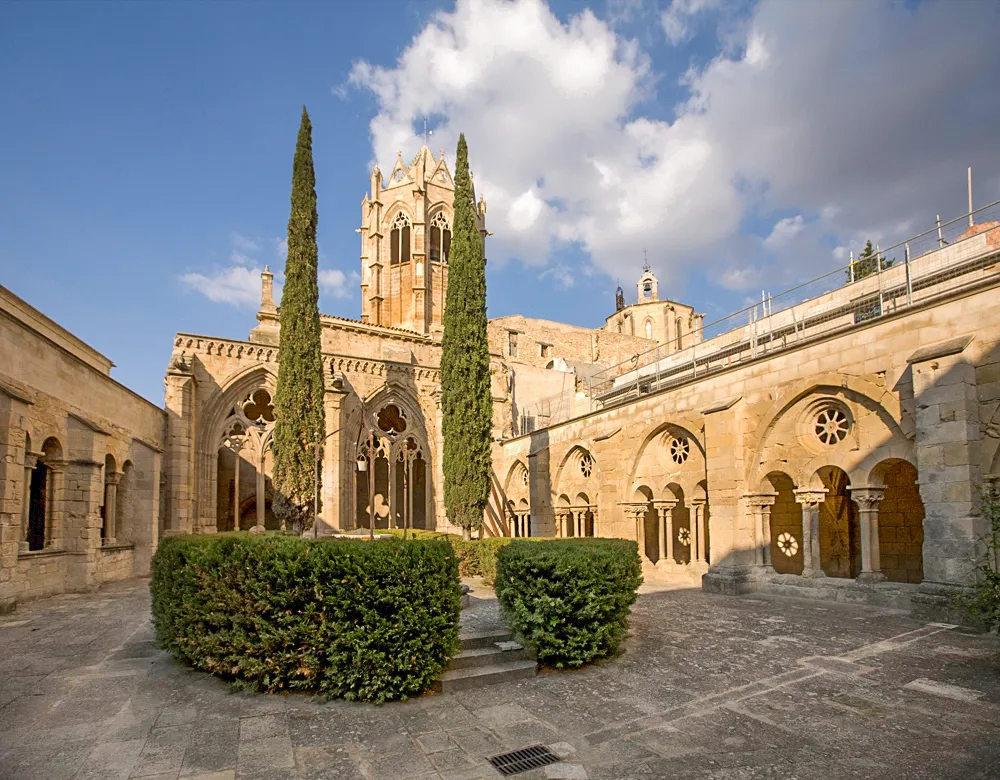
Vallbona de les Monges is in Lleida (province). In the town there is the most important female cistercenc monastery in Catalonia: Santa Maria de Vallbona, and together with the Monestir of Poblet and the Monestir of Santes Creus they make up the Cistercian Route. Also is a stage in the Catalan Way of St. James
Vallbona de les Monges travel guide
Understand
Vallbona de les Monges is in the south of the Urgell county, about 25 km from the capital, Tàrrega, in one of the valleys between the Serra del Tallat and the Vall del Corb, just at the provincial limit of the Terres de Lleida and the Camp de Tarragona. Dry stone huts, cereal fields, vineyards, almond tree and olive tree fields predominate the landscape. The founder of the town of Vallbona de les Monges was an abbess of the monastery, Estefania de Piquer who, in order to avoid the agreements of the Council of Trent which stipulated that female monasteries could not be located in uninhabited places or outside the walls, made a donation of the lands and buildings around the monastery. In this way the town was born and the first mayor was appointed in 1573.
Tourist office 1 Tourist office (Oficina de turisme), C. Prat de la Riba, 6, ☏ +34 973 982 500, [email protected]. (updated Jan 2026)
Getting there
By bus
By car From Barcelona is 140 km (87 mi) away. Follow direction Lleida by B-23, AP-7, AP-2 motorway exit Montblanc↗️ then C-14 direction Tàrrega and LP-2353 From Tarragona is 60 km (37 mi) away. Follow direction Lleida by A-27 then C-14 direction Tàrrega and LP-2353 From Lleida is 53 km (33 mi) away. Follow direction Barcelona by A-2 until Bellpuig and then LP-2015, LV-2014 and LP-2353.
By foot, horse riding or bicycle GR-175 Ruta del Cister: route that links together the three Cistercian monasteries of Santes Creus, Poblet and Vallbona.
Getting around
Small enough to walk.
Parking 1 Parking municipal carrer Muralla. Free. (updated Dec 2025) 2 Parking municipal Piscines. (updated Dec 2025) 3 Motorhome area (Àrea autocaravanes Vallbona de les Monges). Max 48h, (updated Dec 2025)
See
1 Nuns Monastery of Santa Maria de Vallbona (Santa Maria de Vallbona de les Monges), C/Major s/n, ☏ +34 973 33 02 66, [email protected]. There are guided visits, but only in Catalan and Spanish. Check hours in the web, as times vary according Nuns requirements. €8. (updated Dec 2025) History: is a 12th‑century Cistercian convent that evolved from an earlier mixed community of hermits following the Benedictine rule. Around 1153, the charismatic hermit Ramon de Vallbona gathered anchorites in the valley, laying the foundations of a cenobitic settlement later endowed with lands by Ramon Berenguer IV, count of Barcelona, in 1163. By 1175 the male hermits had departed and a stable community of nuns chose full incorporation into the Cistercian Order, receiving their first abbess, Oria Ramírez of Tulebras, the following year. Royal favour from Alfonso II and later kings of the Crown of Aragon turned Vallbona into the most important female Cistercian house in Catalonia and a spiritual and cultural centre linked to the great Cistercian axis of Poblet and Santes Creus. Between the 12th and 14th centuries the community built the church, cloister and conventual buildings, combining Romanesque and Gothic forms that still define its architecture. Despite later crises and reforms, including those prompted by the Council of Trent, the monastery has remained continuously inhabited by nuns for more than 850 years, preserving its liturgical and contemplative tradition into the present. The church is a 12th- to 13th-century Cistercian temple with a Latin cross ground plan, a single nave covered by pointed barrel vaulting and a transept that supports an elegant octagonal dome. Its architecture fuses late Romanesque solidity with early Gothic verticality, visible in the ribbed vaults and slender windows of the polygonal apse. A restrained sculptural program, with capitals and portals decorated by vegetal motifs, reflects Cistercian ideals of simplicity and sobriety. Light, fil
Do
Events Festival of the Pigota: Last Saturday of January Sant Isidre: May 15 Vallbonatura Fair: in May Cultural and Leisure days: 1st fortnight of August Festa Major in honor of the patron saints Sant Cosme and Sant Damià: 3rd weekend of September
Buy
1 agrobotiga, Prat de la Riba, 3, ☏ +34 973 330 260. shop with local products: olive oil, local wine, honey,... (updated Jan 2026)
Eat
1 Restaurant Cister de Vallbona, Carrer de Prat de la Riba, 8, ☏ +34 676 559 539, [email protected]. from €18. (updated Jan 2026)
Sleep
L’Hostatgeria del Monestir, ☏ +34 618 876 004, [email protected]. The hostel is equipped with a lift and consists of 20 single or double rooms, a chapel,2 rooms,the Sant Bernat Shelter for groups of young people (24 places). (updated Dec 2025)
Go next
Royal Monastery of Santa Maria de Poblet in Poblet Natural Park. It is a UNESCO World Heritage Site and one of the most significant Cistercian monasteries in Europe. It's part of "Cister route". Santes Creus monastery ("Holy crosses monastery"), which is part of Cister Route. Valls Known by the Castells (human towers) and the Calçotada food. Montblanc, A 12th-century city, still surrounded by walls, with a nice centre and interesting Jewish quarter. It's also a gateway to the Cistercian Route and the scenic Prades Mountains. It hosts the annual Medieval Week in April.
Overview adapted from Wikipedia, travel guide fromWikivoyage (CC BY-SA). Photography via Wikimedia Commons.