
Q25409
Slovakia · Europe
About Q25409
Košice is the second largest city in Slovakia, with a population of almost 240,000 (in 2021). It was the European Capital of Culture in 2013. Despite its relative remoteness, you may likely find Košice a hidden, unknown and approachable gem when seeking for a lesson in less known European history, lively arts scene or for a less spiritual entertainment thanks to its vibrant party scene.
Q25409 travel guide
Understand
Košice has had a colourful history with its ever changing medieval and modern rulers of Hungarians, these days hardly imaginable Turks for a while, Czechs and nowadays Slovaks. Serving its part as a centre of what may best be described as a frontier of Slovak hill country, Hungarian lowlands and Ukrainian/Russian/Soviet East, it has become a predominantly Slovak city in what was then Czechoslovakia after its emergence in chaos of reconciliations after the First World War. Until these days the city is inhabited by descendants of east Slovak dwellers with many relations in the gorgeous rural surroundings of the city who were flocking to the town during its industrial boom after the World War II and a large Hungarian-speaking minority along with its fast growing and often resented population of Roma. This is the second largest city in Slovakia with a population of 230,000 (2024), and is the capital of Košice Self-governing Region. It is not often visited from elsewhere. This may however help in engaging with many residents who are often pleased that foreigners visit their city. The city prides on being known as "The City of Peace" thanks to non-violent ethnic and national tolerance throughout its history. Visitors can get a view into the history of a lesser known corner of Europe, and at the same journey enjoy a lively art scene and nightlife. Most travelers will find 24 hours in Košice is plenty.
Orientation Košice sits in a basin, above 200 m above sea level, where the Hungarian plains meet the Carpathian mountains. A few suburbs have been built on the mountainsides, though not much higher than the rest of the city. Towards the south, along the Hornád river the plains open up; but unlike what one might expect of a city and a river, it passes through the suburbs of Košice rather than going right through the core. A landmark south of the city is a massive steel plant, the U.S. Steel Košice, employing over 10,000 people. Speaking of the core of the city, it's centere
Getting there
By plane
Košice International Airport
1 Košice International Airport (KSC IATA), ☏ +421 55 683 2182, [email protected]. The city is served by a small passenger airport, and you can fly to Košice from a handful of destinations in Central Europe and the British Isles. The airport is 6 km south of central Košice. Take bus 23: it connects the airport with the city centre.
Other airports As the number of destinations from Košice airport is limited, a minibus service is organized to the main regional airports, in particular to Budapest and Vienna. Such minibuses aren't the only way in from these cities, see By bus and By train for more options, and you can also fly to Bratislava (not that many destinations either) or Krakow.
2 Cassoviaexpres, Mlynská 27, ☏ +421 915 115 555, [email protected]. M-F 00:00-21:00. Budapest – Košice 4 times a day, Vienna – Košice 3 times a day. Arrival and departure from Košice are from the McDonald's parking lot next to the indoor city swimming pool, opposite to Aupark Shopping Center. €39 to Budapest, €69 to Vienna. 3 Izijet, Bottova, ☏ +421 945 454 548, [email protected]. Budapest – Košice 6 times a day. Arrival and departure from Košice is from Bottova Street. Internet reservation required. €39. Otherwise, Flixbus offers routes to Budapest and Vienna airports, though services are irregular and tickets sell-out fast.
By train
4 Košice Railway Station (Železničná stanica), Staničné námestie 11. Košice train station is a 10-minute walk from the city centre and is the terminus for many bus and tram lines. It is one of the most advanced railway stations in Slovakia. Area of 30,000 ft2 provides many shops, cafes, restaurants and supermarket. (updated Sep 2024) Many trains run between Bratislava and Košice. Several connections from Prague are operated daily by night and day trains, which takes about 8 hours. There are anywhere between 4 and 8 daily trains to Budapest, which takes 3 hours 30 minutes, though delays are not un
Getting around
Košice has a small and compact city centre, and is mostly navigable by foot. If you are staying in the suburbs, the tram system is cheap and efficient. With good bus and tram connections around the whole city, transport is very easy to handle. You can get practically anywhere by public transport and all the main sights of the city are within walking distance.
By public transport Public transport is operated by DPMK. English information on their website is limited, the route planner is more informative. Services usually run from 5:00 in the morning to 23:00 in the evening, with a few bus services running during the night.
Ticketing Tickets for public transport can be bought in various ways. For foreign travelers, probably the most convenient is using one of the available apps. The web page/app mhdke.sk is pretty nice, as you don't have to install anything. Other forms of tickets include sales points listed below, vending machines (at some stops), newsstands, from drivers or as SMS (if you have a Slovak SIM card). They should be validated in a machine in the vehicle the first time you're using it, then you can travel and transfer as long as the ticket type is valid. Some ticket prices for adults are (as of Aug 2024): €1 for a 30-minute ticket, €1.20 for a 60-minute ticket, €3.80 for a 24-hour ticket and €12 for a 7-day ticket. Tickets for night buses costs more, and buying tickets from the driver also costs more. In addition to paper tickets there are electronic ticket cards similar to ones on public transit systems elsewhere the world. They can be bought from the sales points, are loaded with electronic money and are used for buying (slight discount compared to paper tickets) and simultaneously validating tickets in the validating machines.
3 Customer service and sales point (Zákaznícke centrum), Bardejovská 6 (in front of the tram depot). (updated Mar 2018) 4 Sales point, Rooseveltova č. 3. (updated Mar 2018) 5 Sales point, Nám. Osloboditeľov (small blue k
See
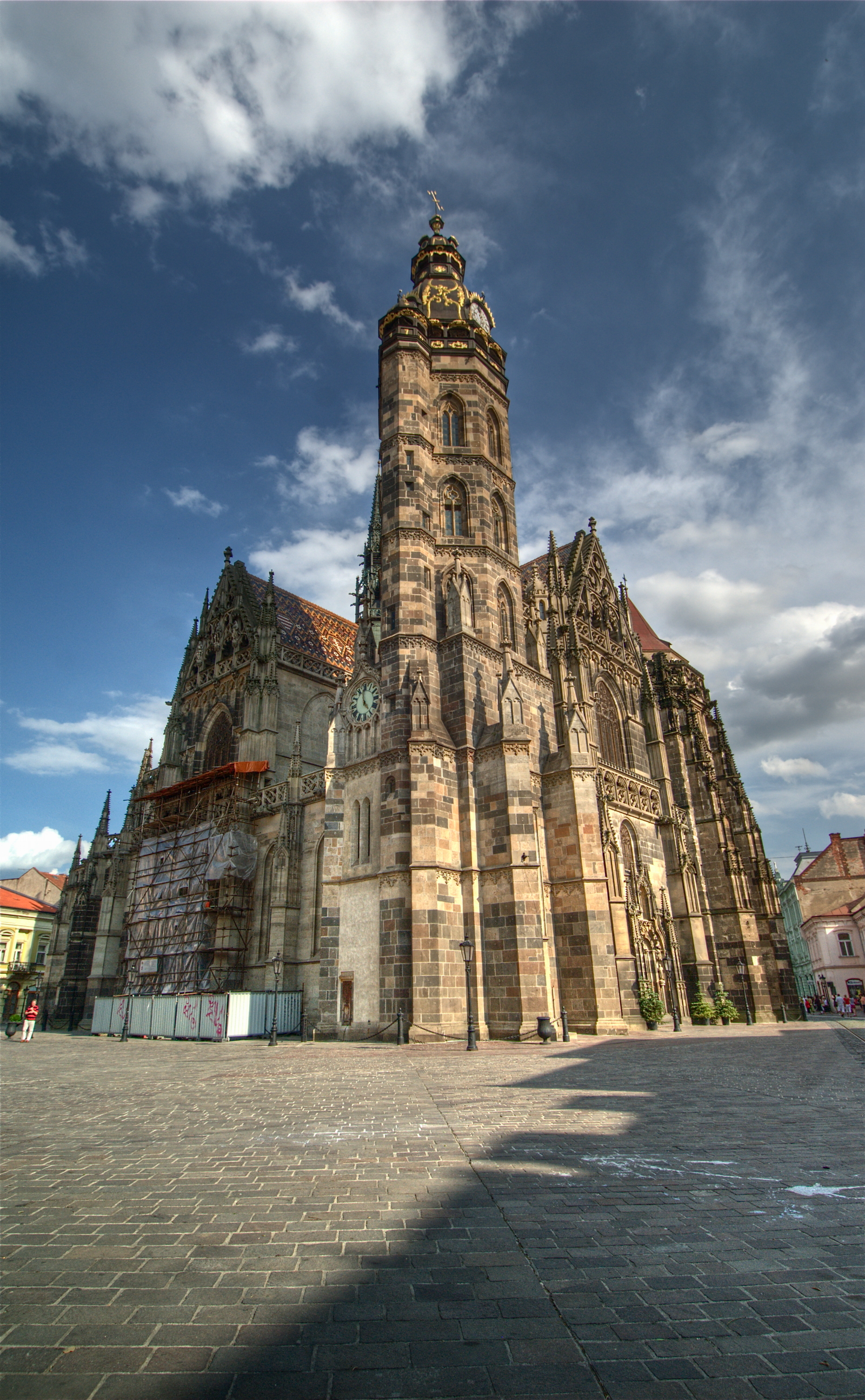
Most of Košice's attractions are along the main pedestrianized street, known as Hlavná ulica (Main Street), Námestie Maratónu mieru (Peace Marathon Square, the north end of Hlavna), and Námestie osloboditeľov (Square of the liberators, at the southern end of Hlavna) at various parts. With its unique atmosphere Hlavná ulica creates the heart of the town. In the past, it used to be a medieval square and the whole town started to grow from this point. Now this place is flat, however in the past it used to be hilly and even a stream flew there. The "Čermeľský potok" (The Tshermel stream) used to create an island on the main street, where the Saint Elizabeth cathedral is located now. Due to developing infrastructure, this stream was filled in in 1899 and was renewed only symbolically during the renovation of the main street in the 1990s. Today, all the traffic from the main street is excluded, therefore it is a very pleasant pedestrian site. Except the Saint Elizabeth Cathedral, you will
Overview adapted from Wikipedia, travel guide fromWikivoyage (CC BY-SA)。Photography via Wikimedia Commons.