
Makarska
Croatia · Europe
About Makarska
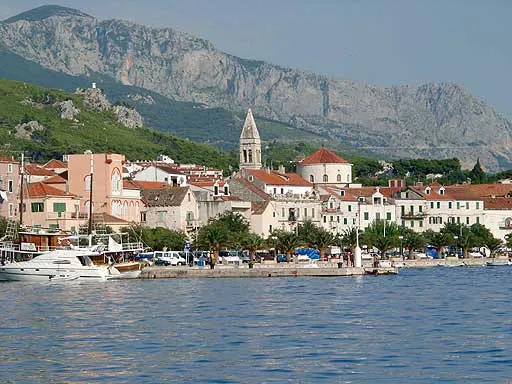
Makarska is the main city and resort of the Makarska Riviera in Split-Dalmatia, between Split and Dubrovnik on the Adriatic coast of Croatia. It's backed by the rugged Biokovo mountains, a national park, and looks out across a channel to Brač island. It's a popular destination for package tours, with plenty of accommodation, eating places and beach activities.
Makarska travel guide
Understand
The Makarska Riviera is a 66-km coastal strip of small towns, villages and beaches along coastal Highway 8 from Brela on the northwest end, through Baška Voda, Bratuš, Krvavica and Makarska itself, continuing southeast through Tučepi, Podgora, Igrane, Mala Duba, Drvenik, Zaostrog, Podaca, Brist and to end in the southeast at Gradac. These all have some accommodation but are much smaller and with fewer permanent inhabitants. Makarska town (with a population of 13; 834 in 2011) has most of its facilities along the traffic-free beach strip Šetalište Dr Franje Tuđmana. Hotels may give their address as Ul Kralja Petra Krešimira IV but this is just a service road one block back where coaches and laundry trucks unload; a further block back is the through-street and bus station. The strip runs to the peninsula of Sveti Petar where it joins the Old Town clustered around the harbour.
Getting there
By plane The nearest airport is Split (SPU IATA), 85 km north (and 25 km beyond the city of Split). In summer this has frequent package flights from north Europe and most visitors to the Makarska Riviera arrive this way. To the south is Dubrovnik (DBV IATA) with even more seasonal flights. It's 160 km south via the Pelješac Bridge, opened in 2022. You could also follow the old highway via Neum in Bosnia and Herzegovina, but rental firms charge extra for taking the car out of Croatia, and apply that charge to every day of the hire even though you only make the ten minute transit there and back.
By bus Promet buses run every 30-60 min between Makarska and Split taking 90 min to two hours, fare €7.50. They run along the coastal Highway 8 via Baška Voda, Bratuš, Brela, Marušići and Omiš. A few services then hairpin up the side of the river gorge to pass through Tugare but most stay on the coast to reach Split via Stobreč. There are four buses a day from Dubrovnik (3-4 hours via Neum) which continue north to Split then variously to Šibenik, Zadar and Zagreb. Makarska 1 bus station is central on Ul. Ante Starčevića at the junction with Ul. Stjepana Radića. There's a ticket office and a couple of little cafes and kiosks, and a shopping centre adjacent.
By boat The Jadrolinija ferry sails between 2 Makarska harbour and Sumartin on Brač island, taking an hour; 4 or 5 sailings a day so a day-trip is simple. Single fare adult €2, car €20. Public transport from Sumartin is very limited so either take your own transport or have it teed up for your arrival. The ferry has limited capacity and is not a ro-ro but a ro-three-point-turno.
Getting around
Walk, but the beach strip is 4 km long, with electric scooters weaving past. With children you might take the road train that toot-toots along the strip every 20-30 min. Bus: Croatia Bus runs south from Makarska every 30-60 min through Tučepi to Podgora, taking 30 min. To go further down the Riviera (e.g. to Igrane; Drvenik and Gradac) you have to take the infrequent buses for Dubrovnik and/or Metković, see "Get in". For the Riviera villages north of Makarska, use the Promet bus for Split as above. Taxi: there's no single large taxi company, but many small operators with a couple of cars apiece.
See
The Old Town is small but well-preserved, stretching back from the harbour through alleys and piazzas, especially pleasant at dusk. The main church of Sv Marka (Co-Cathedral of St Mark) has a baroque interior. Municipal Museum on the quayside has a small but interesting display. It's open M-F 07:00-15:00, Sa 09:00-12:00; €1. Malacological Museum is the grand name for this collection of seashells, usually open 10:00-13:00 and 17:00-19:00. Worth looking in for the venue, an old Franciscan monastery south end of the centre. 1 Sveti Petar (St Peter) is a small island that (like many other islets along the Dalmatia coast) has become joined to the mainland by infill, so it's now an anvil-shaped peninsula separating the harbour from the main beach. It's a bosky park with a stubby lighthouse at its west end and an old church. The south shore is popular with nudists so you might also see some stubby pale zucchini. 2 Osejava Park is the coastal ridge stretching south from the harbour all the way to Tucepi. There are quiet paths (a bit rough for cycling), woodland, and little beaches. Wild camping is not recommended, as there are bugs and spiky vegetation. 3 Vepric or "Lourdes Makarska" is a woodland grotto with shrine. It's 2 km north of town off Highway 8, helpfully signposted "No entry except Driving School vehicles" in Croat. The mountains rearing up behind Makarska comprise Biokovo Nature Park, stretching 36 km along the coast and 9 km inland. It's a huge landscape of limestone karst crags, cliffs and ravines but the most accessible part is the village of 4 Kotišina. This has an old church and the scrappy remains of a castle built into the cliffs, but its main attraction is the Botanical Garden, a protected habitat rather than a formally-laid out garden. Get further into the park via the lane that begins near 5 Šimići on Highway 512. The park toll booth is here: €7 for one day, €13.50 for 3 days or €33.50 for 7 days. The lane zigzags up to Vrata, whence the south fork des
Do
Water activities such as parasailing, jet skiing and motor boat hire: lots of operators along the beach strip. Wibit is a water obstacle course on inflatable rafts. The beach is just a narrow strip of shingle; no tides as this is part of the Med. Scuba dive with More, Kresimira IV 43 (opposite Dalmacija Hotel), ☏ +385 98 173 99 26, [email protected]. They go out daily at 09:00 for two-tank dives, returning 13:00-ish. PADI courses available. €81.50 for two-tank dive & equipment, cash only. (updated Sep 2019) The other local diving operation is Butterfly based in Tucepi 5 km south. Hiking: the mountains behind town have several hiking trails, scenic and seldom crowded. Don't leave the trails as pitfalls abound. The snakes are mostly innocuous but don't mess with the horned / sand viper (Vipera ammodytes). Rock-climbing: lots of cliffs just behind town, varying grades of difficulty. Rafting and kayaking along Cetina River, a 30-min drive from Makarska. It's mostly calm, but there are a few fast stretches and one hazardous section. Several tour agencies in town offer guided trips down the river. They'll point out the cave where Tito's Partisans hid from the Nazis during World War II.
Events Battle of Makarska or Mucules in 887 AD was when the local pirates of Neretva bested the Venetians, who thereafter had to pay protection money for their ships to pass. It's enthusiastically re-enacted each year on 18 Sep, starting at dusk around 19:30 on the harbour pier. Cutlasses, brass bands, camp sailorettes doing pop routines, wizz-bangs and flares, war-canoes mobbing a diesel-powered schooner, tricorn hats from a Captain Morgan advert, and wide-screen display, all contribute to the authenticity and glorious victory. Autumn Jazz Festival is held late Sep - mid-Oct.
Buy
Money: Many places don't take credit cards. There are lots of sm
Overview adapted from Wikipedia, travel guide fromWikivoyage (CC BY-SA). Photography via Wikimedia Commons.