
Galicia
Spain · Europe
About Galicia
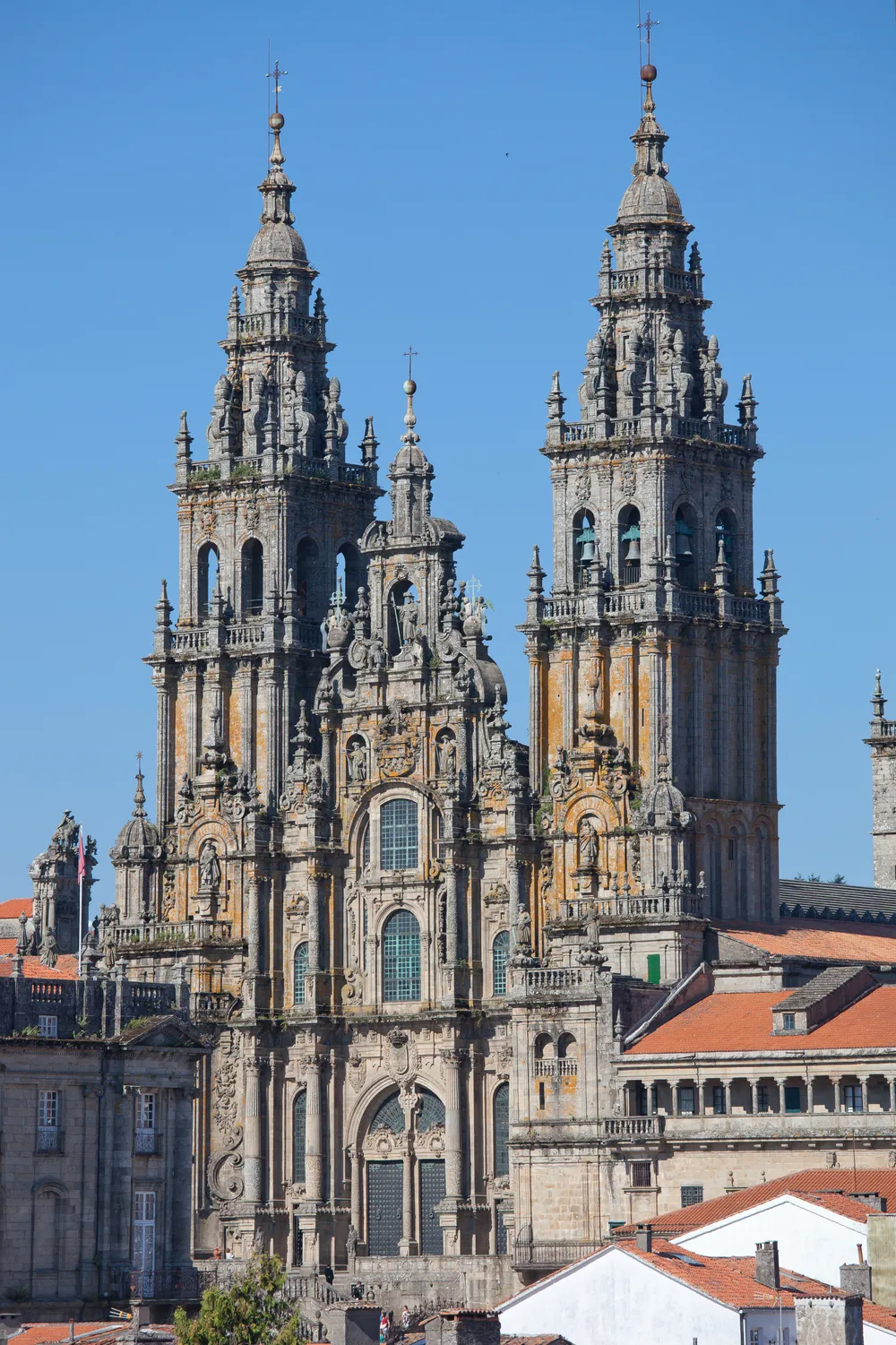
Galicia or Galiza is a region in the northwest corner of Spain, part of "Green Spain". It's bordered by Asturias to the northeast, Castile and León to the east, and the Minho region of Portugal to the south. Its chief city is the pilgrimage destination of Santiago de Compostela; its coast is riddled by rías, long inlets of the sea.
Galicia travel guide
Understand
Ancient Europe heaved and buckled and threw up mountains, tilting the northwest Iberian peninsula down into the growing Atlantic. About 8000 years ago came a marked rise in sea level as the last remnants of the Ice Age melted, and this flooded river valleys along the Galician coast. The result was a series of rías, broad sea channels probing inland. Rías Baixas (lower rivers) is the term for the four along the west coast: those of Vigo, Pontevedra, Arousa and Muros e Noia. (River Minho south on the border with Portugal geologically is not a ría.) Rías Altas are those facing the Bay of Biscay. Their shores were obvious places for human habitation, with fishing, channel crossing points, trading routes inland up the valleys, and oak forests on the slopes. Stone Age people were replaced by Celts around the dawn of the Iron Age, 1000 BC, who in turn came under the Roman Empire from 25 BC. But this far from Rome, and with not much worth looting, "Romanisation" here was weak and Celtic culture persisted. When Roman power ebbed in the 5th century AD, Galicia was settled by Germanic peoples pushed from further east - the Swabians then the Visigoths. The Umayyad Muslims occupied much of Spain in the 8th century but Galicia (like Asturias and Cantabria) was too far north. As Umayyad control was slowly pushed back, Christianity was the unifying crusade for the petty kingdoms of Spain that would otherwise fight each other. There was a spate of church building, and Santiago became a pilgrimage destination thanks to a fantastical (but lucrative) tale that the body of St James the Apostle had somehow wafted its way there.
In 1486 the kingdom of Galicia was annexed to Castile, which along with León, Rioja and Navarre grew into the nucleus of present-day Spain. Thus began 500 years of grousing about loss of autonomy. Galicia had fishing and some Atlantic commerce but lacked mineral wealth and never attracted much industry. Power and patronage drained away to Madrid, and the fabulo
Getting there
By plane Galicia is far enough out that it makes sense to fly here from elsewhere in Spain. Its three airports are Santiago de Compostela (SCQ IATA), A Coruña (LCG IATA) and Vigo (VGO IATA). Santiago de Compostela (aka Lavacolla) is the best connected, with budget flights from several European cities including London Stansted, Dublin, Frankfurt, Liverpool, Istanbul and Rome, plus domestic routes. A Coruña and Vigo have flights by Iberia from Madrid, and by Vueling from Barcelona.
By road From Madrid follow A-6 (toll) northwest. For towns in the south of Galicia branch off at Ponferrada onto N-120. For Santiago branch off at Lugo onto N-547. AP-9 (toll) runs north-south across Galicia from Ferrol to Santiago, Pontevedra, Vigo and Tui on the border with Portugal.
By train
Trains from Madrid Chamartin run every couple of hours, taking about 3 hr 30 min to Santiago, 4 hours to A Coruña or 4 hours to Vigo. A train from Porto runs twice a day to Vigo, where you change for Santiago. A metre-gauge train rattles along the north coast between Ferrol and Ribadeo on the eastern boundary.
Getting around
Trains and buses ply between the major towns. Many sights are at some distance from a public transport route, so you probably need to hire a car, best done at your arrival airport.
See
A total solar eclipse on Wednesday 12 Aug 2026 over the northeast of Galicia, starting at 20:27. For instance in A Coruña it lasts just over a minute, increasing to 90 sec at Ribadeo on the Asturias border. Santiago, Ourense and the west coast miss totality. The chances of a clear sky are only 45%, and you need to find a spot with a clear view to the northwest horizon, where the sun will be setting. North coast is best: hilltops are more likely to be socked in by cloud, and after the show you’d have to descend an unfamiliar hill trail in darkness. Old town centres: Santiago is the standout. Rugged coasts: Fisterra literally means "end of the world". Hórreos are the signature feature of Galicia and adjoining parts of Portugal: they're grain stores on stone stilts to keep out rats. Combarro has a huge example, you wouldn't want to meet the rat it was designed against. UNESCO World Network of Biosphere Reserves in Galicia are: Terras de Miño Área de Allariz Os Ancares Lucenses y Montes de Cervantes, Navya y Becerra Rio Eo, Oscos y Terras de Buron Geres/Xures Mariñas Coruñesas e Terras do Mandeo Ribeira Sacra e Serras do Oribio e Courel Biosphere Reserve
Do
Fiestas: the major Christian festivals are marked by church and secular processions and events. Entroido is the Galician version of Carnival or Mardi Gras, the party before the onset of Lent. Camino de Santiago is the collective name for the pilgrimage routes converging on Santiago de Compostela. Historically these began as far away as Germany or England, but fell out of use with the advent of Lutheranism and anti-clerical periods in France and Spain. They revived in the 20th century, and the best-preserved is the "French Way", 770 km from St Jean Pied de Port in the French Basque country. But the church nowadays rules that 100 km (taking 4-5 days) is enough to qualify you as a pilgrim. So if you draw a 100 km diameter circle around Santiago, all those towns are start points. Football: there are pro soccer teams in Vigo, Santiago, A Coruna and Ferrol.
Eat
Local specialties might make full meals, or be served as raciones or tapas:
Marisco meaning seafood includes mussels, "centollo" (spider crab), "nécoras" (crab) and "percebes" (barnacles). Almeixas a Mariñeira are clams prepared with wine, olive oil and "pimentón" - paprika. Empanada is something between a pizza and a meatcake. Fillings might be tuna, beef or octopus. Polbo á feira is octopus prepared with oil, salt and hot paprika. Caldo galego is the warming "poor man's stew" from Galicia. Bacallau ao alvariño is salted cod. Pimientos de Padrón are green chili peppers, picked early so that only a few in each batch are spicy. Eat them sautéed with salt. Raxo are stewed meat pieces, often of pork loin stewed with onions or red pepper or in cream. Desserts include churros (waffles), tarta de Santiago (an almond cake with the Galician Cross drawn on the icing) and filloas, crepes filled with sugar or custard cream.
Drink & nightlife
Wine: Galician wines are mostly crisp and white like Portuguese, for example Albariño, Ribeiro and Godello. But don't overlook the local reds. Aguardiente - literally "fire-water" - is the local version of grappa or marc, distilled from grape residue after the first pressing has been drained off to make wine. Take it neat or in mixes such as Licor Café. Queimada (meaning burnt) is aguardiente, coffee beans, lemon rinds, and sugar mixed then set on fire. Traditionally the host or bar-keeper recites a spell that wards off any evil spirits who happen to understand Galician, but it does nothing to prevent gastric concussion. Estrella Galicia is the local beer, brewed in A Coruña (tours available). Lots of other European brands available, including Gui
Overview adapted from Wikipedia, travel guide fromWikivoyage (CC BY-SA). Photography via Wikimedia Commons.