
Castile–La Mancha
Spain · Europe
About Castile–La Mancha
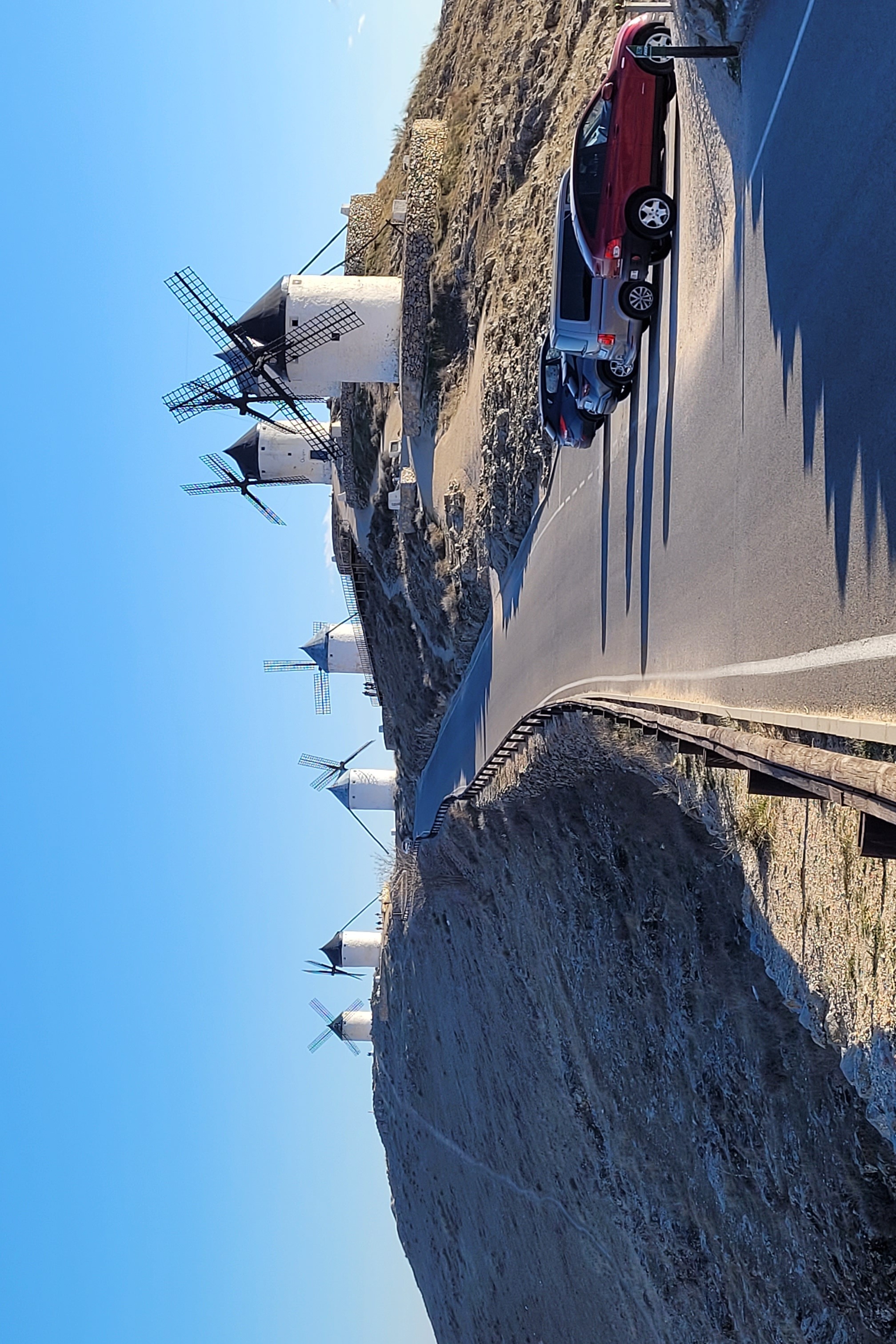
Castile-La Mancha or Castilla La Mancha is an arid region of central Spain where the fictional Don Quixote fought imaginary giants, that were in fact windmills. Those windmills can still be seen today. While it occupies the vast plain composing the southern part of the Meseta Central, the region has no shortage of mountain landscapes: the southern slopes of the Sistema Central in the north, the Sistema Ibérico in the northeast, and the Sierra Morena and Montes de Toledo in the south.
Castile–La Mancha travel guide
Understand
The dialect of Spanish is very similar to the Spanish spoken in Madrid.
Getting there
Albacete and Ciudad Real are the only two commercial airports in the region. However, as none of them has scheduled operations at the moment, other nearby airports are commonly used. Madrid is the main gateway into the region, while tourists heading to Albacete or surrounding areas can also use Valencia, Alicante or Murcia airports.
See
The town of Almadén has long traditions of mercury mining and has been inscribed in the UNESCO World Heritage List as Heritage of Mercury Almadén and Idrija. Old town of Toledo, a UNESCO World Heritage Site The old town of Cuenca and its old quarters, which have grown over centuries, have changed little. Many of their buildings are still used as they were before. There are monasteries that are still alive, churches, mansions and the town hall with its arcades. Also belongs to the world cultural heritage. The castle of Sigüenza The castle of Molina de Aragon The castle and city walls in Palazuelos The Guadalajara Cathedral The cave in La Riba de Saelices Visit the UNESCO World Network of Biosphere Reserves in Castile-La Mancha Mancha Húmeda Valle del Cabriel
Do
Since the 1960s boom, tourism to Spain is mainly directed towards sun, beach and party. While La Mancha is a landlocked region, it has some traditional summer resorts and other bathing areas, similarly to Costa Dulce in Orellana la Vieja, in nearby Badajoz, Extremadura. A good swim can be especially helpful during summer season, when temperatures can sometimes reach 40ºC.
Lagunas de Ruidera: is the main summer resort area in La Mancha, located along the provincial border of Ciudad Real and Albacete. A chain of lagoons of the Pinilla river (often called erroneously Guadiana Viejo or Old Guadiana) along a valley, surrounded by some beautiful vegetation, and often connected to each other by waterfalls. It is classified as a Natural Park (second tier in the Spanish park system). The main lagoons are located south of the N-430, the old Lisbon-Valencia road (largely replaced by the A-43, through a different route). However, the most exclusive and beach-like lagoon, Laguna Blanca, is located near the CR-640 road between Villahermosa and Ossa de Montiel (the road is also known as AB-610 in the Albacete province). Lagunas de Villafranca: a few generations ago, these lagoons on the Cigüela river were a bustling summer resort right in the middle of La Mancha. However, with the advent of automobiles and seaside tourist resorts, Manchegos started holidaying in those latter places, deserting Villafranca. One more reason for this change was the muddy floor of the lagoons. Río Bullaque: is one of the mightiest tributaries of the Guadiana in the area, coming from the Montes de Toledo mountains, between Cabañeros NP and Retuerta del Bullaque. Some of the best bathing areas along the river are located in El Torno and El Robledo. In the latter, there is a designated area known as "Zona de Baño". However, there is an additional less crowded area near Bar Pepe and the Healthcare Centre (Centro de Salud). Confluencia de Solanilla: this little-known spot is located on a side of road CR-50
Eat
The queso Manchego, the famous cheese of La Mancha, is made here from sheep's milk. Other traditional Castilian La Mancha specialties are Manchego and Valdepeñas wine, pisto, roast suckling lamb, Toledo marzipan, drunken sponge cakes, and Manchego gazpacho.
Overview adapted from Wikipedia, travel guide fromWikivoyage (CC BY-SA). Photography via Wikimedia Commons.