
Carpathians
Ukraine · Europe
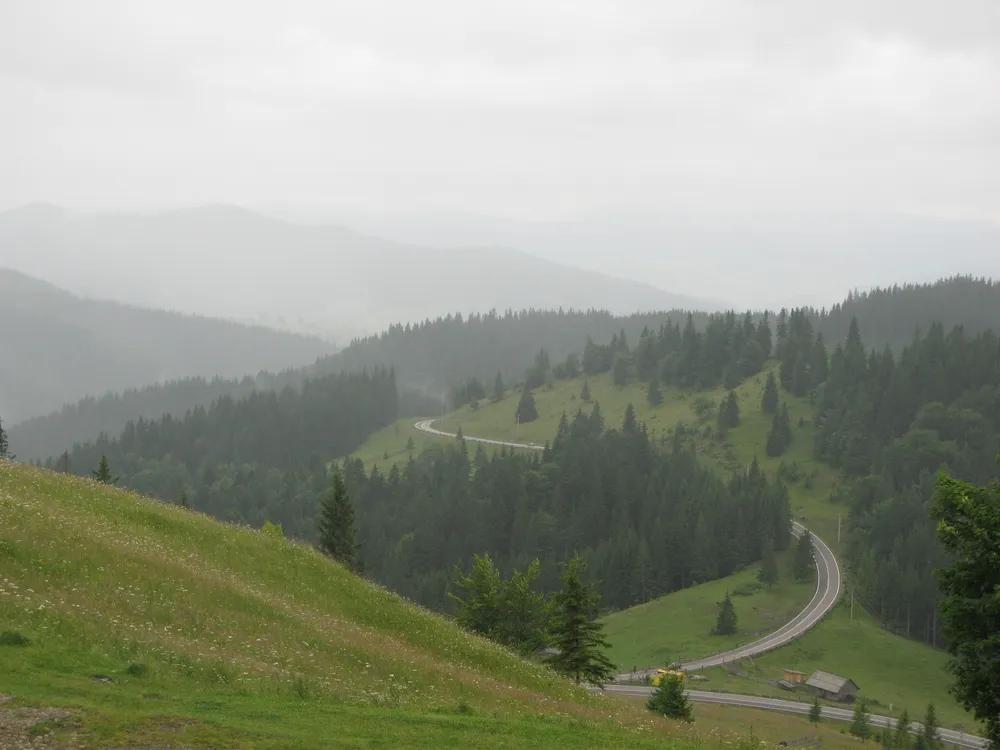
About Carpathians
The Carpathian Mountains are mountains in Central Europe stretching from the Czech Republic to Romania, with many constituent ranges.
There is no generally-agreed regional subdivision of the Carpathians - it depends whether your focus is national / provincial boundaries, geology / geography, habitats, or historic land use. As the focus of this page is travel, it groups them into regions that might be toured in a single extended trip via a major gateway city. It therefore pays more attention to boundaries that influence transport routes.
Carpathians travel guide
Getting there
See above for main airports and transport hubs - no single gateway covers this vast area.
Getting around
Public transport will get you to the main resort towns, eventually, but you need a car to properly explore. Towns often straggle along a valley with accommodation at some distance from the bus stop, and the trail heads and off-road bike routes are even further away. Fill the tank before leaving the valleys, as you'll probably do more mileage than you expected, much of it in low gear.
See
Several aspects of these regions are world heritage sites. Primeval beech forests: think of mountains and you tend to think of conifers, but the deciduous forest is just as important, especially when it's virgin forest with trees 100 years old, an irreplaceable habitat. The most extensive areas are in Ukraine with some in Slovakia; those in Romania are being rapidly lost to logging. Traditional wooden buildings: sometimes entire villages such as Chochołów on the Poland-Slovakia border, but more often dotted about amidst modern bungalows. Not surprisingly it's the churches ("tservkas") that have been best preserved of this style, mostly in Poland and Ukraine, the majority of them Orthodox with some Roman Catholic. Medieval fortified churches in Transylvania. This area came under attack in the 15th and 16th century, but instead of erecting castles, they fortified the churches with walls and lookout towers. The best examples are clustered around Medias north of Sibiu, eg at Biertan and Valea Viilor. Castles and entire fortified towns teeter on crags all over the region. Some are medieval, some are much later Austro-Hungarian mansions and hunting lodges prettified with Gothic turrets. Some are frankly tourist traps, but at least these have better toilets. The most ancient are the 1st century Dacian fortresses, built against Roman imperial ambitions, with the best examples in the Orastie Mountains near Deva in Romania at the southwest tip of the Carpathians. Wildlife: you will be exceptionally lucky to see wolves, but keep your eyes open. There are thousands of bears but how lucky you'll be to encounter one depends on whether the bear is pleased to see you. These are European brown bears (Ursus arctos) so they're seldom aggressive or pesky, but they don't like being surprised or cornered.
Do
Hiking, rock-climbing and mountaineering: opportunities all over the Carpathians. Local rules vary on camping, hunting and other backwoods activities. Skiing and snowboarding: the peaks are all at around 2000 m, which is low by Alpine standards. When the snow comes it can be heavy, but the season and the pistes are short and the resorts are far from being "snow-sure". So you're unlikely to plan a trip here specifically to ski, and western tour operators don't feature the Carpathians in their brochures. Locals however can throw their skis, bobble-hats and snow chains into the car and set off whenever conditions look good. The largest resort is Zakopane. Sing "A bear climbed over a mountain . . .", the endless song to the tune of "For he's a jolly good fellow . . ", as your car hairpins up each mountain pass and down the other side. You may well cross a national boundary, marked only by a signpost within the Schengen bloc of countries.
Eat
It's hearty Central European fare: goulash, pork, venison, dumplings, and endless varieties of sausage. Vegetarians may struggle in some of the smaller places but should be fine in the cosmopolitan resorts, where there's also Italian and even the occasional Chinese: see city listings.
Drink & nightlife
These are all beer-drinking areas. Slovakia and Romania grow lots of wine, Poland and Ukraine make lots of vodka. And there's always a local schnapps or slivovitz-type liqueur, better downed in one than allowed to linger on the palate - Sanatate, Na zdrowie, Prost!
Overview adapted from Wikipedia, travel guide fromWikivoyage (CC BY-SA). Photography via Wikimedia Commons.