

Sweden
Capital: Stockholm · Europe
Sweden is a Nordic model of innovation and welfare, known for its high quality of life and progressive values. On the Scandinavian Peninsula with about 10 million people, it gave the world brands like IKEA, Spotify and Volvo and remains strong in technology and industrial design. Comprehensive welfare, gender equality and environmental awareness keep Sweden among the world's most liveable countries. Long non-aligned, it has recently adjusted its defence posture amid a changing security landscape. Sweden's social model and innovative energy are a key example for understanding the Nordic path.
Sweden in world rankings
- 87th largest by population in the world (of 219)
- 58th largest by area in the world (of 219)
- 25th largest economy (GDP) in the world (of 178)
- 10th highest GDP per capita in the world (of 178)
- Capital
- Stockholm
- Population
- 10,609,460
- Area
- 447,425 km²
- Currency
- Swedish krona
- GDP
- $669.0B
- GDP per capita
- $63,133
- Life expectancy
- 84.1 yrs
- Urban population
- 89%
- Calling code
- +46
- Internet users
- 96%
- Forest cover
- 69%
- Languages
- Swedish
Sweden compared with Taiwan
How Sweden measures up against Taiwan — home to 23.3 million people across 36,193 km².
Countries bordering Sweden


Latest news — Sweden
More news →Swedish Parliament Rejects Magdalena Andersson's Bid to Return as Prime Minister
Sweden’s political landscape faced renewed uncertainty on Tuesday as the Riksdag, the nation’s unicameral parliament, voted against the appointment of Soci
Ukrainian suspect in Nord Stream sabotage to be tried in Hamburg.
A Ukrainian national, previously named in German court documents as the suspect behind the 2022 sabotage of the Nord Stream gas pipelines, is now set to fa
Economists Robert Hall and Michael Woodford Win Nobel Prize in Economics
American economists Robert Ernest Hall and Michael Dean Woodford have been jointly awarded the Nobel Memorial Prize in Economic Sciences for their foundati
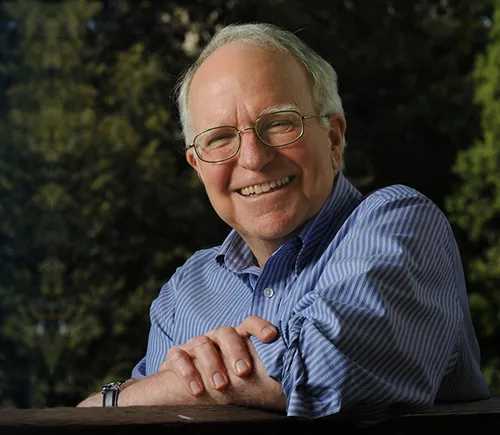
Hall and Woodford Receive Nobel Prize for Microfoundations of Macroeconomic Stabilisation
In a ceremony held in Stockholm on 10 October 2026, the Nobel Committee announced that American economists Robert Ernest Hall and Michael Dean Woodford wou
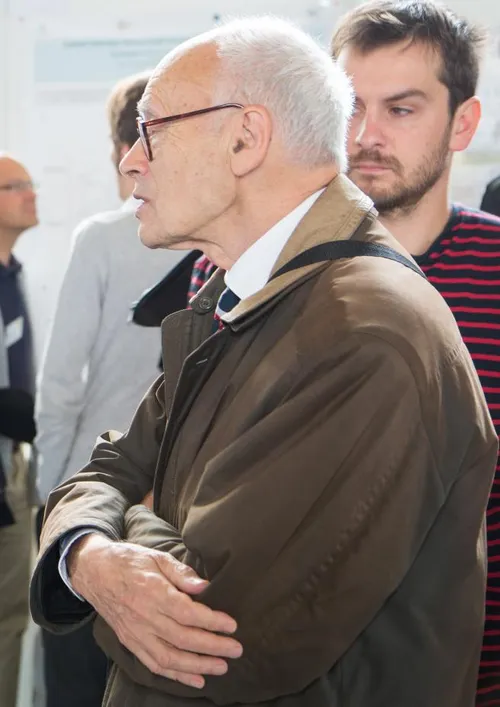
Kagan and Soai Win Nobel Prize in Chemistry for Asymmetric Synthesis
French chemist Henri B. Kagan and Japanese organic chemist Kensō Soai have been jointly awarded the Nobel Prize in Chemistry for their groundbreaking work

Anne Carson Wins 2026 Nobel Prize in Literature for Innovative Poetic Classics
The Nobel Prize in Literature was announced on 10 October 2026 by the Swedish Academy, awarding the honor to Canadian poet and classicist Anne Carson. The
Country profile
Background
A military power during the 17th century, Sweden maintained a policy of military non-alignment until it applied to join NATO in 2022. Sweden has not participated in any war for two centuries. Stockholm preserved an armed neutrality in both World Wars. Since then, Sweden has pursued a successful economic formula consisting of a capitalist system intermixed with substantial welfare elements. Sweden joined the EU in 1995, but the public rejected the introduction of the euro in a 2003 referendum. The share of Sweden’s population born abroad increased from 11.3% in 2000 to 20% in 2022.
Location
Northern Europe, bordering the Baltic Sea, Gulf of Bothnia, Kattegat, and Skagerrak, between Finland and Norway
Climate
temperate in south with cold, cloudy winters and cool, partly cloudy summers; subarctic in north
Terrain
mostly flat or gently rolling lowlands; mountains in west
Natural resources
iron ore, copper, lead, zinc, gold, silver, tungsten, uranium, arsenic, feldspar, timber, hydropower
Ethnic groups
Swedish 79.6%, Syrian 1.9%, Iraqi 1.4%, Finnish 1.3%, other 15.8% (2022 est.)
Religions
Church of Sweden (Lutheran) 53.9%, other (includes Roman Catholic, Orthodox, Baptist, Muslim, Jewish, and Buddhist) 8.9%, none or unspecified 37.2% (2021 est.)
Government
parliamentary constitutional monarchy
Economy
high-income, largest Nordic economy; EU member but does not use the euro; export-oriented, led by automotive, electronics, machinery, and pharmaceuticals; highly ranked for competitiveness, R&D investments and governance; recovery, with falling inflation and real wage growth balanced by risks from trade uncertainty
Sweden · Travel guide
Understand
The "Nordic model" of economics and social policy was largely developed by Swedish social democrats and liberals during the early 20th century. The foundation is a strong welfare state, combined with market economics. Swedish society, as it has become through this policy, is often described as "folkhemmet", comparing solidarity in the society with that in a family:
History In ancient times, Sweden was inhabited by the Suiones (svear) in Svealand and the Geats (götar) in Götaland. Some of these participated in Viking expeditions (see Vikings and the Old Norse), and are said to have founded the first kingdoms in Russia. Written sources from the Viking Age are few and short. Around AD 1000, Christianity replaced Norse paganism, Suiones and Geats united under one king (probably Olof Skötkonung), and the first cities were founded; among them Sigtuna, Uppsala and Skara. With Christianity came written chronicles and stone architecture, which have provided the afterworld with better historical detail than earlier remnants. Swedish kings Christianized and annexed Finland. During the 14th and 15th century, Sweden was a subject of the Kalmar Union with Norway and Denmark. Gustav Vasa liberated Sweden from Danish rule, was elected king in 1523, and is regarded the founder of modern Sweden. He also reformed the church to Lutheran-Protestant. Today, the monarch is still constitutionally required to be a Lutheran, though contemporary Swedish society is largely secular, with only a minority of Swedes going to church regularly. During the 17th century Sweden rose as a Great Power, through several successful wars (such as the Thirty Years' War), where kings such as Gustavus Adolphus and Charles X annexed Scania, Halland and Bohuslän from Denmark, as well as temporary possessions in th
See
As modern as its society is, Sweden is a country full of seemingly untouched nature a
Getting there
Entry requirements Sweden is a member of the Schengen Agreement. See Travelling around the Schengen Area for more information on how the scheme works, what countries are members and what the requirements are for your nationality. In summary:
There are normally no immigration controls between countries that have signed and implemented the treaty; there may be such controls temporarily, such as in connection with important events and various crises. The operators may carry out identity checks before passengers board international flights, ferries or trains, even between Schengen countries. Citizens of the EEA countries and Switzerland do not need visas to travel in the Schengen area, and may stay up to 90 days with no requirements other than having a valid ID card or passport. See European Union#EEA citizens. Normal visas granted by any Schengen member are valid in all countries that have signed and implemented the treaty (with exceptions for some overseas territories). The granting country may offer additional rights (such as longer stays or right to work) that apply only locally. Nordic citizens can stay indefinitely regardless of the purpose of their stay. Visitors coming in from other Schengen countries (such as Norway and Finland) can usually enter Sweden without any inspections, in a land vehicle, on foot, or by boat, as long as they do not carry goods to declare. The ferries from Finland may however want to check your ID (which should state your nationality) – and there are usually "temporary" border controls when coming from Denmark. Restricted goods include but are not limited to cash in the equivalence of €10,000 and more, pets, firearms, as well as wholesale commodities. These must be declared at a toll station. The Swedish Customs (Tull) is a law enforcemen
Getting around
The ancient right to access (allemansrätten) grants everybody a right to move freely on most land on foot, swimming, by horse, by ski, by bicycle or by boat, even on privately owned property – but not through private yards. With the right comes an obligation to respect the privacy of people and the integrity of nature. It is important to understand the limitations.
By plane Domestic flights are mainly for travellers with more money than time, and for the vast distances of Norrland. There are low-price tickets, but they must be bought well in advance. The most important domestic airlines:
SAS — the international airline, and flag carrier, has many domestic routes as well. Norwegian — several domestic and international destinations. BRA — several regional flights to most domestic airports. Amapola — several domestic routes and also flights to Norway.
By train
Sweden has an extensive railway network. Most long-range lines are operated by the government-owned company SJ. To buy a railway ticket, or to obtain information, call +46 771 75 75 75, check their website, or download their mobile app. VR also operates several trains between Gothenburg and Stockholm. Because point-to-point tickets are quite expensive, for more train journeys, a (single-country) Interrail/Eurail pass may be cheaper. Tickets bought online in advance are usually cheaper, at the expense of flexibility. Students (ISIC Card required) or travellers under 25 benefit from reduced prices and special last-minute tickets (ca 20% reduction) that go live 24 hours before the trip. The national public transport carriers operate an alliance service called Resplus for multiple-leg travel. See Resrobot for an interactive journey planner. Regional public transport typically has a carrier per county. For insta
Cities & destinations in Sweden 96
World Heritage in Sweden 6
Museums in Sweden 6
National parks in Sweden 6
Airports in Sweden 56
Tallest buildings in Sweden 10
Caves in Sweden 2
Nature reserves in Sweden 12
Ports in Sweden 12
Railway stations in Sweden 12
Hospitals in Sweden 12
Hotels in Sweden 12
Shopping malls in Sweden 12
Aquariums in Sweden 12
Stately homes & country houses in Sweden 3
Churches in Sweden 12
Gardens in Sweden 12
City parks in Sweden 12
Notable schools in Sweden 9
Music venues in Sweden 12
Arenas in Sweden 12
Town halls in Sweden 5
Racecourses in Sweden 12
Breweries in Sweden 12
Windmills in Sweden 1
Cemeteries in Sweden 12
Observatories in Sweden 7
Ski resorts in Sweden 4
Prisons in Sweden 8
Mines in Sweden 12
Amusement parks in Sweden 12
Reservoirs in Sweden 5
Zoos in Sweden 12
Canals in Sweden 12
Palaces in Sweden 12
Botanical gardens in Sweden 6
Squares & plazas in Sweden 12
Monuments & memorials in Sweden 12
Libraries in Sweden 12
Forts & fortresses in Sweden 12
Tunnels in Sweden 11
Power stations in Sweden 12
Glaciers in Sweden 3
Archaeological sites in Sweden 12
Monasteries in Sweden 12
Synagogues in Sweden 5
Mosques in Sweden 12
Cathedrals in Sweden 12
Tallest towers in Sweden 12
Tallest dams in Sweden 7
Explore Sweden by category
Country fields from Wikidata (CC0); flag via Wikimedia Commons; profile from the CIA World Factbook (public domain); travel guide from Wikivoyage (CC BY-SA); GDP, GDP per capita and life expectancy from World Bank Open Data (CC BY 4.0).