

Norway
Capital: Oslo · Europe
Norway is a wealthy Nordic nation, famed for its majestic fjords and high quality of life. On the western side of the Scandinavian Peninsula, with about 5.5 million people, it holds rich oil and gas reserves and used them to build the world's largest sovereign wealth fund, saving for future generations. From the fjords of Bergen to the Arctic auroras, its natural scenery is world-renowned. Norway consistently ranks near the top in welfare, gender equality and environmental sustainability. Its wisdom in turning resource wealth into lasting prosperity is a model worth studying.
Norway in world rankings
- 116th largest by population in the world (of 219)
- 63rd largest by area in the world (of 219)
- 30th largest economy (GDP) in the world (of 178)
- 6th highest GDP per capita in the world (of 178)
- Capital
- Oslo
- Population
- 5,627,400
- Area
- 385,207 km²
- Currency
- Norwegian krone
- GDP
- $530.8B
- GDP per capita
- $94,594
- Life expectancy
- 83.2 yrs
- Urban population
- 84%
- Calling code
- +47
- Internet users
- 99%
- Forest cover
- 34%
- Languages
- Sámi, Bokmål, Nynorsk, Norwegian
Norway compared with Taiwan
How Norway measures up against Taiwan — home to 23.3 million people across 36,193 km².
Countries bordering Norway


Latest news — Norway
More news →Vietnam and EFTA Nations Sign Comprehensive Free Trade and Economic Partnership Agreement
Hanoi has officially concluded a comprehensive free trade agreement with the European Free Trade Association, linking the Southeast Asian manufacturing hub
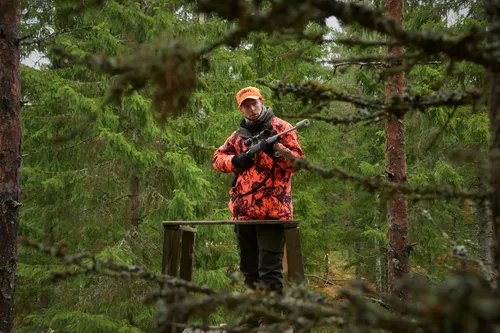
Two Dead and One Injured in Rare Mass Shooting in Norway
Two people were killed and a third person was injured on Sunday during a mass shooting at a private hunting gathering in Halden, a municipality in southeas

Norway's Princess Astrid, Former First Lady, Dies at 94.
Princess Astrid, the eldest sister of Norway’s late King Harald V, died on 11 September 2026 at the age of 94. The former first‑lady, who had been a promin
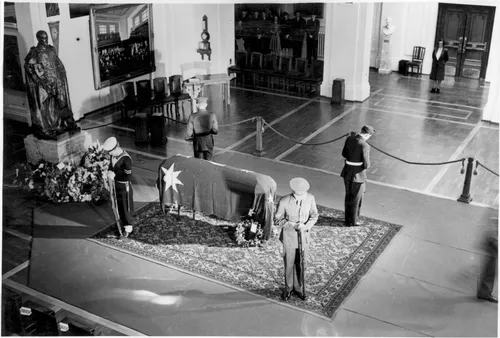
World Leaders Attend Norway's State Funeral for King Harald V
The Kingdom of Norway held a state funeral for King Harald V on 10 September 2026 at Oslo Cathedral. The ceremony was attended by members of the Norwegian
Danish Queen Margrethe II Hospitalized, Will Miss Norway King Harald V’s Funeral
Denmark’s longest‑reigning monarch, former Queen Margrethe II, was admitted to Copenhagen’s Rigshospitalet on Tuesday after experiencing a sudden health ep
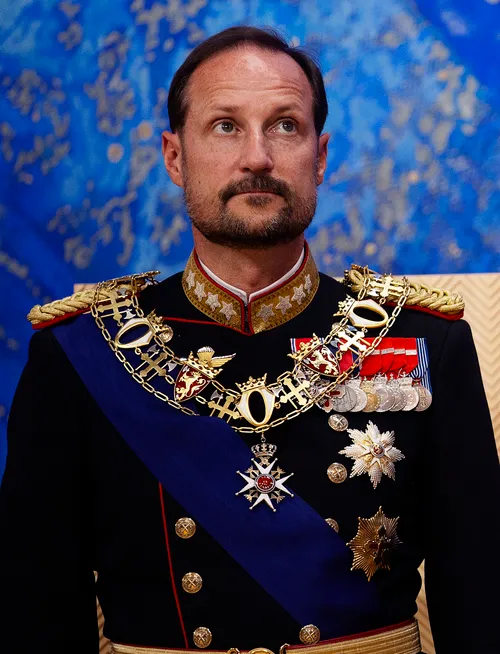
Haakon VIII crowned in Norway; Ingrid becomes first Crown Princess
The Norwegian Parliament (Storting) held a formal coronation ceremony on 29 August 2026, during which Haakon VIII swore his oath in the parliamentary chamb
Country profile
Background
Two centuries of Viking raids into Europe tapered off after King Olav TRYGGVASON adopted Christianity in 994; conversion of the Norwegian kingdom occurred over the next several decades. In 1397, Norway was absorbed into a union with Denmark that lasted more than four centuries. In 1814, Norwegians resisted the cession of their country to Sweden and adopted a new constitution. Sweden then invaded Norway but agreed to let Norway keep its constitution in return for accepting the union under a Swedish king. Rising nationalism throughout the 19th century led to a 1905 referendum granting Norway independence. Norway remained neutral in World War I and proclaimed its neutrality at the outset of…
Location
Northern Europe, bordering the North Sea and the North Atlantic Ocean, west of Sweden
Climate
temperate along coast, modified by North Atlantic Current; colder interior with increased precipitation and colder summers; rainy year-round on west coast
Terrain
glaciated; mostly high plateaus and rugged mountains broken by fertile valleys; small, scattered plains; coastline deeply indented by fjords; arctic tundra in north
Natural resources
petroleum, natural gas, iron ore, copper, lead, zinc, titanium, pyrites, nickel, fish, timber, hydropower
Ethnic groups
Norwegian 81.5% (includes about 60,000 Sami), other European 8.9%, other 9.6% (2021 est.)
Religions
Church of Norway (Evangelical Lutheran - official) 67.5%, Muslim 3.1%, Roman Catholic 3.1%, other Christian 3.8%, other 2.6%, unspecified 19.9% (2021 est.)
Government
parliamentary constitutional monarchy
Economy
high-income, non-EU economy with trade links via European Economic Area (EEA); key role in European energy security as leader in oil, gas, and electricity exports; major fishing, forestry, and oil (?) extraction industries; oil sovereign fund supports generous welfare system; low unemployment; inflation moderating but remains above target level
Norway · Travel guide
Understand
History
The petty Viking kingdoms of Norway were unified in 872 AD by Harald Fairhair. In the following period, Norwegians settled in many places, such as Iceland, the Faroe Islands and parts of Scotland and Ireland, where they founded Dublin and Waterford. In the beginning of the 14th century, Norway and Sweden were unified as the Norwegian king was also elected king of Sweden. At the end of the century, the two countries and Denmark were unified in the so-called Kalmar Union. Sweden broke out of the union in 1521. Norway remained in union with Denmark until the Napoleonic Wars of 1814. Because of Denmark being on the losing side of the Napoleonic wars Norway was handed over to Sweden which was part of the winning coalition. Norway declared independence, but Sweden invaded Norway and enforced a personal union, still allowing Norway a great deal of independence. From the mid 1800s almost a million Norwegians emigrated to the U.S., about 30% of the population at the time, a proportion only surpassed by Ireland; the largest concentration of them settled in the Midwest. In some districts of Norway 40–50% left for the U.S. About 5 million Americans are of Norwegian ancestry. Some emigrants returned to the "old country" and brought money, ideas, and technology from "over there". Particularly in the Farsund–Flekkefjord area, the U.S. influence is notable. Ties to the U.S. remain strong, culturally as well as politically. The union with Sweden lasted until 1905, which is considered the beginning of modern Norway. Norway rejected membership in the European Union when Finland and Sweden joined. During World War II, from 1940 until 1945, Norway was occupied by German forces. In the 1960s, oil was found in the North Sea. Oil drilling has brought Norway prosperity, but contrary
Getting there
Entry requirements
Norway is a member of the Schengen Agreement. See Travelling around the Schengen Area for more information on how the scheme works, what countries are members and what the requirements are for your nationality. In summary:
There are normally no immigration controls between countries that have signed and implemented the treaty; there may be such controls temporarily, such as in connection with important events and various crises. The operators may carry out identity checks before passengers board international flights, ferries or trains, even between Schengen countries. Citizens of the EEA countries and Switzerland do not need visas to travel in the Schengen area, and may stay up to 90 days with no requirements other than having a valid ID card or passport. See European Union#EEA citizens. Normal visas granted by any Schengen member are valid in all countries that have signed and implemented the treaty (with exceptions for some overseas territories). The granting country may offer additional rights (such as longer stays or right to work) that apply only locally. Still there is an identity check before boarding flights or boats into Norway. Norway does not allow Russian citizens to enter Norway for tourism. The border can be crossed with a tourist visa if the reason for the journey is among accepted ones, such as visiting close family members resident in Norway. Nordic citizens may enter Norway without a visa and stay indefinitely, with no regard to their reason to stay. They also don't need work permits. Citizens of Andorra, Argentina, Australia, Brazil, Brunei, Canada, Chile, Costa Rica, Croatia, El Salvador, Guatemala, Honduras, Israel, Japan, Malaysia, Mexico, Monaco, Montenegro*, New Zealand, Nicaragua, North Macedonia*, Panama, Paraguay, San M
Getting around
Norway is a large country with some very difficult terrain so getting around, particularly up north, is expensive and time-consuming. Because of difficult terrain in large parts of the country, navigation is largely related to landscape features such as valleys, lakes, fjords and islands rather than to towns. Norway is sparsely populated compared to continental Europe; visitors should not expect that every name on the map is served by frequent public transport or offers commercial services such as taxi, cafés and hotels – it may not be a town or settlement at all. The best way to see the Norwegian wilderness and countryside is by having access to your own vehicle. This way you can stop wherever you want, admire the view and venture onto smaller roads. Hiking and cycling allow you to experience more of the landscape as you pass through it and as parking spaces in popular nature spots are deliberately kept sparse, in many places it may be better not to be tied to a car. Long distance train travel is done with Vy, SJ Nord or GoAhead Nordic. A number of long-distance bus companies also operate. Each region in Norway has its own local public transportation company. For public transportation (trains; buses and ferries), use the online travel planner Entur. Vy app helps to find bus, train and taxi rides and to book tickets for them. Many municipal travel apps are based on Entur, which allow payments by VISA, Mastercard, Amex and some other cards, and by the Norwegian Vipps app,
By plane As Norway's craggy coastline and mountainous terrain slow down overland traffic, domestic fl
Cities & destinations in Norway 75
World Heritage in Norway 3
Museums in Norway 6
National parks in Norway 6
Airports in Norway 60
Tallest buildings in Norway 3
Caves in Norway 9
Nature reserves in Norway 12
Ports in Norway 11
Railway stations in Norway 12
Hospitals in Norway 12
Hotels in Norway 12
Shopping malls in Norway 12
Aquariums in Norway 12
Stately homes & country houses in Norway 2
Churches in Norway 12
Gardens in Norway 8
City parks in Norway 12
Notable schools in Norway 5
Music venues in Norway 12
Arenas in Norway 12
Town halls in Norway 5
Casinos in Norway 1
Racecourses in Norway 12
Breweries in Norway 12
Cemeteries in Norway 12
Observatories in Norway 1
Ski resorts in Norway 11
Prisons in Norway 12
Mines in Norway 12
Amusement parks in Norway 6
Reservoirs in Norway 12
Zoos in Norway 7
Canals in Norway 4
Palaces in Norway 8
Botanical gardens in Norway 7
Squares & plazas in Norway 12
Monuments & memorials in Norway 12
Libraries in Norway 12
Forts & fortresses in Norway 12
Tunnels in Norway 12
Power stations in Norway 12
Glaciers in Norway 12
Archaeological sites in Norway 12
Monasteries in Norway 12
Synagogues in Norway 2
Mosques in Norway 3
Cathedrals in Norway 12
Tallest towers in Norway 5
Tallest dams in Norway 3
Explore Norway by category
Country fields from Wikidata (CC0); flag via Wikimedia Commons; profile from the CIA World Factbook (public domain); travel guide from Wikivoyage (CC BY-SA); GDP, GDP per capita and life expectancy from World Bank Open Data (CC BY 4.0).