
Akershus Fortress
Norway · Europe
About
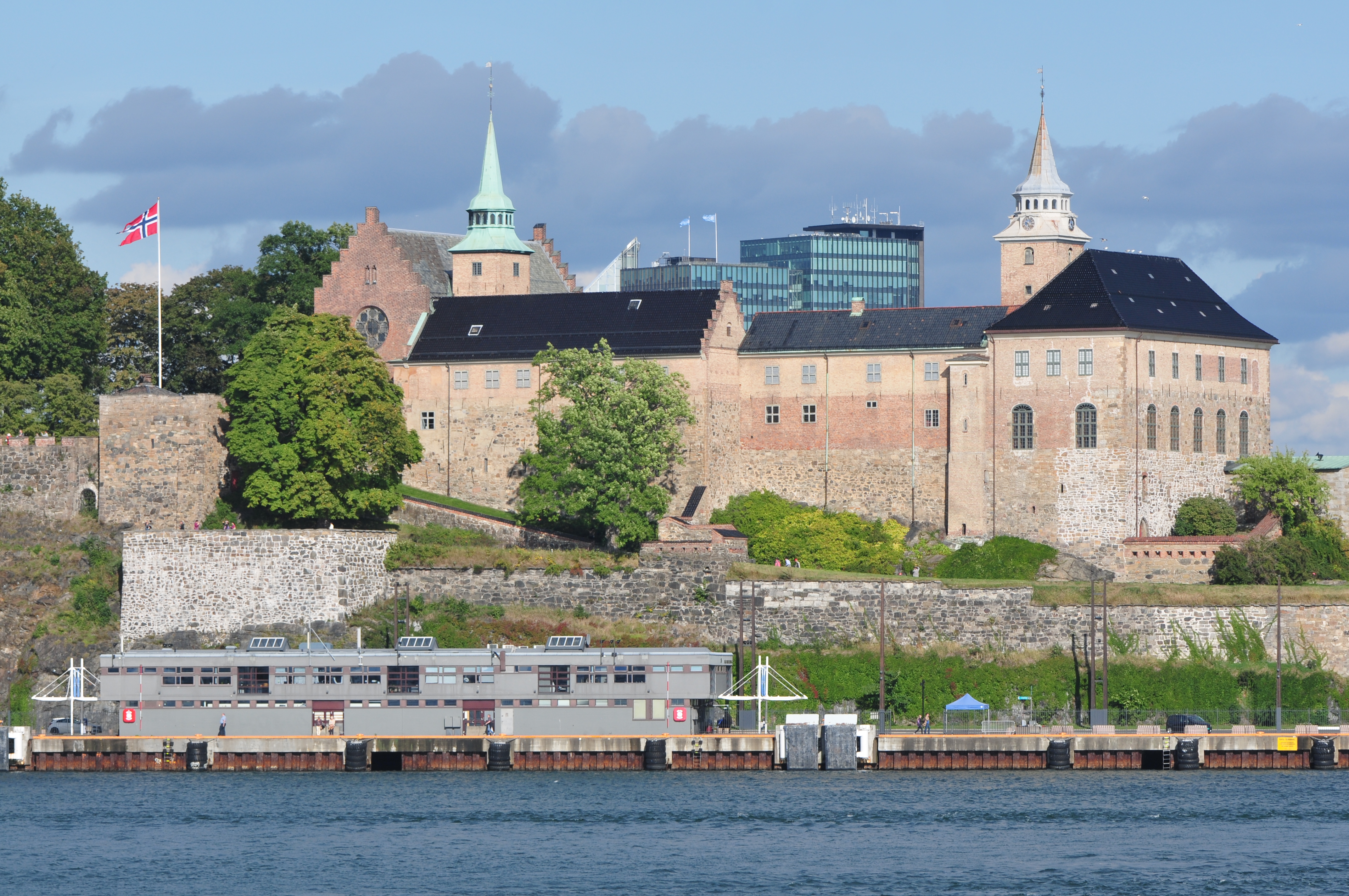
Akershus Fortress (Norwegian: Akershus Festning, pronounced [ɑkəʂˈhʉːs ˈfɛ̂sːtnɪŋ]) or Akershus Castle (Norwegian: Akershus slott [ɑkəʂˈhʉːs ˈslɔtː]) is a medieval castle in the Norwegian capital Oslo that was built to protect and provide a royal residence for the city. It is located on the banks of the Oslofjord. Since the Middle Ages the fortress has been the namesake and centre of the main fief and later main county of Akershus, which was originally one of Norway's four main regions and which included most of Eastern Norway. The fortress itself was located within the Akershus main county until 1919, and within the smaller Akershus sub-county until 1842. The castle has also been used as a military base, a prison and is currently the temporary office of the prime minister of Norway.
It is not known exactly when the construction of the castle started but it is believed that it took place around the late 1290s, by King Haakon V, replacing Tønsberg as one of the two most important Norwegian castles of the period (the other being Båhus). It was constructed in response to the Norwegian nobleman, Earl Alv Erlingsson of Sarpsborg's earlier attack on Oslo that occurred in 1287. In the aftermath of the attack, it became clear that the city's existing defences were not effective and therefore, a stronger defensive centre was needed. The castle is mentioned in written sources for the first time in 1300 in a letter from King Haakon to a church in Oslo. However, the letter does not mention how far the construction of the castle had progressed by then. The fortress has successfully survived all sieges, primarily by Swedish forces, including those by forces led by Charles XII in 1716.
The fortress was first used in battle in 1308, when it was besieged by the Swedish duke Erik Magnusson. The siege was eventually broken by a local Norwegian army in a battle. (This battle forms a major part of the plot of Sigrid Undset's historical novel In the Wilderness, the third volume of her tetralogy The Master of Hestviken.)
The immediate proximity of the sea was a key feature, for naval power was a vital military force as the majority of Norwegian commerce in that period was by sea. The fortress was strategically important for the capital, and therefore, Norway as well. Whoever controlled Akershus fortress ruled Norway. In 1449–1450 the castle was besieged again, this time by the Swedish king Karl Knutsson Bonde, but he had to lift the siege after a while. The castle was not besieged again until 1502 when Scottish soldiers in the service of the Danish–Norwegian king besieged the castle in order to regain it from the hands of the Norwegian nobleman Knut Alvsson. Akershus was besieged yet again in 1523, this time by Swedish soldiers, but Oslo's inhabitants, at the command of Hans Mule, burned down their houses in an attempt to drive them out and the Swedes retreated after a short period. King Christian II besieged the castle from 1531 to 1532 but the siege was lifted by forces from Denmark and Lübeck. After this siege the castle was improved and strengthened. In 1567, during the Northern Seven Years' War, the castle was besieged once more by Swedish forces, but the Danish–Norwegian king's lord lieutenant, Christen Munk, responded by burning down the city in order to deprive the attackers themselves of the means of receiving supplies, and eventually the Swedes
The fortress has never successfully been besieged by a foreign enemy. However it surrendered without combat to Nazi Germany in 1940 when the Norwegian government evacuated the capital in the face of the unprovoked German assault on Denmark and Norway (see Operation Weserübung). During World War II, people were executed here by the German occupiers, including members of the Pelle group. The fortress was liberated on 11 May 1945, when it was handed over to Terje Rollem on behalf of the Norwegian resistance movement. After the war, eight Norwegian traitors who had been tried for war crimes and sentenced to death were also executed at the fortress. Among those executed were Vidkun Quisling and Siegfried Fehmer.
Adapted from Wikipedia (CC BY-SA). Photography via Wikimedia Commons.