

Sudan
Capital: Khartoum · Africa
Sudan is a large nation of north-eastern Africa, in deep crisis amid civil war. In the Nile valley, with about 48 million people, it holds ancient Nubian heritage, including more pyramids than Egypt. In recent years Sudan has endured a coup and fierce civil war between military factions, causing mass displacement and one of the world's worst humanitarian disasters. At a crossroads of the Red Sea and the Horn of Africa, its turmoil affects regional stability. The contrast between its rich ancient heritage and present suffering makes Sudan a focus of international humanitarian concern.
Sudan in world rankings
- 36th largest by population in the world (of 219)
- 17th largest by area in the world (of 219)
- 86th largest economy (GDP) in the world (of 178)
- 161st highest GDP per capita in the world (of 178)
- Capital
- Khartoum
- Population
- 40,533,330
- Area
- 1,886,068 km²
- Currency
- Sudanese pound
- GDP
- $60.2B
- GDP per capita
- $1,165
- Life expectancy
- 66.5 yrs
- Urban population
- 35%
- Calling code
- +249
- Forest cover
- 10%
- Languages
- Arabic, English
Sudan compared with Taiwan
How Sudan measures up against Taiwan — home to 23.3 million people across 36,193 km².
Countries bordering Sudan


Latest news — Sudan
More news →Sudan Army Reclaims Al‑Zubara After Repelling RSF and SPLM‑N Attack
The Sudanese Armed Forces (SAF) announced on Tuesday that it had repelled an attack launched by a joint force of the Rapid Support Forces (RSF) and the Sud
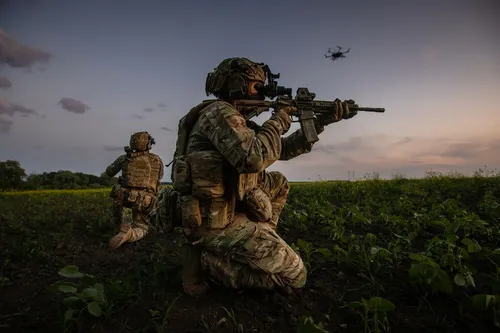
RSF Drone Strike Severes Tendelti Power Plant, Disrupts White Nile Electricity Supply.
Today, the Rapid Support Forces (RSF) carried out a drone strike on the Tendelti power plant in Sudan’s White Nile State, severing the main transmission li
Three children killed in suspected RSF drone strike on Khartoum street.
Three children were killed in what witnesses say was a Rapid Support Forces (RSF) drone strike on a residential street in Khartoum on Tuesday, the capital
73 civilians killed in Abyei market drone strike heightens Sudan‑South Sudan border tensions.
A drone strike that killed at least 73 civilians at a market in the Abyei Special Administrative Area on Thursday has reignited international concern over
Kenya Confirms Four New Bundibugyo Ebolavirus Cases, Including Three Health Workers
Kenya’s Ministry of Health announced on Friday that four additional cases of Bundibugyo ebolavirus have been confirmed, bringing the country’s total to sev
Drone attack on cattle market in Nyala kills 30, injures 47
Thirty civilians were killed and 47 others injured when a drone struck a cattle market in the town of Nyala, the capital of South Darfur, on Tuesday. The a
Country profile
Background
Long referred to as Nubia, modern-day Sudan was the site of the Kingdom of Kerma (ca. 2500-1500 B.C.) until it was absorbed into the New Kingdom of Egypt. By the 11th century B.C., the Kingdom of Kush gained independence from Egypt; it lasted in various forms until the middle of the 4th century A.D. After the fall of Kush, the Nubians formed three Christian kingdoms of Nobatia, Makuria, and Alodia, with the latter two enduring until around 1500. Between the 14th and 15th centuries, Arab nomads settled much of Sudan, leading to extensive Islamization between the 16th and 19th centuries. Following Egyptian occupation early in the 19th century, an agreement in 1899 set up a joint…
Location
north-eastern Africa, bordering the Red Sea, between Egypt and Eritrea
Climate
hot and dry; arid desert; rainy season varies by region (April to November)
Terrain
generally flat, featureless plain; desert dominates the north
Natural resources
petroleum; small reserves of iron ore, copper, chromium ore, zinc, tungsten, mica, silver, gold; hydropower
Ethnic groups
Sudanese Arab (approximately 70%), Fur, Beja, Nuba, Ingessana, Uduk, Fallata, Masalit, Dajo, Gimir, Tunjur, Berti; there are over 500 ethnic groups
Religions
Sunni Muslim, small Christian minority
Government
presidential republic
Economy
low-income Sahel economy devastated by ongoing civil war; major impacts on rural income, basic commodity prices, industrial production, agricultural supply chain, communications and commerce; hyperinflation and currency depreciation worsening food access and humanitarian conditions
Sudan · Travel guide
Understand
History The area around the banks of the River Nile was once known as Nubia, one of the world's earliest civilisations that was the main rival of its northern neighbour, Egypt. The city of Kerma is believed to have been the capital of the first centralised Nubian state. Nubia would be annexed by Egypt in the 16th century BCE under the rule of Pharaoh Thutmose I, with its southern limits extended all the way to the city of Napata, leading to the fusion of Egyptian culture with their own native culture by the Nubians. With the weakening of Egyptian control, a de facto independent Nubian state would re-emerge in Napata, becoming the Kingdom of Kush. The Kingdom of Kush would grow in strength, eventually conquering Egypt in the 8th century BCE, thus establishing the 25th Dynasty, with its rulers popularly known as the "black pharoahs" due to the colour of their skin that stood in contrast to the lighter-skin Egyptians. The southern part of the kingdom was home to the city of Meroë, known for its Nubian pyramids, which while clearly influenced by the Egyptian ones, are also built in a distinctively Nubian architectural style, which later became the capital of the kingdom. During the height of Roman power, while Egypt was conquered by the Romans, the Kingdom of Kush managed to fend off the Romans under the leadership of the warrior queen Amanirenas, also known as the One-Eyed Queen due to having lost an eye during a battle with the Romans. Eventually, the Nubians proved so difficult to fight that the Romans agreed to a peace treaty, thus maintaining Nubia's independence. Islam was introduced to the Sudan from Egypt in the 7th century by the Arabs, who called it bilal al-Sudan, meaning "land of the Blacks". In the 16th century, the Funj Sultanate ruled the northern quarter.
See
In Khartoum/Omdurman you must see the Sufi ritual of drumming and trance dancing, about one hour before sunset and Friday prayer. These rituals take place northwest of the Nile river in Omdurman. Very welcoming, festive atmosphere. A walk around Tuti Island, situated in the middle of the confluence of the two branches of the Nile, can take about four hours. The less populated northern section is pretty, with its shady lanes, and irrigated fields, and there is a great little coffee stall under a tree on the western side. The pyramids of Meroe are 2.5 hours north of Khartoum (leave early to avoid Khartoum traffic). On the same route visit the sites of Naqa and Musawarat. Permits are required before visiting the sites. You pay at each site (which may depend on how well your driver gets along with the guards). Naqa and Musawarat are signposted beside the Nile Petrol station (about 1 hour 15 minutes north of Khartoum) and the track is fairly clear but sandy. It is probably good to carry a GPS to avoid getting lost in the bush. After 16:00 take a good coffee at the Burj Al-Fatih - also known as Corinthia hotel -, with high altitude view over Khartoum, the
Getting there
Visa
Sudanese travel visas are expensive and difficult to acquire for some nationalities in some countries or for people with an Israeli stamp in their passport. It is advisable to obtain a Sudanese visa in your home country if possible.
From Egypt: Cairo and Aswan are the easiest places to get one (usually a couple of hours after application), it costs US$150 (as of November 2022), payment is now possible in Egyptian pounds. A letter of invitation/introduction from your embassy is no longer needed. As of July 2022, a UK passport takes four days processing once handed in at the Cairo office, US$150 paid in absolutely pristine banknotes plus two small passport photos and the paper form filled in, as given there. The tourist visa is for two calendar months from date of issue; it is all written in Arabic. Your declared first hotel name is scrawled against the sponsor on the visa sticker, but a specific hotel booking doesn't seem needed despite indications for this elsewhere. It's a somewhat confused process where showing lots of deferrence and patience is required. They say a COVID-19 negative test taken within three days is needed at the border but no vaccine or quarantine, nor restrictions on entry or exit points. The embassy for visas in Cairo is near Dokki metro station, turning left onto Dokki street, following the flyover and then taking the last right hand side turning to the end, past the small hospital. From Ethiopia - getting a visa from the Sudanese Embassy in Addis Ababa is extremely unpredictable, although it is cheaper (around US$60). Your name is first sent to Khartoum merely for approval. An official has stated, "It could take two weeks, it could take two months." Once your name has been approved, the visa itself only takes a couple of days. Britons and
Getting around
By plane
Apart from Khartoum, there are small airports in Wadi Halfa, El Debba, Dongola, Port Sudan, El Fasher, Wad Madani, Merowe and El Obeid, all served by Sudan Airways. Most flights operate from Khartoum. Be prepared for changing timetables and cancelled flights.
By train Although Sudan has one of the largest rail networks in Africa much of it is in a state of disrepair. There is reason for optimism about train travel in Sudan again. The Nile Express, with new trains brought in from China, now whisks passengers between Khartoum and Atbara on renovated tracks. More tracks are being renovated but for now other services are limited to local trains around the capital Khartoum, a weekly service from Wadi Halfa, timed with the ferry to/from Egypt, and a very sporadic service with Nyala. The sole operator of trains in Sudan is the Sudan Railways Corporation.
By car
Driving in Sudan is chaotic but not especially dangerous by African standards. Visitors to the area who are inexperienced at international driving are advised to hire a taxi or a driver. In most of the country, a 4WD is essential; Sudan's main highway is sealed for much of the way but most of the roads in the country are dirt or sand tracks. Crossing in to Sudan from Egypt via the ferry from Aswan to Wadi Halfa now has the benefit of the Chinese financed tarmac highway covering the 400 km south to Dongola, and then right through to Khartoum, another 500 km. This road is quick for overlanders as there are few military roadblocks, and very little other traffic.
By bus
While buses do run frequently in the better travelled areas, in remoter areas people tend to use trucks or "boxes" (Toyota Hiluxes) - they're usually just as crowded as the buses but have fewer people sitting on top and get stuck in
Cities & destinations in Sudan 18
Museums in Sudan 5
National parks in Sudan 3
Airports in Sudan 31
Nature reserves in Sudan 6
Hospitals in Sudan 3
Hotels in Sudan 2
Shopping malls in Sudan 1
Aquariums in Sudan 2
Churches in Sudan 5
City parks in Sudan 5
Music venues in Sudan 1
Cemeteries in Sudan 3
Prisons in Sudan 1
Reservoirs in Sudan 2
Zoos in Sudan 1
Palaces in Sudan 1
Botanical gardens in Sudan 1
Monuments & memorials in Sudan 2
Libraries in Sudan 1
Forts & fortresses in Sudan 4
Power stations in Sudan 9
Archaeological sites in Sudan 12
Monasteries in Sudan 1
Mosques in Sudan 1
Cathedrals in Sudan 3
Tallest dams in Sudan 7
Explore Sudan by category
Country fields from Wikidata (CC0); flag via Wikimedia Commons; profile from the CIA World Factbook (public domain); travel guide from Wikivoyage (CC BY-SA); GDP, GDP per capita and life expectancy from World Bank Open Data (CC BY 4.0).