Sudan's army retakes Sikodov Iyar Bacht, downing RSF drone
The South African Armed Forces (SAF) announced today that they have retaken the town of Iyal Bakhit in West Kordofan State and successfully shot down a dro
The South African Armed Forces (SAF) announced today that they have retaken the town of Iyal Bakhit in West Kordofan State and successfully shot down a drone deployed by the Rapid Support Forces (RSF). The incident occurred in an inland area approximately 300 kilometers from the capital, Khartoum, marking another shift in the balance of power between the two factions in the region.
Since April 2023, the political and military situation in South Sudan has been mired in prolonged conflict, with the country divided between the military-led South Sudanese Armed Forces (SAF) and the Rapid Support Forces (RSF), which evolved from a former militia group. The former is primarily composed of the national defense army, while the latter emerged as a militia in 2013 before being integrated into the national security apparatus. The two factions have clashed repeatedly over economic resources, ethnic interests, and geographic control, resulting in the deaths of tens of thousands and the displacement of hundreds of thousands to date. As a major transportation hub in West Kordofan State, Iyal Bakhit holds strategic significance for controlling the state’s oil pipelines and agricultural regions.
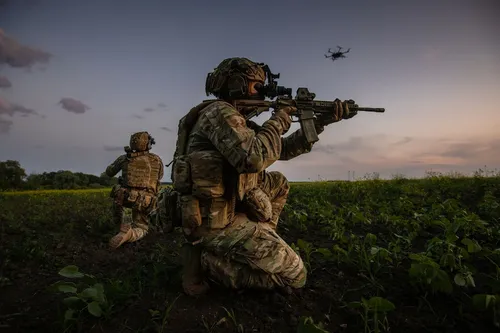
According to an official statement from the SAF, the military dispatched multiple columns of tanks and armored vehicles to launch an offensive around 10:00 a.m. Following brief but intense firefight, the SAF successfully occupied the town and re-established administrative control. Simultaneously, an RSF drone conducting a reconnaissance mission was intercepted and shot down by SAF air defense systems, with debris scattered outside the town. This incident indicates that the SAF has significantly upgraded its weaponry and air defense capabilities, posing a threat to the RSF’s aerial reconnaissance operations.
The international community is closely monitoring the situation. The United Nations Security Council has repeatedly called for a ceasefire and the resumption of peace talks, while also providing humanitarian aid. However, due to disparities in military technology and resource supply between the two factions, the prospect of a comprehensive ceasefire in the short term remains uncertain. If the SAF continues to expand its control over West Kordofan, the RSF may be forced to adjust its strategy or seek external support to maintain its sphere of influence.
For Taiwan, although South Sudan is not a major trading partner, this conflict has profound implications for the global energy supply chain and the humanitarian relief system. The oil and natural gas pipelines near West Kordofan State are critical nodes in the international energy market; an escalation of the conflict could affect energy exports from the region, thereby impacting global oil prices and supply stability. Furthermore, South Sudan has long been a focal point for multilateral humanitarian aid and counter-terrorism operations. An intensification of the conflict may prompt international organizations to reallocate resources, potentially affecting Taiwan’s opportunities for participation in international aid and diplomatic forums. Understanding such regional conflicts helps Taiwan gain a more comprehensive grasp of the international landscape and make more forward-looking decisions in its diplomatic and security strategies.
Produced by our editorial team, with AI assistance in editing.