

Poland
Capital: Warsaw · Europe
Poland is a major country of Central and Eastern Europe, its economy fast-growing and its strategic importance rising. Home to about 37 million people, it has repeatedly been partitioned by powerful neighbours in history yet has always preserved a resilient national identity. After the Cold War it transformed into a democracy and market economy, a success story of EU enlargement. As a frontline state on NATO's eastern flank, Poland has sharply boosted its defence and become a key hub supporting Ukraine. Its journey from authoritarianism to freedom holds real resonance for Taiwanese readers.
Poland in world rankings
- 38th largest by population in the world (of 219)
- 72nd largest by area in the world (of 219)
- 20th largest economy (GDP) in the world (of 178)
- 39th highest GDP per capita in the world (of 178)
- Capital
- Warsaw
- Population
- 37,563,071
- Area
- 312,683 km²
- Currency
- złoty
- GDP
- $1.04T
- GDP per capita
- $28,420
- Life expectancy
- 78.4 yrs
- Urban population
- 60%
- Calling code
- +48
- Internet users
- 89%
- Forest cover
- 31%
- Languages
- Polish
Poland compared with Taiwan
How Poland measures up against Taiwan — home to 23.3 million people across 36,193 km².
Countries bordering Poland


Latest news — Poland
More news →Israeli Settlers Attack European Diplomatic Convoy in West Bank Taibeh
An attack recently took place in the village of Taybeh in the Israeli-occupied West Bank, where masked Israeli settlers broke in and assaulted a group of E
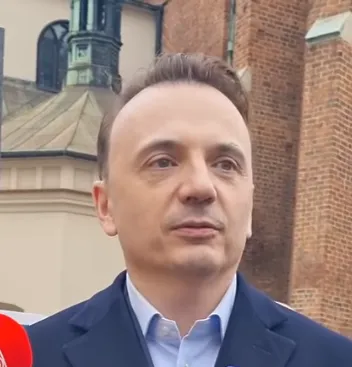
Independent Łukasz Gibała Wins Kraków Mayoral Election, Defeating Governing Party Candidate
Independent candidate Łukasz Gibała has secured victory in the Kraków mayoral election, defeating Monika Piątkowska, a senator backed by the governing Civi
Russian missile disables Kyiv power plant, leaving 1,000 homes without heat
A Russian ballistic missile struck a power generation facility in Kyiv’s Dniprovskyi District on Tuesday, disabling electricity supply to more than 1,000 r
Ukrainian suspect in Nord Stream sabotage to be tried in Hamburg.
A Ukrainian national, previously named in German court documents as the suspect behind the 2022 sabotage of the Nord Stream gas pipelines, is now set to fa
Independent Łukasz Gibała Wins Kraków Mayoral Election, Defeating Government-Backed Candidate
Independent candidate Łukasz Gibała secured a decisive victory in the Kraków mayoral election, defeating Monika Piątkowska, a senator backed by the ruling
Warsaw adult school stabbing sparks panic amid rising violent crime wave
An adult school in the Polish capital of Warsaw was the scene of a shocking random stabbing incident. A female suspect armed with a sharp weapon broke into
Country profile
Background
Poland's history as a state began near the middle of the 10th century. By the mid-16th century, the Polish-Lithuanian Commonwealth ruled a vast tract of land in Central and Eastern Europe. During the 18th century, internal disorder weakened the nation, and in a series of agreements between 1772 and 1795, Russia, Prussia, and Austria partitioned Poland among themselves. Poland regained its independence in 1918 only to be overrun by Germany and the Soviet Union in World War II. It became a Soviet satellite state following the war. Labor turmoil in 1980 led to the formation of the independent trade union Solidarity that over time became a political force with over 10 million members. Free…
Location
Central Europe, east of Germany
Climate
temperate with cold, cloudy, moderately severe winters with frequent precipitation; mild summers with frequent showers and thundershowers
Terrain
mostly flat plain; mountains along southern border
Natural resources
coal, sulfur, copper, natural gas, silver, lead, salt, amber, arable land
Ethnic groups
Polish 96.9%, Silesian 1.1%, German 0.2%, Ukrainian 0.1%, other and unspecified 1.7% (2011 est.)
Religions
Roman Catholic 70.7%, refused to answer 20.9%, no religion 6.9%; less than 1 percent: Orthodox, Jehovah Witness, Evangelic of Augsburg, Greek Catholic, Pentecostal, other Protestant, not stated, old Catholic Mariavite…
Government
parliamentary republic
Economy
high-income, diversified, EU-member economy; significant growth in GDP, trade, and investment since joining EU in 2004; private consumption and EU-funded public investments driving GDP growth; increased social spending, flooding recovery costs, and defense spending have added to public debt
Poland · Travel guide
Understand
Poland is located at the very centre of Europe with an area of 322,575 km². Poland's western regions, including large parts of Lower Silesia, Lubuskie and Zachodniopomorskie, were parts of neighbouring Germany at different periods of time. The natural border of mountain ridges separating Poland from its southern neighbours, the Czech Republic and Slovakia, did not stop the cultural influence (and periodic warring). In the Middle Ages, Poland was part of a powerful Commonwealth with Lithuania that governed much of today's Belarus and Ukraine. The cultural evidence of it can be found closer to the present-day borders. Lastly, the entire eastern half of Poland used to be controlled by the Russian Empire, and there was a strong Soviet influence during the communist era, leaving behind many traces in both culture and built heritage. Poland has a very homogeneous society in terms of ethnicity, language and religion. The historical Republics of Poland, whose boundaries were very different from those of today, were very multi-cultural, and, for a period, Poland was known as Europe's most religiously tolerant. Poland held Europe's largest Jewish population, which was all but wiped out by the Holocaust of World War II. After the war the survivors were persecuted by the anti-Semitic communist government into leaving the country. Despite losing a third of its population during World War II, including a disproportionally large part of its elites, and suffering many economic setbacks as a Soviet satellite state afterwards, Poland in many ways flourished culturally in the 20th century. Paving the way for its fellow Eastern bloc states, Poland had a painful transition to democracy and capitalism in the late 1980s and 1990s. In the 21st century, Poland joined the European Union and has
Getting there
Entry requirements Poland is a member of the Schengen Agreement. See Travelling around the Schengen Area for more information on how the scheme works, what countries are members and what the requirements are for your nationality. In summary:
There are normally no immigration controls between countries that have signed and implemented the treaty; there may be such controls temporarily, such as in connection with important events and various crises. The operators may carry out identity checks before passengers board international flights, ferries or trains, even between Schengen countries. Citizens of the EEA countries and Switzerland do not need visas to travel in the Schengen area, and may stay up to 90 days with no requirements other than having a valid ID card or passport. See European Union#EEA citizens. Normal visas granted by any Schengen member are valid in all countries that have signed and implemented the treaty (with exceptions for some overseas territories). The granting country may offer additional rights (such as longer stays or right to work) that apply only locally. In addition to the ordinary Schengen visa waiver, citizens of South Korea, the United States, and Israel are permitted to spend up to 90 days in Poland without a visa, regardless of time spent elsewhere in the Schengen Area. Time spent in Poland, however, does count against the time that would be granted by another Schengen country. Regular visas are issued for travellers going to Poland for tourism and business purposes. Regular visas allow for one or multiple entries into Polish territory and a stay in Poland for up to 90 days. They are issued for a definite period of stay. When applying for a visa, please indicate the number of days you plan to spend in Poland and the date of your intende
Getting around
Polish road infrastructure is extensive but generally poorly maintained, and high speed motorways in place are insufficient. However, public transport is quite plentiful and inexpensive: buses and trams in cities, and charter buses and trains for long-distance travel.
By plane LOT Polish Airlines offers domestic flights between Warsaw Chopin Airport and the airports of Kraków, Katowice, Wrocław, Poznań, Szczecin, Gdańsk, Olsztyn (only in summer season), Zielona Góra, Rzeszów and on the route between Kraków and Gdańsk. The best prices are available in booking 60 days in advance. Prices are 60-130 zł. Ryanair offers daily flights from Warsaw Chopin to Gdańsk, Wrocław and Szczecin and on route between Kraków and Gdańsk. Prices start from 9 zł. Connections from Radom to Wrocław and Gdańsk are operated by Sprint Air. There are no domestic flights to or from Warsaw Modlin, Łódź, Bydgoszcz and Lublin airports. Every Wednesday, LOT holds a 24 hours ticket sale for return flights originating at Warsaw airport and often some other Polish airports, also including some domestic connections. The discounted flights offered are usually a few months away from the date of sale, and the number of tickets and available dates is restricted, but if you are planning ahead on visiting Poland or other European countries, you may find this offer attractive.
By train
Inter-city routes are operated by PKP (Polskie Koleje Państwowe). Local routes are operated by Polregio, the brand name of Przewozy Regionalne, hived off from PKP in 2008. There are also several regional rail operators run exclusively by the voivodeships providing regional travel (like Koleje Maz
Cities & destinations in Poland 96
World Heritage in Poland 6
Museums in Poland 6
National parks in Poland 6
Airports in Poland 36
Tallest buildings in Poland 12
Caves in Poland 10
Nature reserves in Poland 12
Ports in Poland 12
Railway stations in Poland 12
Hospitals in Poland 12
Hotels in Poland 12
Shopping malls in Poland 12
Aquariums in Poland 12
Churches in Poland 12
Gardens in Poland 12
City parks in Poland 12
Notable schools in Poland 11
Music venues in Poland 12
Arenas in Poland 12
Town halls in Poland 12
Racecourses in Poland 4
Breweries in Poland 12
Windmills in Poland 1
Cemeteries in Poland 12
Observatories in Poland 9
Prisons in Poland 12
Mines in Poland 12
Amusement parks in Poland 7
Reservoirs in Poland 12
Zoos in Poland 12
Canals in Poland 12
Palaces in Poland 12
Botanical gardens in Poland 10
Squares & plazas in Poland 12
Monuments & memorials in Poland 12
Libraries in Poland 12
Forts & fortresses in Poland 12
Tunnels in Poland 4
Power stations in Poland 12
Archaeological sites in Poland 11
Monasteries in Poland 12
Synagogues in Poland 12
Mosques in Poland 3
Cathedrals in Poland 12
Tallest towers in Poland 12
Tallest dams in Poland 4
Explore Poland by category
Country fields from Wikidata (CC0); flag via Wikimedia Commons; profile from the CIA World Factbook (public domain); travel guide from Wikivoyage (CC BY-SA); GDP, GDP per capita and life expectancy from World Bank Open Data (CC BY 4.0).