

Philippines
Capital: Manila · Asia
The Philippines is Taiwan's nearest southern neighbour, facing the island across the Bashi Channel. An archipelago of over 7,000 islands and more than 110 million people, it is a Southeast Asian giant and a major exporter of labour. Known for widespread English, a young population and a strong services sector, Manila is a busy regional metropolis. The Philippines faces China directly in the South China Sea disputes while maintaining a close military alliance with the US, its strategic position shaping the whole first island chain. For Taiwan, it is a key source of migrant workers and a trade partner whose geopolitics are tied to the Taiwan Strait.
Philippines in world rankings
- 14th largest by population in the world (of 219)
- 66th largest by area in the world (of 219)
- 32nd largest economy (GDP) in the world (of 178)
- 118th highest GDP per capita in the world (of 178)
- Capital
- Manila
- Population
- 112,729,484
- Area
- 343,448 km²
- Currency
- Philippine peso
- GDP
- $487.1B
- GDP per capita
- $4,171
- Life expectancy
- 70.0 yrs
- Urban population
- 56%
- Calling code
- +63
- Internet users
- 67%
- Forest cover
- 24%
- Languages
- Taglish, Filipino, English
Philippines compared with Taiwan
How Philippines measures up against Taiwan — home to 23.3 million people across 36,193 km².
Latest news — Philippines
More news →Philippine Prosecutors Drop Three Charges to Accelerate Vice President's Impeachment Trial
Philippine prosecutors handling the high-stakes impeachment trial of Vice President Sara Duterte have dropped three of the four original charges in a proce

Tagle elected first Asian dean of College of Cardinals.
In a formal announcement issued by the Vatican’s Secretariat of State on Tuesday, Pope Leo XIV confirmed the election of Cardinal Luis Antonio Tagle as the
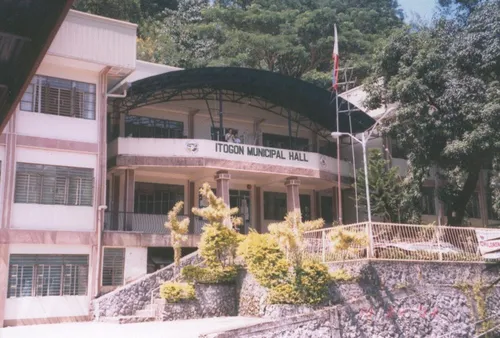
Seven Workers Die From Toxic Gas Accumulation in Benguet Mining Tunnel
Seven workers have tragically lost their lives following a gas-related incident inside a mining tunnel located in the mountainous municipality of Itogon, i
Bus Crash on Munich Motorway Claims Two Filipino Tourists, 25 Injured
A bus carrying a group of Filipino tourists veered off the A9 motorway near Munich on Friday, March 15, killing two passengers and injuring 25 others, loca
Two Killed, 25 Injured in Crash of Filipino Tourist Bus Near Munich
A tourist coach carrying a group of Filipino visitors veered off a federal highway outside Munich on Tuesday evening, killing two passengers and leaving 25
Philippine President Ferdinand Marcos Jr. Grants Absolute Pardon to Mary Jane Veloso
Philippine President Ferdinand Marcos Jr. announced an absolute pardon on Wednesday for Mary Jane Veloso, a former overseas Filipino worker whose long-dela
Country profile
Background
The Philippine Islands became a Spanish colony during the 16th century; they were ceded to the US in 1898 following the Spanish-American War. Led by Emilio AGUINALDO, the Filipinos conducted an insurgency against US rule from 1899-1902, although some fighting continued in outlying islands as late as 1913. In 1935, the Philippines became a self-governing commonwealth. Manuel QUEZON was elected president and was tasked with preparing the country for independence after a 10-year transition. The islands fell under Japanese occupation during World War II, and US forces and Filipinos fought together during 1944-45 to regain control. On 4 July 1946 the Republic of the Philippines attained its…
Location
Southeastern Asia, archipelago between the Philippine Sea and the South China Sea, east of Vietnam
Climate
tropical marine; northeast monsoon (November to April); southwest monsoon (May to October)
Terrain
mostly mountains with narrow to extensive coastal lowlands
Natural resources
timber, petroleum, nickel, cobalt, silver, gold, salt, copper
Ethnic groups
Tagalog 26%, Bisaya/Binisaya 14.3%, Ilocano 8%, Cebuano 8%, Illonggo 7.9%, Bikol/Bicol 6.5%, Waray 3.8%, Kapampangan 3%, Maguindanao 1.9%, Pangasinan 1.9%, other local ethnicities 18.5%, foreign ethnicities 0.2% (2020 est.)
Religions
Roman Catholic 78.8%, Muslim 6.4%, Iglesia ni Cristo 2.6%, other Christian 3.9%, other 8.2%, none/unspecified <0.1 (2020 est.)
Government
presidential republic
Economy
growing Southeast Asian economy; commercial rebound led by transportation, construction and financial services; electronics exports recovering from sector slowdown; significant remittances; interest rate rises following heightened inflation; uncertainties due to increased regional tensions with China
Philippines · Travel guide
Understand
With over 7,100 islands and 300,000 km2 (120; 000 sq mi) of territory between the Philippine Sea and the South China Sea (called the "West Philippine Sea" in the Philippines), the Philippines is the world's second largest archipelago country, after nearby Indonesia (Northern Canada has the largest archipelago). The islands are mostly volcanic in origin, covered with tropical rainforest and fertile soil, but much of the rainforest has been cut down. The terrain varies considerably, but many of the coasts have a lot of bays and headlands, and many of the larger islands have mountainous interiors. The coasts also have many coral reefs. The country has problems like crime, corruption, poverty, and internal conflicts. There is ongoing conflict between the Philippine government and Islamic separatists in Mindanao, and with Communist rebels (New People's Army) elsewhere. Spillovers of hostilities into large cities have occurred. The red tape, bribery, and excessive patronage associated with Philippines' bureaucracy has been reduced, but some locals still distrust government. Crimes and illegal drugs are commonplace, but you are more likely to encounter them if you venture into rough areas. Western nations have discouraged travel to the country because of safety and security concerns. Despite the first impressions of the Philippines as relatively economically developed, it remains a developing country struggling with income inequality and poverty. Typical monthly income for someone in a low-end job – farmer, fisherman, store or office clerk, laborer, security guard, etc. – is in the ₱5000-10,000 range, about US$90–180 at early 2026 exchange rates. Even a job requiring education — nurse, teacher, call center worker who needs excellent English — will rarely pay much over ₱30,000
Getting there
As an island nation separated by thousands of kilometers of seas, the Philippines is mostly reachable only by plane even from within Southeast Asia. There are few passenger ships, and ports may have limited facilities for immigration and customs processing. Philippine bureaucracy is nowhere as cumbersome and corrupt since the end of the Ferdinand Marcos era, and most visitors can travel visa free or get a visa upon arrival at most ports of entry. Customs are relaxed, but the country is now strictly enforcing restrictions on bringing plants, animals, and food, and the obvious prohibitions on bringing in contraband.
Entry requirements
Visas
Nationals from most countries, including all ASEAN countries, can enter the Philippines without a visa for up to 30 days, or obtain a visa on arrival for up to 59 days, as long as they have a return or onward ticket as well as passports valid for a period of at least six months beyond the period of stay. Exceptions to this rule are as listed below:
Nationals of Brazil and Israel may enter the Philippines visa-free for up to 59 days. Nationals of Hong Kong and Macau — including permanent residents of Macau who hold Portuguese passports — may enter the Philippines visa-free for up to 14 days. Nationals of the People's Republic of China traveling as tourists and holding a valid visa issued by Australia, Canada, Japan, the United States or a Schengen Area state may enter the Philippines visa-free for up to 7 days. Nationals of Taiwan holding passports with National ID numbers or Resident Certificate may apply for the eVisa. Nationals of India whose sole purpose of visit is tourism may enter the Philippines visa-free for up to 14 days visa-free. Nationals of India holding a valid tourist, business or resident visa issued by Australi
Getting around
The country's vast archipelagic nature makes travel by plane and boat very important for most visitors, especially between major cities. The country is quite large, especially when considering the area that is water, and its geography and population patterns mean that seemingly short distances, especially on land, may take more time to travel than you would expect. Do what Filipinos do, and try to "commute" or take public transportation when possible. That said, travel by car or motorcycle is still an interesting way to discover the Philippines and find places off the beaten track, if you're willing to face the rather shocking situation on Philippine roads.
Finding your way Philippine addresses roughly follow the Western system, but often have a lot more information, and directions or landmark details (e.g. opposite the high school; near the church/police station/barangay hall) are often provided. Street names exist in cities, but they become less common as you get into the countryside, and the intersecting street is often included (e.g. Rizal Ave cor. Mabini St). Building numbers exist in more central parts of larger cities, but are uncommon elsewhere; even when building numbers are assigned, they may or may not be marked on buildings,
Cities & destinations in Philippines 231
World Heritage in Philippines 4
Museums in Philippines 6
National parks in Philippines 6
Airports in Philippines 60
Tallest buildings in Philippines 12
Caves in Philippines 12
Nature reserves in Philippines 12
Ports in Philippines 12
Railway stations in Philippines 12
Hospitals in Philippines 12
Hotels in Philippines 12
Shopping malls in Philippines 12
Aquariums in Philippines 7
Stately homes & country houses in Philippines 5
Churches in Philippines 12
Gardens in Philippines 8
City parks in Philippines 12
Notable schools in Philippines 8
Music venues in Philippines 8
Arenas in Philippines 9
Town halls in Philippines 7
Casinos in Philippines 2
Fire stations in Philippines 1
Racecourses in Philippines 6
Breweries in Philippines 1
Cemeteries in Philippines 12
Observatories in Philippines 2
Prisons in Philippines 12
Mines in Philippines 6
Amusement parks in Philippines 10
Reservoirs in Philippines 3
Zoos in Philippines 12
Canals in Philippines 1
Palaces in Philippines 2
Botanical gardens in Philippines 3
Squares & plazas in Philippines 12
Monuments & memorials in Philippines 12
Libraries in Philippines 10
Forts & fortresses in Philippines 12
Tunnels in Philippines 4
Power stations in Philippines 12
Archaeological sites in Philippines 12
Monasteries in Philippines 4
Mosques in Philippines 9
Cathedrals in Philippines 12
Tallest towers in Philippines 5
Tallest dams in Philippines 12
Explore Philippines by category
Country fields from Wikidata (CC0); flag via Wikimedia Commons; profile from the CIA World Factbook (public domain); travel guide from Wikivoyage (CC BY-SA); GDP, GDP per capita and life expectancy from World Bank Open Data (CC BY 4.0).