

Mali
Capital: Bamako · Africa
Mali in world rankings
- 59th largest by population in the world (of 219)
- 25th largest by area in the world (of 219)
- 108th largest economy (GDP) in the world (of 178)
- 160th highest GDP per capita in the world (of 178)
- Capital
- Bamako
- Population
- 22,395,489
- Area
- 1,240,192 km²
- Currency
- West African CFA franc
- GDP
- $30.1B
- GDP per capita
- $1,193
- Life expectancy
- 60.7 yrs
- Urban population
- 32%
- Calling code
- +223
- Internet users
- 37%
- Forest cover
- 11%
- Languages
- Bobo, Tamasheq, Dogon, Songhay, Hassaniya Arabic, Kassonke
Mali compared with Taiwan
How Mali measures up against Taiwan — home to 23.3 million people across 36,193 km².
Countries bordering Mali


Latest news — Mali
More news →Andorra and San Marino Sign Historic Association Agreements with the European Union
Andorra and San Marino have officially signed association agreements with the European Union, marking a historic milestone in the integration of Europe’s m
Kenya Confirms Four New Bundibugyo Ebolavirus Cases, Including Three Health Workers
Kenya’s Ministry of Health announced on Friday that four additional cases of Bundibugyo ebolavirus have been confirmed, bringing the country’s total to sev
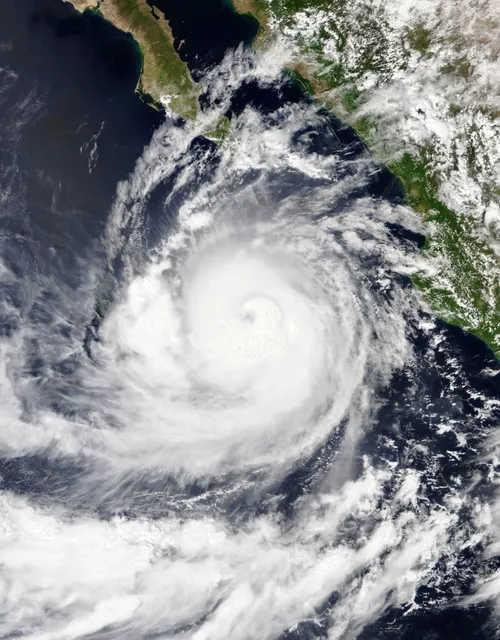
Hurricanes Rachel and Simon leave two dead and flood Mexican coastal regions.
Two people have been confirmed dead following a destructive series of coastal storms in Mexico, as the combined impacts of Hurricanes Rachel and Simon batt
At least 139 migrants dead following shipwreck off coast of Djibouti
At least 139 people have been killed and dozens more remain missing following the shipwreck of a vessel carrying migrants off the coast of Djibouti, local
At least 139 migrants dead and 84 missing after shipwreck off Djibouti
At least 139 people have lost their lives, with another 84 reported missing, following the shipwreck of a vessel carrying migrants off the coast of Djibout
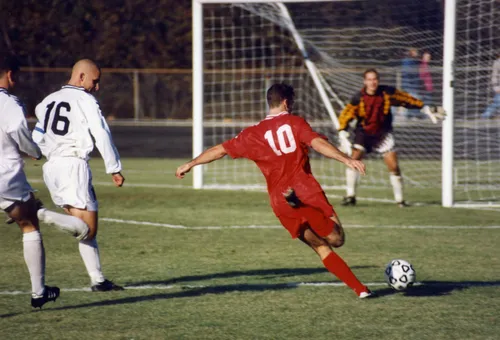
Rayo Vallecano and Athletic Bilbao Match Abandoned Due to Fan Protests
A La Liga fixture between Madrid-based club Rayo Vallecano and visiting Athletic Bilbao was abandoned on Sunday after referee José María Sánchez Martínez h
Country profile
Background
Present-day Mali is named after the Mali Empire that ruled the region between the 13th and 16th centuries. At its peak in the 14th century, it was the largest and wealthiest empire in West Africa and controlled an area about twice the size of modern-day France. Primarily a trading empire, Mali derived its wealth from gold and maintained several goldfields and trade routes in the Sahel. The empire also influenced West African culture through the spread of its language, laws, and customs, but by the 16th century, it had fragmented into mostly small chiefdoms. The Songhai Empire, previously a Mali dependency centered in Timbuktu, gained prominence in the 15th and 16th centuries. Under…
Location
interior Western Africa, southwest of Algeria, north of Guinea, Cote d'Ivoire, and Burkina Faso, west of Niger
Climate
subtropical to arid; hot and dry (February to June); rainy, humid, and mild (June to November); cool and dry (November to February)
Terrain
mostly flat to rolling northern plains covered by sand; savanna in south, rugged hills in northeast
Natural resources
gold, phosphates, kaolin, salt, limestone, uranium, gypsum, granite, hydropower
Ethnic groups
Bambara 33.3%, Fulani (Peuhl) 13.3%, Sarakole/Soninke/Marka 9.8%, Senufo/Manianka 9.6%, Malinke 8.8%, Dogon 8.7%, Sonrai 5.9%, Bobo 2.1%, Tuareg/Bella 1.7%, other Malian 6%, from members of Economic Community of West Africa 0.4%, other 0.3% (2018 est.)
Religions
Muslim 93.9%, Christian 2.8%, animist 0.7%, none 2.5% (2018 est.)
Languages
Bambara (official), French 17.2%, Peuhl/Foulfoulbe/Fulani 9.4%, Dogon 7.2%, Maraka/Soninke 6.4%, Malinke 5.6%, Sonrhai/Djerma 5.6%, Minianka 4.3%, Tamacheq 3.5%, Senoufo 2.6%, Bobo 2.1%, other 6.3%, unspecified 0.7%…
Government
semi-presidential republic
Economy
low-income Saharan economy; recession due to COVID-19 and political instability; extreme poverty; environmentally fragile; high public debt; agricultural and gold exporter; terrorism and warfare are common
Mali · Travel guide
Understand
The Sudanese Republic and Senegal became independent of France on 22 Sept 1960 as the Mali Federation. Senegal withdrew after only a few months, and the Sudanese Republic was renamed Mali. The country was then governed by dictatorships until 1991. In 1992 the country's first democratic presidential elections were held, but since then, Mali has regressed back into a military regime embroiled in a civil war with Islamist militants and Tuareg separatists. Just under half the population is less than 15 years old. The great majority of Malians are Muslim, some also practice indigenous beliefs, and a tiny number are Christian. Around 10% of the population is nomadic. Most Malians work in agriculture and fishing.
History
Mali was once part of three famed West African empires which controlled trans-Saharan trade in gold, salt, slaves, and other precious commodities. These Sahelian kingdoms had neither rigid geopolitical boundaries nor rigid ethnic identities. The earliest of these empires was the Ghana Empire which expanded throughout West Africa from the 8th century until 1078. The Mali Empire later formed on the upper Niger, and reached the height of power in the 14th century. Under the Mali Empire, the ancient cities of Djenné and Timbuktu were centres of both trade and Islamic learning. Mansa Musa, who ruled in the early 14th century, is regarded as the wealthiest person in history (est. $400 billion adjusted for inflation!) owing to the Malian Empire's production of gold & salt. He used this wealth to build some of the impressive mosques still to be found around the country. The empire later declined, and was being supplanted by the Songhai Empire. The Songhai people originated in current northwestern Nigeria. In the late 14th century, the Songhai gradually gained inde
See
The Great Mosque of Djenné, built in 1907, is made completely of mud, and it has five stories and three towers. Every spring the people replaster the Mosque. Regrettably, entrance to non-Muslims is not allowed. Apparently this prohibition is a consequence of a fashion photo-shoot held by Vogue inside the mosque in 1996, which was regarded by the locals as "pornographic". Sites and cultural landscapes making up the Mali Empire can be seen in different parts of the country.
Do
Cruise the Niger River on a traditional pirogue.
Buy
Money
The currency of the country is the West African CFA franc, denoted CFA (ISO currency code: XOF). It's also us
Getting there
Visa requirements
Mali is not a country you can just waltz into. There are few visa-free arrangements in place, and thus, almost everyone requires a visa to visit the country. Visas are not required for citizens of Algeria, Andorra, Benin, Burkina Faso, Cameroon, Cape Verde, Chad, Côte d'Ivoire, Indonesia, Gambia, Ghana, Guinea, Guinea-Bissau, Liberia, Macau, Mauritania, Monaco, Morocco, Niger, Nigeria, Senegal, Sierra Leone, Togo and Tunisia. If you require a visa to visit the country, you must possess a valid passport and you must submit the following: visa application forms, passport photos, a travel itinerary, flight tickets, and an invitation letter from a Malian organisation or individual (a hotel reservation will normally suffice for a tourist visa). Visa fees tend to be expensive and will vary by country. At the Malian Embassy in Dakar, Senegal, a 30-day visa costs CFA25,000 (2018).
By plane Direct air connections between Europe and Mali have been shifted due to ongoing regional diplomatic standoffs; Air France and other major European carriers have completely suspended the flight routes from European airports such as Paris Charles de Gaulle, to Bamako (and return). The most reliable modern routes from Europe now transition from alternative global hubs. Royal Air Maroc offers daily flights from Europe and New York via Casablanca in Morocco. There are also smaller companies, such as Point Afrique, who fly cheaply to & from Mali in the busy tourist season. Alternatively, Turkish Airlines via Istanbul and Ethiopian Airlines via Addis Ababa have become the primary lifelines connecting Sahel to Europe and the rest of the world. Royal Air Maroc arrives and departs in the middle of the night - so even if you are planning a budget trip it may be worth splurgin
Getting around
By bus
The main cities along the paved road into the north are connected via bus (Bamako; Segou; San; Mopti; Gao). A separate paved loop runs through the south (Bamako; Bougouni; Sikasso; Koutiala; Segou) There are many different companies with different schedules but they all have more or less the same prices. Normally a ride to Mopti (600 km; half the way up), endures approximately nine hours; a ride to Gao at least 12. All times are very rough, however, and few bus companies will even give you an estimated arrival time as different drivers drive different speeds and it is not improbable that the bus breaks down and needs a repair or stops to help another bus. It is usually possible to make a reservation several days before, recommended during the tourist season, though one rarely has a problem just showing up 30-60 minutes before the bus leaves. More reliable companies include Bittar, Bani and Banimonotie (Sikasso region) among others. Bus companies:
Bittar Transportation
By taxi brousse To get around one can take the "Taxi - Brousse", the bush taxis. They are the main connection between towns which aren't connected via bus. They are very slow and they sometimes break down or stop to help other broken down taxis. So sometimes the ride takes longer than expected. Unlike the buses, these rarely run on a set schedule, so you generally just need to show up at the station (in a larger town) or sit by the roadside (in smaller villages) and wait for the next to come along - locals may be able to give you some idea what to expect.
By taxi In any larger city, taxis will be plentiful and are usually an easy way for the tourist to get where they are going without trying to figure out the local public transport system (if one even exists). Be prepared to bargain, as th
Cities & destinations in Mali 6
World Heritage in Mali 4
Museums in Mali 2
National parks in Mali 5
Airports in Mali 25
Tallest buildings in Mali 1
Nature reserves in Mali 7
Churches in Mali 2
City parks in Mali 4
Music venues in Mali 1
Arenas in Mali 1
Mines in Mali 4
Reservoirs in Mali 2
Palaces in Mali 1
Squares & plazas in Mali 1
Monuments & memorials in Mali 1
Libraries in Mali 3
Power stations in Mali 12
Archaeological sites in Mali 3
Mosques in Mali 8
Cathedrals in Mali 2
Tallest dams in Mali 2
Explore Mali by category
Country fields from Wikidata (CC0); flag via Wikimedia Commons; profile from the CIA World Factbook (public domain); travel guide from Wikivoyage (CC BY-SA); GDP, GDP per capita and life expectancy from World Bank Open Data (CC BY 4.0).