Rare Martian meteorite discovered in Mali confirmed to be 4.1 billion years old
Researchers have confirmed that a meteorite discovered in the Sahara desert of Mali in 2022, designated Teghaza 001, formed approximately 4.1 billion years
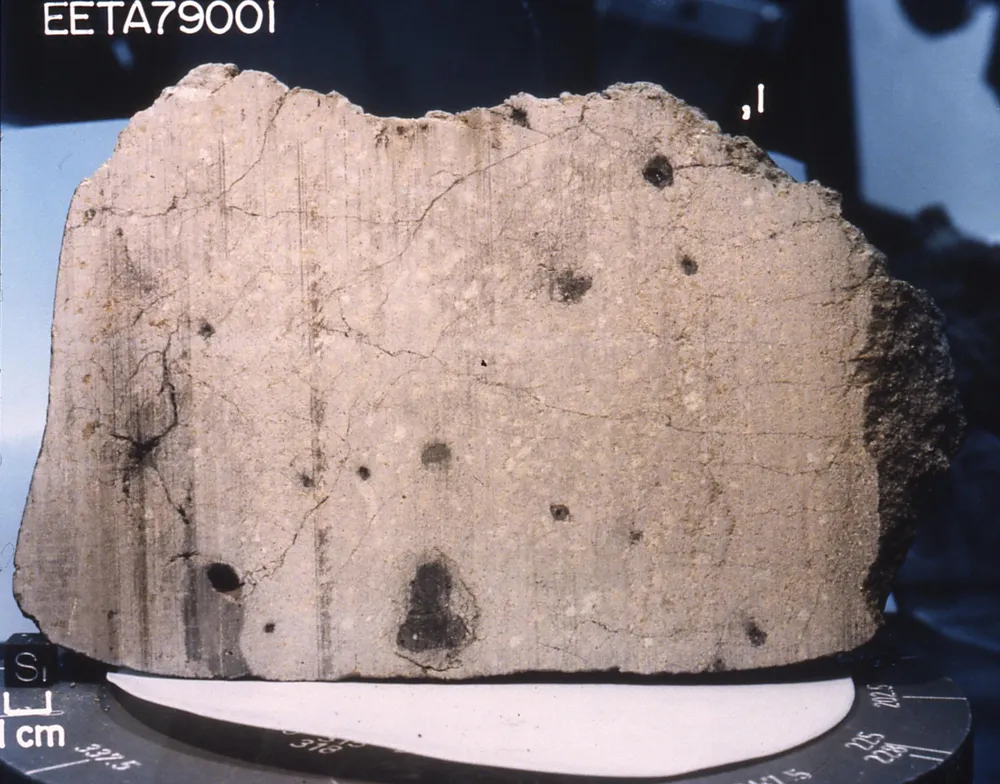
Researchers have confirmed that a meteorite discovered in the Sahara desert of Mali in 2022, designated Teghaza 001, formed approximately 4.1 billion years ago. The finding provides scientists with fresh physical evidence from the early epochs of the Martian planetary system, offering a terrestrial window into geological processes that occurred on our planetary neighbor during its infancy.
Teghaza 001 belongs to an exceptionally rare category of extraterrestrial material. Martian meteorites are rocks that originally formed on Mars before being blasted into space by violent asteroid or comet impacts. After drifting through the solar system for millions of years, fragments occasionally intersect with Earth's orbit and survive the fiery passage through the atmosphere. Out of more than 72,000 meteorites officially classified by researchers worldwide, fewer than 300 have been identified as originating from Mars, accounting for less than half a percent of all known meteorite finds.
Scientists establish the Martian origin of these rare stones by comparing their elemental and isotopic signatures with direct measurements gathered by orbital spacecraft, landers, and surface rovers operating on Mars. The trapped gases and mineral compositions within these samples match the atmospheric and geological profile of the Red Planet, distinguishing them from lunar meteorites or asteroids originating from the main asteroid belt. Martian meteorites are generally divided into three main chemical groups—shergottites, nakhlites, and chassignites, collectively known as the SNC group—though a small number of samples, including unique compositions, remain ungrouped.
A crystallization age of 4.1 billion years places Teghaza 001 squarely within the Noachian period of Martian history. This was a formative era characterized by intense meteorite bombardment, widespread volcanic activity, and the suspected presence of surface liquid water. By analyzing such ancient material in terrestrial laboratories with advanced instrumentation, geochemists can reconstruct the thermal and chemical evolution of early Mars with a level of precision that remote-sensing rovers cannot achieve alone.
For the international scientific community, deep-space research and planetary geology hold profound implications for understanding our wider cosmic neighborhood. Analyzing pristine extraterrestrial samples like Teghaza 001 refines models of planetary formation, atmospheric loss, and the conditions that once allowed liquid water to exist on neighboring worlds, ultimately helping researchers contextualize the fragile environmental history of Earth within the solar system.
Produced by our editorial team, with AI assistance in editing.