

Algeria
Capital: Algiers · Africa
Algeria is Africa's largest country by area, holding the Sahara and rich oil and gas. In North Africa, with about 45 million people, most of its land is Saharan desert, and oil and gas are its economic lifeblood, supplying energy to Europe. The Mediterranean coast holds its cities and population. After French colonisation and a hard war of independence, national identity runs strong. Rich Roman and Berber heritage is a cultural asset. As a major African and Arab power, Algeria's energy and geopolitical role make it weighty in North African and Mediterranean affairs.
Algeria in world rankings
- 33rd largest by population in the world (of 219)
- 10th largest by area in the world (of 219)
- 48th largest economy (GDP) in the world (of 178)
- 101st highest GDP per capita in the world (of 178)
- Capital
- Algiers
- Population
- 46,164,219
- Area
- 2,381,741 km²
- Currency
- Algerian dinar
- GDP
- $287.0B
- GDP per capita
- $6,051
- Life expectancy
- 76.5 yrs
- Urban population
- 76%
- Calling code
- +213
- Internet users
- 77%
- Forest cover
- 1%
- Languages
- Standard Algerian Berber, Arabic
Algeria compared with Taiwan
How Algeria measures up against Taiwan — home to 23.3 million people across 36,193 km².
Countries bordering Algeria


Latest news — Algeria
More news →
Uncharted Crossroads of the Mediterranean: A Land of Ancient Legacies and Enduring Culture
In the heart of Northern Africa, where the Mediterranean Sea kisses the sun-kissed shores, lies the vast and storied land of Algeria. This magnificent coun
Algeria Sends Ambassador Back to Mali, Reopens Shared Airspace
Algeria announced that its ambassador to Mali will return to Mali, and the two countries have also reopened each other's airspace, easing the diplomatic di
Algeria holds parliamentary elections as citizens voice discontent and hopes.
Elections for the People's National Assembly were recently held in Algeria, where voters cast ballots to fill 407 seats. The election took place as Algeria
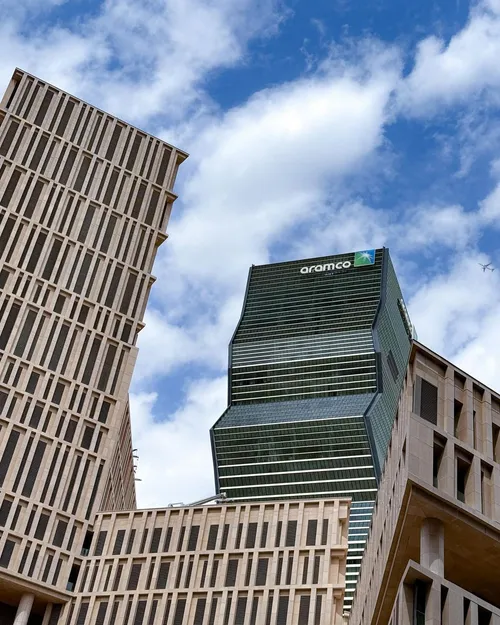
Saudi Arabia, Algeria's National Oil Companies Lower LPG Prices
Saudi Aramco, the national oil company of Saudi Arabia, and Sonatrach, Algeria’s state‑owned oil company, announced that they will lower the price of lique
Human Rights Watch Exposes Widespread Human Rights Abuses by Various Forces in Mali.
Human Rights Watch has recently released a report, exposing the severe human rights abuses committed by various forces within Mali. According to the report
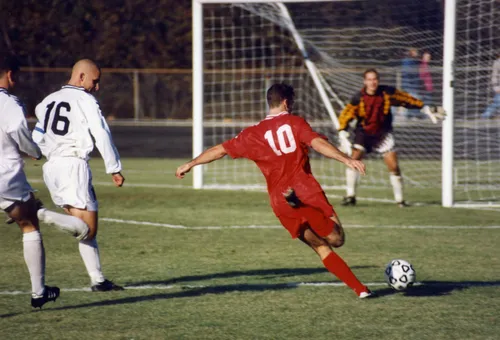
Lionel Messi Leads Argentina to World Cup Opener Victory and Historic Achievement
Lionel Messi, the captain of the Argentine national football team, recently scored a hat-trick in the opening match against Algeria at the World Cup, leadi
Country profile
Background
Algeria has known many empires and dynasties, including the ancient Numidians (3rd century B.C.), Phoenicians, Carthaginians, Romans, Vandals, Byzantines, over a dozen different Arab and Amazigh dynasties, Spaniards, and Ottoman Turks. Under the Turks, the Barbary pirates operated from North Africa and preyed on shipping, from about 1500 until the French captured Algiers in 1830. The French southward conquest of Algeria proceeded throughout the 19th century and was marked by many atrocities. A bloody eight-year struggle culminated in Algerian independence in 1962. Algeria's long-dominant political party, the National Liberation Front (FLN), was established in 1954 as part of the…
Location
Northern Africa, bordering the Mediterranean Sea, between Morocco and Tunisia
Climate
arid to semiarid; mild, wet winters with hot, dry summers along coast; drier with cold winters and hot summers on high plateau; sirocco is a hot, dust/sand-laden wind especially common in summer
Terrain
mostly high plateau and desert; Atlas Mountains in the far north and Hoggar Mountains in the south; narrow, discontinuous coastal plain
Natural resources
petroleum, natural gas, iron ore, phosphates, uranium, lead, zinc
Ethnic groups
Arab-Amazigh 99%, European less than 1%
Religions
Muslim (official; predominantly Sunni) 99%, other (includes Christian, Jewish, Ahmadi Muslim, Shia Muslim, Ibadi Muslim) <1% (2012 est.)
Government
presidential republic
Economy
suffering oil and gas economy; lack of sector and market diversification; political instability chilling domestic consumption; poor credit access and declines in business confidence; COVID-19 austerity policies; delayed promised socio-economic reforms
Algeria · Travel guide
Understand
Politics and government Algeria is officially known as the People's Democratic Republic of Algeria. Although the term "People's Republic" is commonly associated with communist states, Algeria is not a communist country. The term was adopted primarily because Algeria gained its independence through a revolutionary struggle against France. Algeria is a multi-party republic with a strong executive branch led by a president. The president is both the head of state and the commander in chief of the army, and is elected by popular vote for a five-year term. Legislative power is vested in the two chambers of Parliament, the Council of the Nation and the People's National Assembly.
Geography Algeria covers an area of 2,381,741 square kilometres (919; 595 sq mi), making it the world's tenth-largest country and the largest country in Africa. It is slightly larger than Mexico, four times smaller than the United States, and nearly 200 times larger than Africa's smallest country, Gambia. Algeria has diverse terrain, with the Mediterranean coast, the Atlas Mountains and the Sahara. Algeria is made up of 58 provinces and more than 1,541 communities.
History
Early history The history of Algeria can be traced back to the earliest civilisations that inhabited the region and beyond. The earliest known inhabitants of Algeria were the Berber people, who have inhabited the region since at least 10,000 BCE. From the 8th century BCE, Phoenician traders established trading posts along the North African coast, introducing the region to the wider Mediterranean world, and were the first to settle Hippo Regius, now Annaba. The subsequent Carthaginian Empire, headquartered in what's now Tunisia, built cities including Leptis Magna. Following the destruction of Carthage by the Romans, Ber
See
Algeria is brimmin
Getting there
Algeria is not a country you can just show up to and get in; most visitors require a visa to visit the country and the government hasn't exactly opened up the country to the rest of the world. An Algerian visa requires reams of paperwork and often back-and-forth with consular officials. Merely obtaining one is often an accomplishment in its own right.
Visa requirements
Citizens of Libya, Malaysia, Mali, Mauritania, Western Sahara, Seychelles, and Tunisia can enter the country without a visa for 90 days. Hong Kong passport holders are entitled to 14-day visa free arrangement. If you're not a citizen of any of the countries listed above, you are required to apply for an Algerian visa at an Algerian diplomatic mission. Obtaining an Algerian visa can be challenging, as the process often involves heaps of paperwork and high fees. For example, the Algerian Embassy in the United States usually charges US$160 for any kind of Algerian visa and the Algerian consulate in Alicante charges €95 for visas for Spanish citizens staying up to 90 days. As a general rule of thumb, the longer you intend to stay, the more expensive the visa will be.
Visa application requirements
An Algerian diplomatic mission can be found in almost every country. If your country does not have an Algerian diplomatic mission, you may need to travel to another country to apply for an Algerian visa. Most missions will accept applications by mail so long as you send a prepaid return envelope (be sure to follow the instructions exactly). Although visa requirements vary from country to country, you're typically asked to submit the following to apply for an Algerian visa:
A copy of your passport (must have a validity of more than six months) Two passport-sized photographs (European size) Two visa applic
Getting around
With an area of 2,381,741 square kilometres (919; 595 sq mi), travelling between major cities in Algeria can take a lot of time and can be dangerous if you don't know what you're doing.
By plane Due to the country's immense geography, the most convenient way of travelling long distances is by plane. That said, schedules are more guidelines in Algeria; expect delays. Algeria has a very small airlines industry ― only four airline companies, all state-owned, operate in the country. The two main airline companies are as follows:
Air Algérie is Algeria's national carrier and offers flights to almost any Algerian city. The airline uses Houari Boumediene Airport as its hub. Tassili Airlines, like Air Algérie, uses Houari Boumediene Airport as its hub and will take you all over Algeria. It is a subsidiary of Sonatrach, the largest company in Africa and one of the largest oil and gas companies in the world.
By taxi It's usual to take a taxi to travel near or in cities. The prices are pretty moderate but when travelling between bigger cities with large distances taxis are the same or more expensive as flying. Try to avoid unofficial taxis since it's very likely the driver will rip you off. Most taxis in Algiers have meters and you should insist on using the meter. The presence of meters in other large cities such as Oran varies. Do not negotiate the price before you enter the taxi, as this will clue the driver in that you have no idea what you are doing and he will invariably scam you on the price. Instead, only negotiate the price once you enter the taxi and determine it has no meter. Tipping is not necessary but you can round up to the next DA10. Shared taxis, known as “taxi-libre” in Algeria, operate along fixed routes and depart once fully occupied. These taxis provi
Cities & destinations in Algeria 23
World Heritage in Algeria 6
Museums in Algeria 6
National parks in Algeria 6
Airports in Algeria 48
Tallest buildings in Algeria 2
Caves in Algeria 6
Nature reserves in Algeria 10
Ports in Algeria 1
Railway stations in Algeria 12
Hospitals in Algeria 5
Hotels in Algeria 6
Shopping malls in Algeria 3
Aquariums in Algeria 3
Churches in Algeria 8
City parks in Algeria 10
Notable schools in Algeria 7
Music venues in Algeria 2
Arenas in Algeria 1
Cemeteries in Algeria 6
Observatories in Algeria 1
Ski resorts in Algeria 1
Prisons in Algeria 3
Mines in Algeria 8
Palaces in Algeria 9
Botanical gardens in Algeria 1
Monuments & memorials in Algeria 12
Libraries in Algeria 5
Forts & fortresses in Algeria 2
Tunnels in Algeria 1
Power stations in Algeria 1
Archaeological sites in Algeria 12
Monasteries in Algeria 1
Synagogues in Algeria 1
Mosques in Algeria 12
Cathedrals in Algeria 5
Tallest towers in Algeria 2
Tallest dams in Algeria 5
Explore Algeria by category
Country fields from Wikidata (CC0); flag via Wikimedia Commons; profile from the CIA World Factbook (public domain); travel guide from Wikivoyage (CC BY-SA); GDP, GDP per capita and life expectancy from World Bank Open Data (CC BY 4.0).