
Musical theatre
旅遊主題
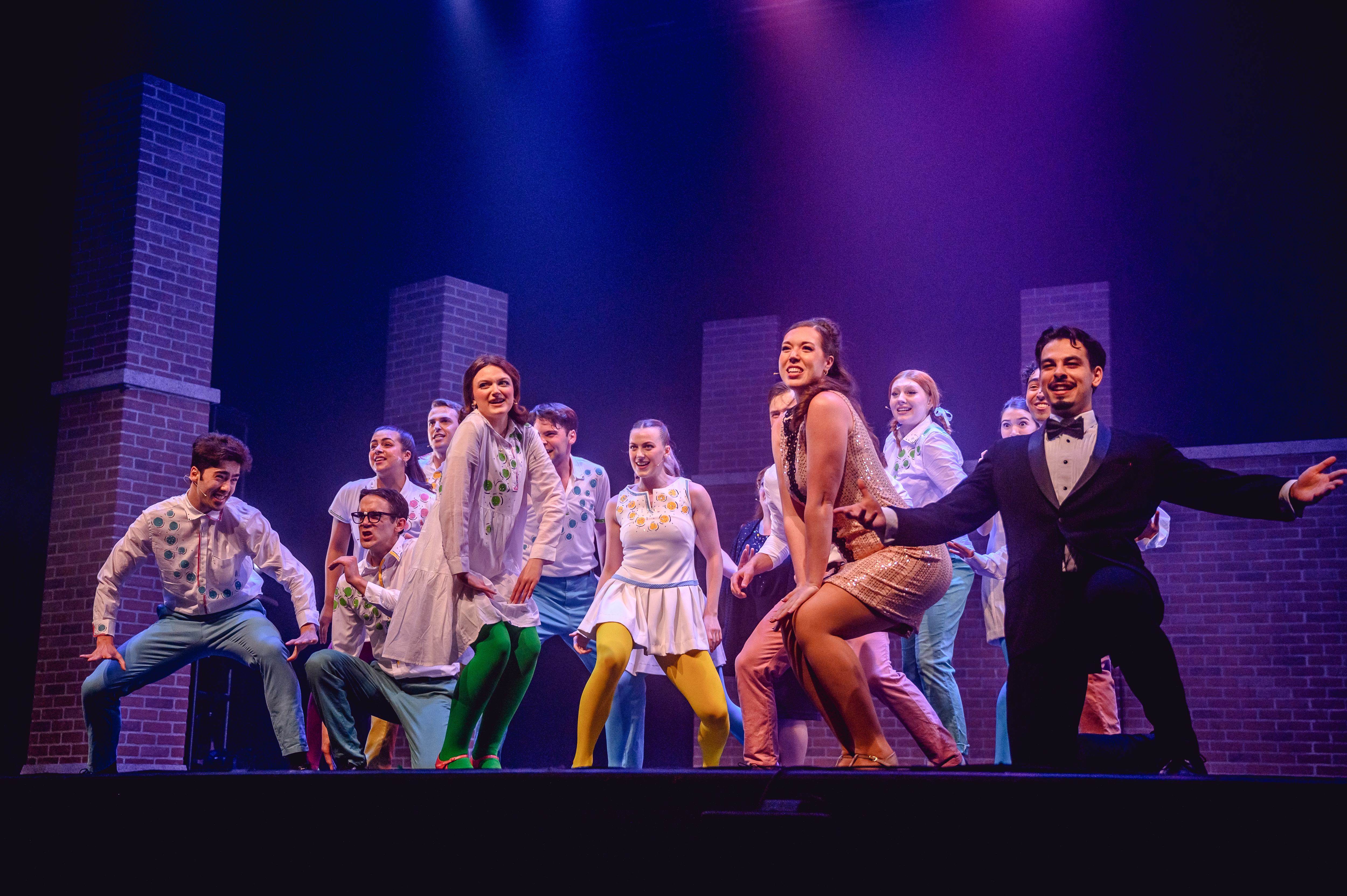
Musical theatre, or just musicals, is an art form at the intersection of theatre and music. It is a relatively new genre, and widely regarded as distinct from opera, though the distinction between the two genres can often be rather poorly defined. There is also some overlap between "concept albums" and musicals. A concept album is a piece of popular music that consists of several discrete songs that nonetheless dwell upon a common theme or tell a coherent story. Indeed some musicals were initially written as concept albums and vice versa.
Understand
The term "musical theatre" originated as a descriptive term for any theatrical performance that included music, but today specifically refers to a piece of theater where much — or all — of the dialogue is sung. Although considered by most experts to be a distinct genre from opera, the distinction between the two art forms is often not very well defined, and there are several high-profile works that straddle the boundaries of the two. Many musicals contain some spoken dialogue, but many are entirely sung-through (or rapped-through) with no spoken dialogue at all. An actor in a musical can be reasonably expected to be a "triple threat" who is reasonably competent in singing, dancing, and acting.
While not all musicals include choreography or dancing, it is often said "When the emotions get too strong for speaking, the actors sing and when the emotions get too strong for singing, the actors dance." A major limitation of the musical compared to straight theater is that while it is primarily a narrative form (unlike opera where the plot is often secondary), a minute of song usually contains fewer words than a minute of spoken dialogue, and due to the structure of song, much of that is repeated. Musicals thus have to place a great emphasis on reminiscence themes, choreography and other cues to transport what would be done by text in other theatrical productions. Those factors and the relatively recent emergence of the art form have led some to dismiss the musical as incapable of telling the complex stories of theater or reaching the musical complexities of opera, but there are in fact no limitations on what musicals can do, and a well made and performed musical has no reason to be considered a "lesser art form" in any way. That said, countries that subsidize certain operas or theaters as "high culture" usually do not do the same for musicals. On Broadway or the West End, performances are always accompanied by a live orchestra, if you define that loosely as consisting of at least a few instrumentalists who may also act. However, some amateur or lower-level professional productions may make use of pre-recorded music instead.
History Musical theatre grew out of the
Venues
Perhaps the best known venues for musicals are Broadway in New York City and the West End in London. As this indicates, many of the world's best known musicals were written in English, and the English language market is still the most important. Most venues tend to only show one musical at a time, with repeat performances as long as there is sufficient demand, and then replace it with something new when interest wanes. As such the revenue of individual venues greatly depends on the success of their productions and it is quite some feat to have the same show performed for years or even decades on end. As musicals are an art form notoriously hard to translate well (much of the lyrics depend on rhyme, timing and word play and both text and music are important and need to work as a harmonious whole with all parts supplementing each other) musicals often have problems "exporting" which however doesn't stop authors and producers from trying. Interestingly this sometimes leads to musicals enjoying a much longer and more successful run abroad in a different language market than at home as the translated text somehow "works" better and/or manages to hit a note with the different audience. For example, Les Misérables was only a modest success when the original French version premiered in Paris in 1980, while the English version became a global sensation after its London premiere in 1985, to the point that the London version is better known than the original even in France itself. Similarly, perhaps due to cultural differences, there have been West End hits that were flops on Broadway and vice versa. Examples of the former include Jesus Christ Superstar (1970), Chess (1986), and Aspects of Love (1989).
West End What Broadway is to musicals in the US, the West End is to musicals in England, to the extent that the terminology "off-West End" has been created in analogy to "off-Broadway" (originally a geographic designation, now mostly one of seating capacity). However, shows written for the English market often have a stint at Broadway and vice versa.
1 Apollo Victoria Theatre. At 2328 seats, this is the largest musical theatre on the West End of London. From 1984 to 2002
Songs
Many of the songs in the musicals were eventually turned into jazz standards because the melodies had good structures and chord sequences for improvising on. While musicals have eventually branched into several types of music and Hamilton famously is a hip-hop musical about "a man who embodies hip-hop" (Alexander Hamilton, according to the musical's creator Lin Manuel Miranda), there is a distinct style of music usually employed for at least some songs in a musical, called "show tunes". Another common feature of musicals is not so much one of musical style but rather of lyric content, the so-called "I want song" which usually appears within the first quarter hour of the show and is usually sung by the main character expressing her or his (unfulfilled) desires and/or motivations, i.e. what the character wants, thus establishing the character and possibly setting up the conflict driving the narrative. Those songs are among those musical numbers most likely to "survive" outside the musical and become popular even among people who don't know the musical. Examples of such songs include "No Matter What", which is better known for the chart-topping cover version by Irish band Boyzone, but was written for Andrew Lloyd Webber's Whistle Down the Wind (1996), and "You'll Never Walk Alone", which has been adopted by supporters of Liverpool FC as their club anthem and is better known as such, but was written for Rodgers and Hammerstein's Carousel (1945). In fact, there have been cases of individual songs becoming massive hits even when the entire production as a whole was a flop. Many of the earlier songs in musicals had simple melodies; they were designed so they would be easy for the musical's performers to sing. This usually meant that the notes did not make large jumps as they did in many of the songs for movies of the same era. For this reason, songs like "Invitation" and "Green Dolphin Street", which were written for films, are harder to sing than the songs in musicals. However in the last third of the 20th century, the demand for singing talent in movie actors has become rarer, the result being that musical stage actors typically have more singing ability than film ac
Buy
At most Broadway and West End musicals, merchandise is sold at the venue. Typical examples of merchandise include colouring books, mugs, t-shirts, and detailed programme booklets.
Respect
When attending a performance, you are generally expected to remain silent at all times. Children are generally welcome as long as they can sit still and do not make too much noise. You can applaud at the end of a particularly challenging musical number, as well as at the end of the performance, though cheering like at a ball game is not appropriate. Try to be at the performance venue on time; if you are late, you will usually not be let in until the next interval or intermission so you do not distract the performers and other audience members. Dress at a musical tends to be smart casual. That said, you generally will not be denied entry as long as you are not topless or dressed in rags.
本指南改寫自 Wikivoyage (CC BY-SA)