
Museums
旅遊主題
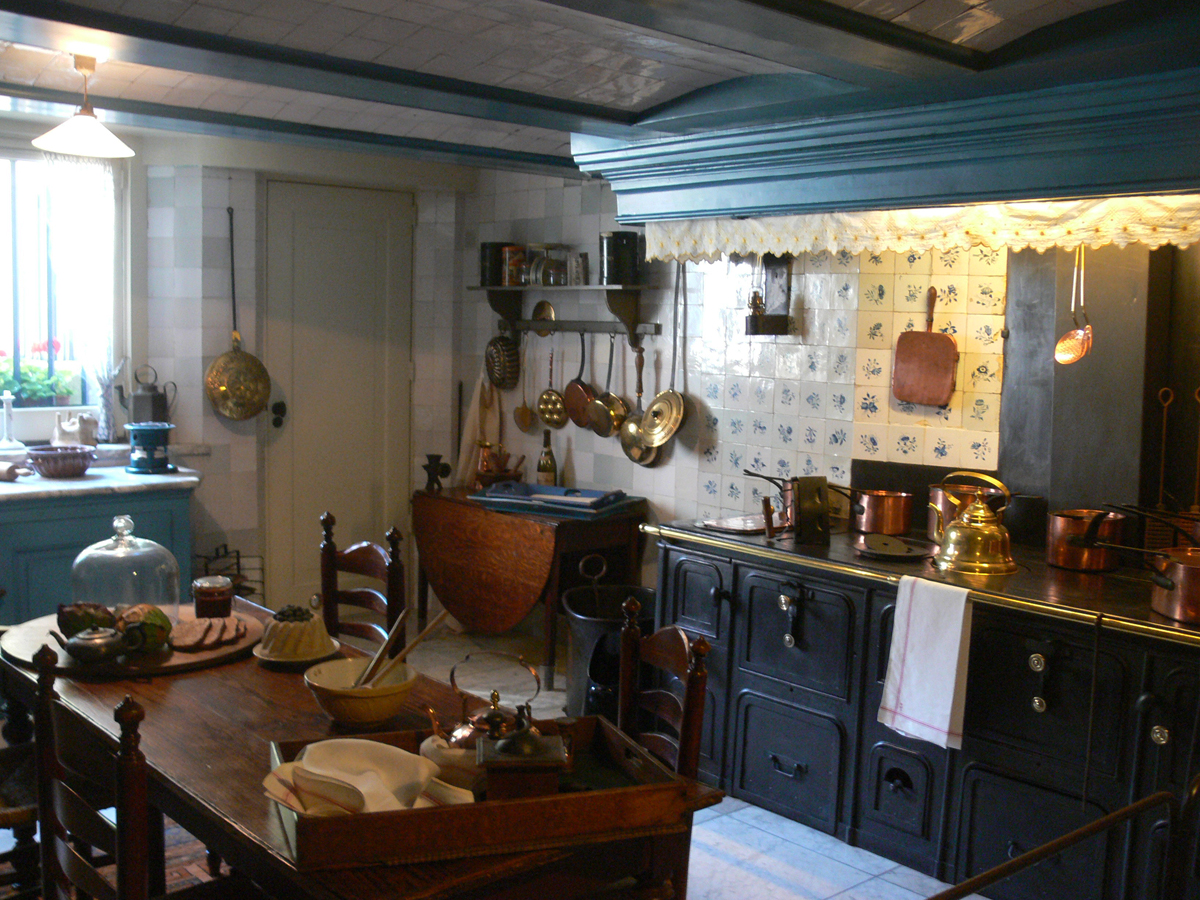
Museums are institutions that showcase a collection of artifacts or other objects, to educate visitors about some topic. Museums exist for practically every subject you can imagine, from typical areas like history, art, or science to strange niche topics like eccentric collections, espionage, and even fringe phenomena.
Understand
Museums can be traced back over 2,000 years to private collections of wealthy individuals. Public museums started in the late middle ages. The Capitoline Museums were founded in 1471 and opened to the public in 1734. The Vatican Museums date back to 1506. The Royal Armouries in the Tower of London opened to the public in 1660. However, museums did not become widespread until the 19th and 20th centuries. Museums are typically created to preserve historic artifacts, to educate and to enable research; though the term is not legally protected, and does not in itself warrant academic aspirations. Many museums are established by national and local governments or by universities, educational charities or non-profit organisations. A few museums are run as profit-making commercial ventures, while others are run as a spin-off from commercial or military organisations, to promote their products or public image. There are also museums created as a private hobby, perhaps later receiving public or community support. "Museums" on sensational topics such as erotica or torture might be disappointing tourist traps; check reviews before going. Curation policy within museums can also vary considerably. A museum may be as simple as a small room with a narrowly focussed collection, perhaps opened one day per week by a volunteer. Other museums, typically national or regional museums, are in large buildings housing a wide variety of exhibitions. Open-air museums can include a village or town. Extant and former monarchies often have some of their palaces in use as museums, as are the homes of much of the nobility and wealthy business tycoons of yesteryear. Former celebrity homes can also be converted to museums, including those of scientists, artists and politicians, such as the Presidents of the United States.
Older museums have become historical artifacts in their own right, for their architecture, for their collections, or for their scientific legacy. Buildings and collections which were contemporary when the museum was inaugurated, might centuries later seem obsolete, but also be rare examples of earlier exhibition methods and ideologies. Up to the 18th century, most collections we
Get in
Admission and donations Some museums charge admission (to support the work of the museum), whereas others have free entry. Some museums have agreements where members of one museum get free or reduced admission to others. Some museums charge for admission but have a lower fee or free entry for local residents, who may be indirectly subsidising the museum via their taxes. Many museums have free or discounted admission for everyone on certain days or evenings. Museums in some countries also offer discounts to students, teachers, members or veterans of armed forces or senior citizens, on presentation of an appropriate ID. In some museums, there is no admission per se, but you can donate to the museum. If the donation is a "suggested donation", it is expected that, out of etiquette, you will donate to the museum. In most cases, if there is no admission you should donate to the museum a comparable amount of money to that of an admission fee. Some very popular museums require a reservation in advance to limit crowds; other very niche museums require a reservation because otherwise they can't or won't open (typically due to staffing or 'conservation' concerns). At some other museums a reservation isn't necessary but can allow you to avoid waiting in line when you get there. Some museums will also operate on a timed entry system; this is also to control numbers.
Taking in belongings Museums may restrict what belongings, such as bags, you can take in, and may have a facility, such as a cloakroom, near the entrance where you can leave belongings. They may also have security staff present and may inspect or x-ray belongings or use metal detectors. This is more likely if the museum (or its collections) are high profile, or the subjects featured put the museum at risk. It is also more common in some countries than in others.
See
Guided tours are usually possible and may even be free. In certain museums a guided tour may be the only way visitors are allowed in. Some museums offer guided tours of the surroundings, in particular if it is an archaeological site, an old town, or a historically important site. In addition to or instead of guided tours, there may be self-guided audio tours or maps showing you the layout of the museum. These typically show you the locations of all the exhibits, or rooms, in relation to the museum in general. Self-guided audio tours and brochures are often available in a selection of languages. Guided tours in other than the local language(s) may be available at certain hours or days of the week, or by agreement. Sometimes it is possible to ask questions in languages other than the one of the tour. Unless you know the local language it usually pays to check the options. Most museums are divided into exhibits, and the bigger the museums the larger the exhibits, the fancier the exhibits, and the more exhibits there are.
World-renowned museums While there is no consensus on which museums can be considered the best in the world, the following commonly appear whenever any such list are compiled:
1 The Louvre (Musée du Louvre), Paris, France. 2 British Museum, London, United Kingdom. 3 Metropolitan Museum of Art, New York City, United States. 4 Prado Museum (Museo del Prado), Madrid, Spain. 5 Uffizi Gallery (Galleria degli Uffizi), Florence, Italy. 6 State Hermitage Museum (Государственный Эрмитаж), Saint Petersburg, Russia. 7 Pergamon Museum (Pergamonmuseum), Berlin, Germany. 8 Vatican Museums (Musei Vaticani), Vatican City. Some other museums may also be well-known to people interested a specific topic, or for certain specific items on display. Some examples include:
9 Field Museum, Chicago, United States. Natural history museum known for its dinosaur exhibit that includes Sue, one of the largest and most complete Tyrannosaurus rex fossils found to date. 10 Museum of Modern Art, New York City, United States. Museum housing some of the most important examples of artworks from the late 19th century onwards, including Vincent van Gogh's The Starry Night a
Do
Museums, especially if oriented towards kids, may have performances or interactive activities. Science museums in particular often have elaborate interactive exhibits exploring scientific phenomena. Sometimes there are planetariums in which you can view documentary films about space; the movie screens in planetariums are so large that watching them can cause motion sickness. Museums may have tours, often showing parts of the museums that are not accessible to the general public.
Buy
There will often be a souvenir shop on-site. Most museums see this shop not as a public service but as a source of profit that can subsidise other portions of the museum's operation, which do serve the institution's core mission. The items therefore can be overpriced; often, they might not serve any purpose except as a souvenir. These souvenirs may however be unique items. Sometimes the items are made for use, with a twist reminding of the museum, such as a deck of cards in historic style. It is also common for museums to sell replicas of items in their collections, or even items held by other museums. Museums at archaeological sites are particularly likely to offer replicas. Major museums like the British Museum or the Smithsonian have a wonderful selection, and even lesser museums often have some quite fine stuff. Many of these items are rather pricey, but quality is usually excellent and many items are unique. Where else could you get a good copy of some of Cleopatra's jewellery, or of an ancient statue as in the photo? If a museum is engaged in research, they may have one or more books in print. These publications are specialised and usually closely related to the subject matter covered in the museum's main collections. An art gallery might sell
本指南改寫自 Wikivoyage (CC BY-SA)