
Gestures
旅遊主題
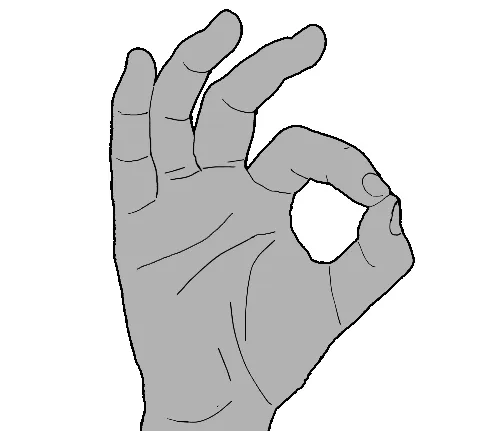
A gesture is a form of nonverbal communication.
Understand
There are practically countless gestures, including hand signals in sign language, that we use during speech or in place of speaking. In day to day life, we may use dozens of different gestures throughout the day without really thinking about them, but when travelling, it is important to be aware of our body language and think about the meaning we are trying to convey. Some languages and cultures are more non-verbally expressive than others; in Europe, it is a common stereotype that the further south you go, the more physically expressive people are when talking to you. Therefore, a northern European traveller visiting the south may miss certain cues which would be obvious to any local, because they're relying much more on what a person says rather than how they act. In order to understand people from other backgrounds, it helps to understand their gestures. Certain gestures only have meaning within a specific culture, whereas others exist internationally but have been assigned different meanings in different parts of the world. This is especially important to remember for travellers, as we rely much more on non-verbal communication when we can't speak the language of those around us. So it's more than worth your time to read this article, if only to save yourself from any potentially awkward moments: a gesture which you consider insignificant or positive may be quite offensive elsewhere!
Gesture types
A-ok or Okay — made by connecting the thumb and forefinger in a circle and holding the other fingers straight or relaxed in the air, may signal the word "okay". While the gesture is positive in some countries, in certain parts of central and southern Europe (although not in Spain or Portugal), Turkey, Latin America and the Arab world, the gesture is considered offensive and disgusting. One American political legend states that the then-Vice President Richard Nixon greeted a crowd of Brazilian well-wishers with this symbol when emerging from a plane for a visit of the country. In the U.S.A., this gesture was adopted by white supremacists in the 2010s and is now controversial. Fig sign – Made by forming a fist and putting the thumb in between the index and middle fingers, the fig sign is used for the "got your nose" children's game in some countries. In areas including Turkey and some Slavic countries, this is offensive. It is also offensive in Spanish-speaking Latin America, but conversely in Portuguese-speaking Brazil, it is used as a good luck charm. Gallic shrug – A typically French gesture, combining shrugged shoulders, raised arms, puffed-out cheeks and a slight sucking or popping noise made with the lips. If you spend any time among the French, you'll find yourself doing it too! The shrug has many meanings, from a simple "I'm not sure" and "I don't care", through to "It's not my fault. Why are you bothering me?" and "I don't agree with what you're saying but can't be bothered to argue." The shrug's more narrow meaning in the Anglosphere may cause you to view it simply as a sign of apathy or rudeness to you, when this could perhaps not be further from the truth; context is key to working out the meaning. Fun fact: the concept for this does not exist in France or the French language! That's despite the testimony of every English speaker who has ever met a French person asserting that it does in fact exist. Maybe it's so common in France, they don't need a word for it... Hand-kissing — While this gesture indicates courtesy, politeness, respect or admiration in certain cultures, it is frowned upon in the Muslim world, where this gesture is considered disgusting
本指南改寫自 Wikivoyage (CC BY-SA)