
Fjords of Norway
旅遊主題
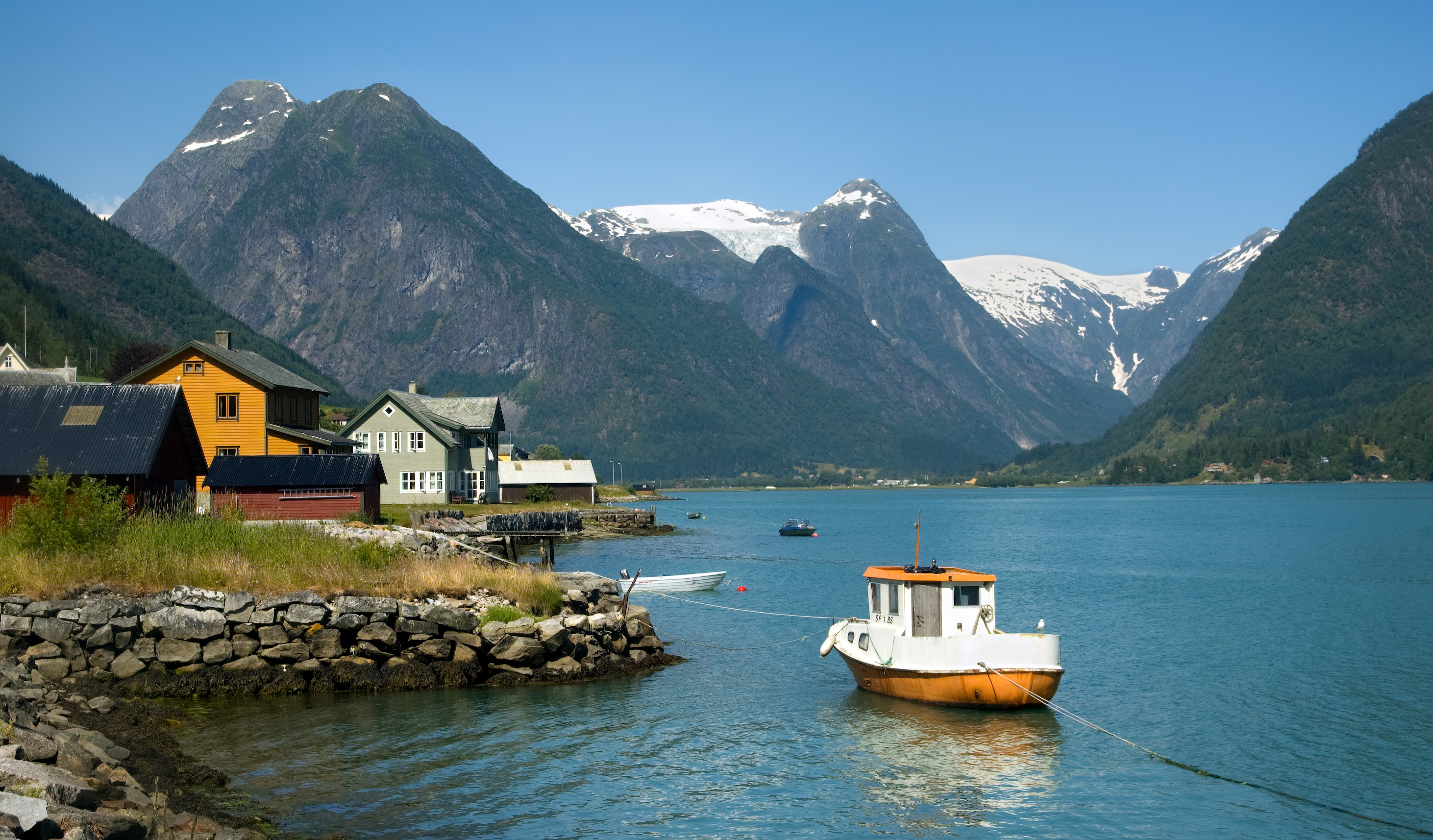
A fjord is a long and deep inlet of the ocean. While fjords can be found in many countries, the fjords of Norway are particularly famous, numerous and easily accessible.
Understand
There are well over 1,000 distinct (named) fjords in Norway. Some 10-15 major fjords are 100 km or longer from the ocean to the far end. The vast Sognefjord is some 200 km to the far end and includes a number of arms each about the size of Milford Sound. Fjords are several hundred meters deep, the deepest fjords are 700 to 1300 meters deep. Some fjords are characteristically narrow, such as Geirangerfjord and Nærøyfjord, others are wide like bays or enclosed oceans, such as Boknafjord or Trondheimsfjord. In most parts of Norway fjords are the dominant landscape features, traditional districts are often identified by proximity to a major fjord and the district or region often have the same name as the dominant fjord. For instance Nordfjord is the district surrounding the Nordfjord, Sogn is the area surrounding Sognefjord. Orientation is likewise typically related to how far one is removed from the open ocean along the fjord, key words are "inner" and "outer" fjord areas. Fjords are often so deep and/or wide (particularly in western Norway) that they can only be crossed by ferry (a few daring bridges or tunnels have been built). Traditionally the fjords were the highways of large parts of Norway, because overland transport was often difficult, slow or virtually impossible. Today fjords remain as obstacles for roads and railways, only cruise passengers experience travel along these vast corridors. The word "fjord" in fact originates from a Norse word for travel or crossing. "Ferry", "fare" and "ford" have same origin. English and Scotch "firth" is adopted from old Norwegian, whereas "fjord" is an international word adopted from modern Norwegian. In large parts of Norway the fjords create a particular kind of fragmented and complex landscape. There is often in very little continuous land, instead a wide tangle of islands and peninsulas. These peninsulas are often connected to the actual mainland by (narrow) isthmuses (typically recognized by the Norwegian name "eid"). Such isthmuses are shortcuts between fjords and have always been important transport corridors. For instance Vikings pulled their ships overland at isthmuses to avoid treacherous stretches of the co
Get in
As there are fjords all over Norway there is little general advice about entry points or how to get in, advice mostly depends on fjord region. The Hurtigruten offers transport from fjord region to fjord region mostly along the very coast. Many visitors arrive by cruise ships departing from Denmark, the Netherlands or the UK, a cruise ship can navigate the entire fjord thus offering direct transport to the iconic inner parts of the most popular fjords.
Railway Because of difficult landscape there are no railway lines across the great fjords. Railway construction is also difficult in the east-west direction, only the Bergen railway (Bergensbanen) runs through the mountains and fjords until the ocean. The Bergen railway was an engineering achievement when it was constructed around 1900. The Stavanger line (Sørlandsbanen) circumvents the central mountains and terminates in Stavanger just south of big western fjords. The Rauma railway (Raumabanen) terminates at the Åndalsnes, the end of the Romsdalsfjord, further transport on water or by road. The Iron Ore Line (Ofotbanen/Malmbanan) also runs through difficult terrain to reach the fjord at Narvik port.
Western fjords
By air: Stavanger, Haugesund, Bergen, Ålesund and Molde international airports are all convenient entry points. By car: Roads E39, E16, E136, 55, 15, E134 By rail: Three railway lines run from eastern Norway: Bergen line with an arm to Flåm Kristiansand-Stavanger line (Sørlandsbanen) terminates at Stavanger Rauma line (Raumabanen) runs from Dovre line at Dombås and terminates at Åndalsnes By boat: Regular ships (ferries) from Denmark to Stavanger and Bergen Cruise ships - the western fjords are popular destinations for multi-day cruises, often departing from foreign ports
Nordland and Troms fjords By air: Bodø, Evenes (Narvik/Harstad) and Tromsø are convenient entry points (several secondary airports for regional and domestic traffic) By rail: The Bodø line (Nordlandsbanen) offers access to several towns in Nordland county The Iron Ore line (Ofotbanen) offers access from northern Sweden to Narvik By car: This area stretches some 1,000 km south to north, driving is rewarding but time consuming r
Get around
Historically boat transport was the only possible transport in many fjord areas. Even after the introduction of cars there were several hundred car ferry crossings throughout the fjord region, Møre og Romsdal alone had some 50 ferry crossings on the road network. After the construction of many new roads during the last 50 years mostly ferry crossings at the most narrow points remain. Ferry docks and crossing points are often located in remote places with nothing but the dock and a car line up.
By boat: Hurtigruten runs along the coast where most great fjords meet the ocean. The Hurtigruten does not however visit the inner part of the fjords, instead the ship mostly runs across the mouth of the fjords. Exception to this rule is visits to Geirangerfjord (summer season) and regular calls at Molde and Trondheim. Car ferries (ferje/ferge) are part of the road system and not a separate means of transport. Express passenger boats (hurtigbåt) travels like buses in some fjord areas with limited road transport By private boat. Motor boat is usually the easiest. Sails can be difficult to use because wind is unpredictable or absent in these largely sheltered waters. Kayak is a fine and peaceful mode of transport, but mostly for sightseeing on shorter stretches, kayakers should be cautious at steep cliffs as rocks may plunge to the fjord. By car: Driving is (to the surprise of many first time visitors) an excellent way of getting around and at the same time sightseeing. Many roads run along the shores or on "shelves" (corniches) at the steep rock faces offering great and ever changing panoramas. Car ferries offer a nice break and a mini cruise for 10, 20 or 30 minutes across the water. Car ferries (ferje/ferge) are part of the road system and not a separate means of transport, on main roads these ferries run so frequent that planning is hardly needed. By rail: Because of the complex topography, rail is in general not an option, except for the stretch of Bergen line with the famous arm to Flåm, and the Bodø line (Nordlandsbanen) that runs from Trondheim to Bodø. By bicycle. Bicycle is a nice and friendly mode of transport. Cyclists should however be aware that in the fjord a
Do
The fjord areas cover large parts of Norway. Activities specific to fjords include kayaking and other boat sports. Fjords are generally sheltered and waves are moderate and rare, sea breeze can occur on hot summer days. Fjords are generally very deep and in some areas there may not be beaches, just steep cliffs rising directly from the water. Fjords generally do not heat substantially during summer, although some shallow bays may be warm enough for pleasant swimming. Rivers pour cool melt water to middle and inner parts of fjords during most of the summer.
本指南改寫自 Wikivoyage (CC BY-SA)