
Fjords
旅遊主題
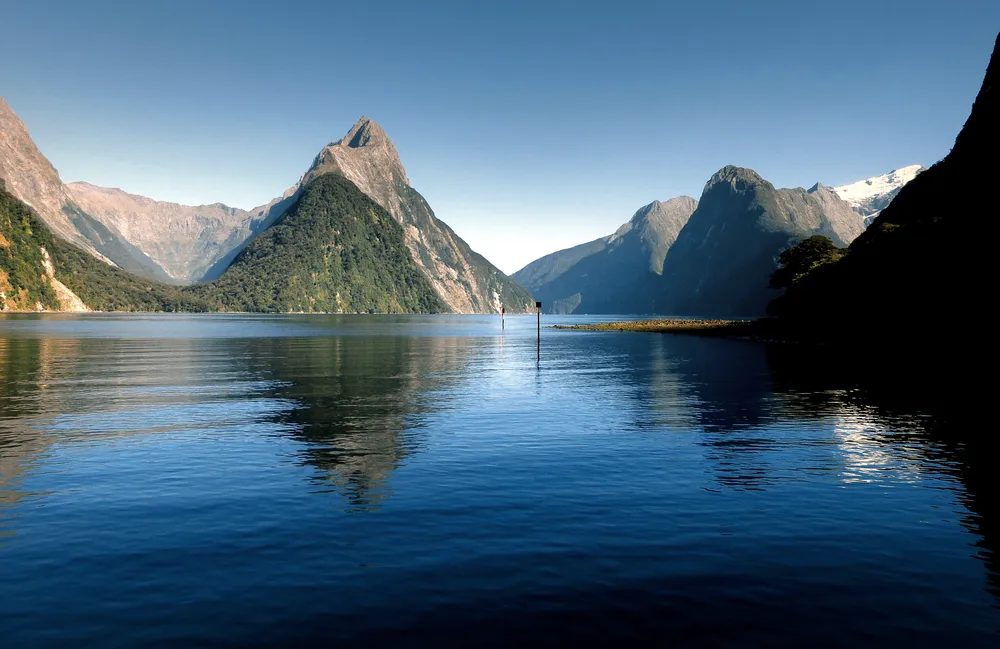
Fjords or fiords are long narrow inlets of the ocean often with steep sides or cliffs, created by a glacier. The two countries that are most known for their fjords are Norway and Canada, with New Zealand, Chile, Iceland, Scotland (where they are often just known as lochs) and Greenland (Denmark) also having a large number of fjords. There are some fjords in Alaska (US), Tasmania (Australia) and many European countries; they may not be as well-known as the fjords in the former mentioned, but they are still spectacular sights to behold.
Understand
Fjords are formed by valley glaciers flowing down from their area of origin, through pre-existing river valleys. The original shape of the valley is overstated by the glacier, in that the ice pulls rock along with it and this further erodes the surrounding rock. The original valley, for example a notched valley, becomes wider and deeper and gets its typical U-shaped valley, also known as a trough valley, with very steep slopes. With the retreat of the glaciers, the sea is able to flow into the deep valleys.
The depth of fjords can vary. In some cases, they may be no more than 25 m (82 ft) deep, while in others, the bottom can be more than 1,000 m (3,300 ft) below sea level. Typical for glacial fjords are relatively shallow thresholds at the mouth creating a relatively closed off basin within. Sognefjorden main basin is more than 1000 m deep while the threshold is some 100 m (330 ft) below the surface; there are thresholds at less than 2 m (6.6 ft) while the fjord within can be 100 or 200 m (330 or 660 ft). There can be strong tidal currents at shallow and narrow thresholds. Sognefjorden is the second longest in the world and the largest glacier-free fjord complex. Unlike Greenland and Svalbard, mainland Norway's fjords does not have icebergs but inner branches may freeze over in cold winters. In most places, the spelling of fjord is fjord except in New Zealand where the spelling fiord is the standard and is reflected in place names such as Fiordland National Park. In Canada, fiord is only used in proper names such as Grise Fiord, but it's fjord otherwise. The term is of Old Norse origin and borrowed into English from Norwegian. The Icelandic cognate of the word is "fjörður". The original Old Norse meaning is related to crossing or travel as the word ford in English. An older term was angr and survived only as a suffix in names of some Scandinavian fjords and has in same cases also been transferred to adjacent settlements or surrounding areas for instance Hardanger, Stavanger and Geiranger. In many parts of Norway, fjord are not merely landscape features but, together with adjacent tangle of valleys, lakes, glaciers and islands, make up a particular type of lan
Destinations
Australia 1 Macquarie Harbour near Strahan – a shallow fjord near the coastal town of Strahan and due to its sheer isolation, it was one of the toughest British penal settlements in the colony of Van Diemen's Land 2 Port Davey in Southwest National Park – often mistaken for a fjord, it is actually a ria.
Canada
Newfoundland and Labrador 3 Aviron Bay 4 Bonne Bay in Gros Morne National Park 5 Nachvak Fiord 6 Saglek Bay 7 Western Brook Pond in Gros Morne National Park
Nunavut Nunavut has a large number of fjords with some of them located in 8 Auyuittuq National Park:
9 Alexandra Fiord 10 Arviqtujuq Kangiqtua 11 Baumann Fiord 12 Grise Fiord 13 Kangiqhuk
Costa Rica 14 Golfo Dulce — considered one of only four tropical fjords in the world, but it's actually a "ria" (a drowned river valley that remains open to the sea).
Iceland Iceland has a total of 109 fjords. The 15 Westfjords and 16 Eastfjords regions have particularly high concentrations of them, though there are also some fjords in West Iceland and along the North Coast. There are no fjords along the southern coast of Iceland.
17 Hvalfjörður - the closest fjord to the capital Reykjavik. 18 Eyjafjörður - one of Iceland's longest fjords, located on the north coast, with Akureyri, the largest town in Iceland outside the Southwest region, on its shores.
Montenegro 19 Bay of Kotor — on the Adriatic, this is often purpoted to be the southernmost fjord in Europe. However, since it wasn't formed by glacier action, it is not a fjord but a ria — an ancient river valley submerged by the sea.
New Zealand New Zealand is the only place in the world where the spelling of fjord is fiord. Most of NZ's fiords can be found in Fiordland National Park.
20 Milford Sound – the most visited and well known fiord of New Zealand 21 Doubtful Sound
Norway
22 Fjords of Norway - Norway's more than 1000 fjords are found along the entire coast and the fjord districts cover about half of Norway's area, but the most dramatic fjord landscape is found in West Norway and parts of Northern Norway. 23 Nærøyfjorden and 24 Geirangerfjord are inscribed on UNESCO world heritage list. 25 Hjørundfjord - picturesque fjord surrou
本指南改寫自 Wikivoyage (CC BY-SA)