
Filipino cuisine
旅遊主題
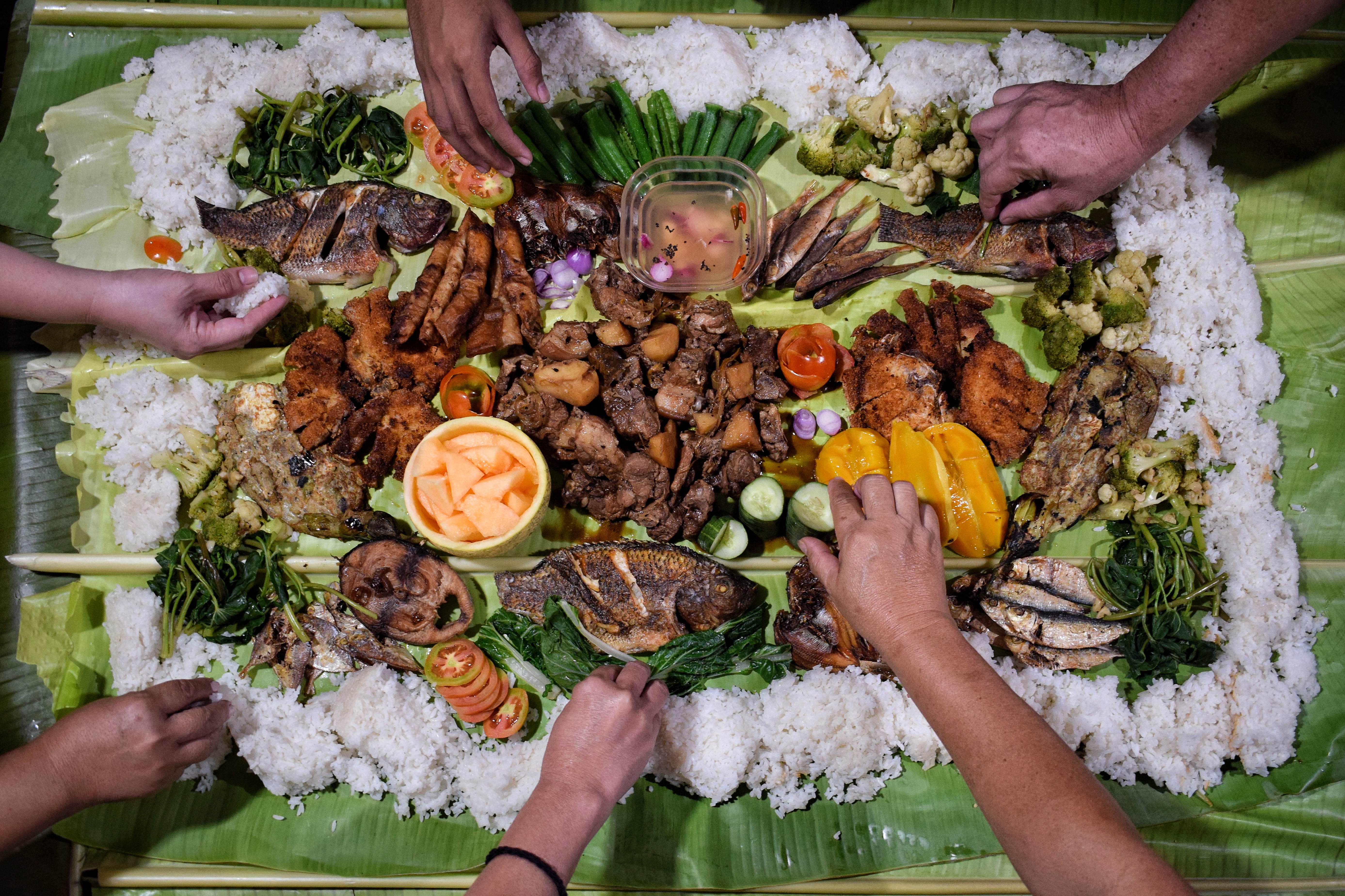
With over 7,500 islands, Filipino cuisine is a mish-mash of hundreds of local, regional, and ethnic cuisines that defies easy generalizations. The Spanish colonial era brought Spanish influences like stews cooked with vinegar, giving rise to the national dish adobo, and spit roasting a whole pig until the skin was crispy giving rise to lechón, as well as Mexican ingredients like as corn and tomato. Chinese immigrants brought over pancit noodles and lumpia spring rolls, while the American occupation introduced the Philippines to the joys of ice cream, hamburgers, fried chicken, spaghetti and Spam.
Understand
Food is a huge deal in the Philippines. Whether it's a neighborhood street fiesta or an invitation to someone's house, no celebration is complete without a vast array of dishes. As with the rest of Southeast Asia, rice is the staple food of the Philippines. Some areas in the Visayas prefer corn but elsewhere Filipinos would generally have rice for breakfast, lunch and dinner. In urban areas, though, fast food has become hugely popular and diets have become quite Westernized, with plenty of burgers, fried chicken, pizza and the like, and more oil, meat and sugar than people in neighboring nations. To visit a convenience store is to gaze into the abyss, with vast arrays of cheap shelf-stable snacks loaded with sugar, palm oil and preservatives, and nary a vegetable in sight. However if you visit rural areas, they use more fresh produce (vegetables, fruits, grains, etc.) and less meat and practice old Filipino medicine. In coastal areas, fish and many sorts of seafood are usually served and eaten.
How to eat
Kamayan means eating by hand. Some Filipinos who were born and raised in rural provinces still eat with their hands, mostly at their homes during mealtimes. They would often say that kamayan makes food taste better. Wash your hands clean before attempting this to avoid illnesses. Almost all Filipinos in the urban areas though use spoons, forks and knives. Eating with hands in public is not uncommon but can be considered rude if you're at a mid-range or upscale restaurant. A special variant is the boodle fight, where food is laid out on rice on a banana leaf that serves a communal plate, and everybody digs in with their right hand. This style of eating actually originates from the army, but is increasingly offered by restaurants and sought out by patrons looking for a casual group meal. To experience how the Filipinos eat in a budget way, carinderias (eateries) and turo-turo (literally "point-point", which actually means you point at the food you want to eat in the buffet table) are some of the options. Mains cost less than ₱50. Carinderias serve food cooked earlier and it may not always be the safest of options.
Regional and ethnic cuisines Filipino cuis
Ingredients
Fruits like calamansi (small limes, or calamondins), guavas (bayabas), mangoes (mangga), pineapple (pinya), plantain (cooking bananas or saging na saba) also feature heavily in Filipino cuisine, and provide the tropical flavor of various dishes. Calamansi is often combined with soy sauce for the right combination of sourness and saltiness. Most Filipino dishes are heavy on meat, like beef (baka), chicken (manok), and pork (baboy), and occasionally goat (kambing). Offal is also commonly eaten by Filipinos, and forms the main ingredient of dishes like bopis, dinuguan, La Paz batchoy and sisig and street food like adidas, Betamax or dugo, and isaw. A few regions have exotic meat dishes, like dog in the Cordilleras, and crocodile in Palawan. Rice is the archetypical Filipino staple food, it is not only steamed or fried and eaten plain with other dishes, but also used to create many types of rice cakes or kakanin, including puto (rice cupcakes) and bibingka (rice pancakes served in banana leaf strips). Seafood - As an island nation, there's no shortage of fish and shellfish dishes, especially in coastal or island provinces. The Ilocos Region is known for fish or shrimp pastes (bagoong), Batangas for tawilis (a species of sardine endemic to Taal Lake), Roxas City for its variety of seafood dishes, and Zamboanga City for their sardines. Vegetables are usually complements in main dishes, and are sautéed, steamed, or stir-fried. Common vegetables that feature in dishes include kangkong (water spinach) and sitaw (string beans). Vinegar (suka) is also a common ingredient in dishes like adobo sa suka, a variant of the famous adobo. The Chinese introduced other ingredients such as noodles (usually pansit), soy (soya, used in soy sauce (toyo) and tofu (tokwa)), and other vegetables, while the Spaniards brought in New World fruits and vegetables, spices, bread and pastries, and cheese. Rice is generally the staple throughout most of the country, but some regions (e.g. Cebu, Cagayan Valley) have corn (mais) instead.
Dishes
Ulam (main dishes)
Adobo - Chicken, pork or both served in a garlicky stew with vinegar and soy sauce as a base. It is arguably the national dish of the Philippines. Bicol Express (or sinilihan) — Named after the eponymous passenger train and one of the famous Bicol dishes, it is pork or pig intestine slow-cooked in coconut milk, vinegar and some spices. Bopis - Originating from Batangas, it is chopped pig heart and lungs, usually served spicy. Burong talangka - A Filipino version of caviar, using the eggs of talangka or small crabs. Calamares - fried shrimp/squid wrapped in breading. Camaron rebusado - the Filipino version of tempura. Chicken curry - A lot different from other curries because it isn't spicy unlike other curries. Aside from chicken, crab curry and other varieties are also available. Daing na bangus - Fried dried milkfish, usually served for breakfast with garlic fried rice and fried egg. Dinuguan - A dark stew made from pig blood and innards. Usually served with a big green chili and paired with puto (rice cakes). Kare-kare - A stew of vegetables and meat simmered for hours in peanut sauce. It is usually made from ox tripe and tail and eaten with shrimp paste (bagoong). There is also a seafood version, with crabs, squid and shrimp used instead of beef. Laing - Pronounced LAH-eeng, it is taro leaves cooked in coconut milk. Lechon - Roasted suckling pig, usually served in large occasions like fiestas, Christmas dinner (Nochebuena) and the New Year feast (Medianoche). Two major regional variations exist: the Visayan lechon (with the Cebu variant the most notable) which is stuffed with herbs, and the Manila lechon (with the variant served in Quezon City's La Loma district being the most known) which is served with a sauce made from the pig's liver. Chicken and beef variants are available as well. Lechon de leche - A version of lechon made from slow roasted piglet. The crispy skin is delicious and is often the first part that is consumed. Lengua - roasted beef tongue marinated in savory sauce. Nilaga - Literally means "boiled", it is usually beef (which in certain places is served with its marrow (bulalo)), pork or chicken. Paksiw - fish or veget
Snacks
Filipinos are inveterate snackers, and an afternoon snack break (merienda) is a popular tradition that can range from coffee and a pastry to essentially a full meal.
Bread and pastries The term kakanin covers a vast array of traditional confections made from rice.
Bibingka - rice cake with cheese and salted egg, it originates from Indian cuisine. Kutsinta - steamed rice cake (puto) flavored with brown sugar and fresh coconut Pandesal - Spanish for "salt bread", they are small buns usually made fresh in the morning, an alternative to rice for breakfast. They are usually eaten with a cup of coffee. Some people prefer to dip their pandesal in coffee. Puto - Soft white rice muffins. The towns of Calasiao in Pangasinan and Biñan, Laguna are famous for their puto.
Fruits
Tropical fruits abound in the Philippines. Most of the countryside produce finds its way to the metro areas and can be easily bought in supermarkets, such as:
Coconut (buko) - The Philippines is the largest exporter of coconuts in the world. Durian - smells like hell but supposedly tastes of heaven, most common in Davao but can usually also be bought in some supermarkets in Manila. Mangoes - Don't leave the Philippines without trying green Indian mangoes with bagoong (shrimp paste), tasting ripe mangoes and buying dried mangoes as a pasalubong. Ube - A lurid purple yam, unique to the Philippines and very popular. The taste is subtle but it finds its way into countless pastries, cakes and iced desserts.
Sweet treats Banana chips - Unlike the ones eaten in India, the F
本指南改寫自 Wikivoyage (CC BY-SA)