
Cheese
旅遊主題
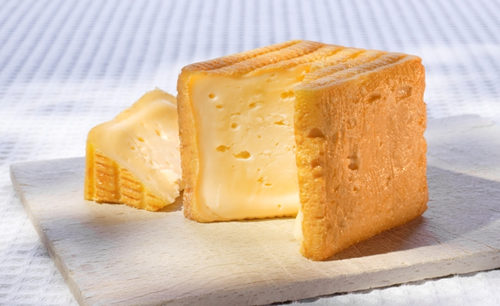
Cheese is a dairy product made in endless variations around the world. Though trade is extensive, it is still regulated and sometimes forbidden from importation for medical and political reasons, and some kinds of cheese are best experienced locally.
Understand
While some type of cheese is available in almost every supermarket, there are numerous types of cheese that are very much linked to a rather small geographical region of origin. While some of these cheeses have become "globalized" and they (or their cheap knock off second cousin thrice removed) are available almost everywhere, the vast majority is best consumed where they originate. The European Union has created the protected designation of origin (PDI; marked as AOP in Francophone countries), that applies for many types of cheese and stipulates that a product may be called by the original name only if produced in a certain region and according to certain laws and guidelines. Almost all well known European cheeses are protected in that way.
Mountain cheese Mountainous slopes were used for dairy farming for centuries, as few other uses were practicable and the usually plentiful precipitation means grass grows well during the growing season. However, as mountains are by their nature hard to reach, the cheese had to be of a variety that stores well and can be collected for later sale. In the Alps in particular (but formerly also e.g. in the Nordic countries: saeter), there is a tradition of seasonal migration with the cows being moved to higher pastures at the beginning of the warm season and back down at the end. This move is often accompanied by numerous festivities that used to be the only thing going for rural areas where most people lived in agriculture and continue to be put on as a show for tourists.
Where to visit for cheese
Australia
All the cooler regions of the states of Australia have localised regional cheese areas based on the dairy industry. Australian cheeses are mostly cheddar cheeses, reflecting the country's British colonial heritage, though other cheeses are produced by artisanal cheesemakers across the country. Major cheesemaking regions are distributed across the relatively mild climes of the country's south and southeast, and include Gippsland in Victoria, the Murray River region in Victoria and New South Wales, and King Island off the coast of Tasmania. For a good indicator of where the dairies and cheese varieties are, the Dairy Australia website is a good guide with a map and event diary as well.
Belgium Belgium is a small country that boasts a large and diverse range of cheeses.
Herve (AOP) is the best known Belgian cheese, a washed rind soft variety made from cow's milk.
Brazil
The region around the Serra da Canastra, in the southwest of the state of Minas Gerais has a tradition of cheesemaking which is more than 300 years old. In May 2008, the original firm, ripened "Minas cheese" was declared a Brazilian Material Cultural Heritage by IPHAN, the Brazilian Institute for National Historic and Artistic Heritage.
Canada
Canada is known among North Americans for producing good extra sharp cheddar, though the varieties that are widely available in supermarkets are not comparable to the mature cheddars from England and Ireland. However, the cheese item that Canada is probably best known for is the cheese curd that is a necessary ingredient for poutine, the Québécois dish of french fries, brown gravy and cheese curds that is a staple of Canadian fast food.
Finland
A specialty of Northern Finland and halfway down the west coast is leipäjuusto, a cheese made of rich milk from cows that have recently calved. The cheese is baked like a bread and usually eaten as a dessert with cloudberry jam. There are also two Finnish iconic spread cheeses: Viola and Koskenlaskija.
France
If there are just three major cornerstones of French gastronomy, they are bread, wine and cheese, which pleasingly can be consumed together. Charles de Gaulle famously wondered how
Concerns
There are some relevant taboos, such as in the case of kosher-observant Jews, who cannot consume dairy products with or shortly before or after eating meat. In addition, the rennet used to make the cheese must be from kosher-slaughtered or halal-slaughtered animals for Jews and Muslims respectively, and vegetarians may avoid cheese containing animal-derived rennet and select cheese with vegetarian rennet instead. Vegans avoid traditional cheese altogether, as it is an animal product, often substituting it with plant-based cheese analogues or by using nutritional yeast (known affectionately as nooch). People concerned about their salt or fat intake for health reasons, including people with high blood pressure, should also consider limiting their consumption of cheese or carefully choosing which varieties they eat, as most types of cheese are high in fat and salt, though some are much more salty and fatty than others. Some cheeses are unsuitable for people with lactose intolerance, but aged hard cheeses such as Parmigiano Reggiano are very low in lactose and therefore safe to eat. Unlike lactose-intolerant people, those with milk allergies must avoid all cheese and use dairy-free alternatives.
本指南改寫自 Wikivoyage (CC BY-SA)