
US Airstrike on Iranian Water Facility Leaves Thousands Facing Severe Shortages
The Hormozgan Province Water and Wastewater Company in southern Iran recently issued a statement reporting that a recent U.S. military airstrike damaged lo
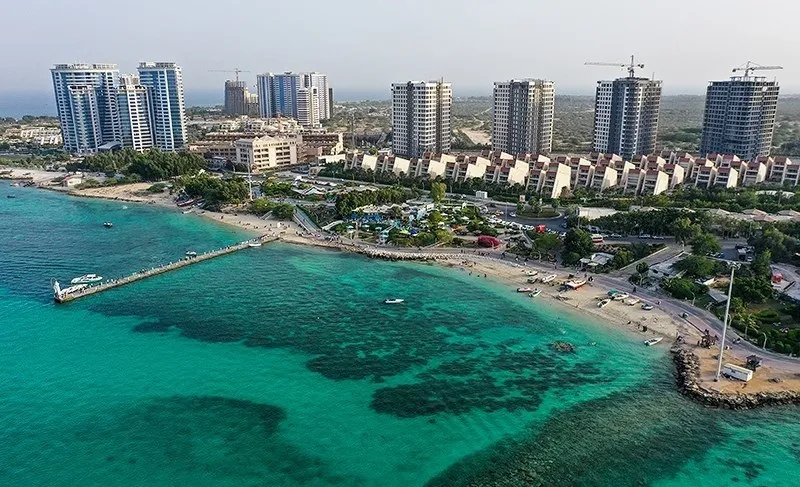
The Hormozgan Province Water and Wastewater Company in southern Iran recently issued a statement reporting that a recent U.S. military airstrike damaged local desalination facilities, leaving approximately 10,000 residents without access to water. The incident occurred in the strategically vital province of Hormozgan, which sits on the coast of the Persian Gulf, serving as a key gateway for Iran and bordering the Strait of Hormuz, a critical chokepoint for global maritime oil transport. While Iranian officials are working to repair the damaged infrastructure, the U.S. military’s intent and specific targeting have sparked concerns over a further escalation of regional tensions.
Hormozgan Province has long played a pivotal role in Iran’s economic and defense strategies. Its capital, Bandar Abbas, houses a major Iranian naval base and serves as a primary hub for the country’s foreign trade. Due to the province's arid climate and scarcity of freshwater, it relies heavily on desalination technology to meet domestic and industrial water demands. The damaged facility serves as an essential lifeline for local residents. The disruption to the water supply system, which has impacted several towns and villages, underscores the grim reality of modern military conflicts, in which critical non-military infrastructure is frequently caught in the crossfire.
Positions on the incident remain sharply divided. The Iranian government has condemned the U.S. airstrike for its severe humanitarian consequences, accusing the U.S. military of disregarding international legal standards regarding the protection of civilian infrastructure and threatening the basic needs of the local population. Conversely, the U.S. has long maintained that its regional operations are aimed at countering Iran-aligned armed groups to ensure freedom of navigation in the Strait of Hormuz and maintain regional stability. Analysts point out that since the onset of the Red Sea crisis and rising tensions across the Middle East, the frequency of military friction between the U.S. and Iran in the Persian Gulf has increased. This cycle of targeted strikes and retaliations has become a core variable affecting global energy supplies and regional security.
The broader context of this event involves Hormozgan’s 1,000-kilometer coastline and its control over several Persian Gulf islands, a geography that directly impacts the arteries of global oil and gas trade. In recent months, Iran has repeatedly emphasized its intent to bolster its defensive capabilities against external threats. The damage to the desalination plant is not merely an incident of infrastructure failure; it symbolizes a spillover of regional conflict from strictly military targets into the socioeconomic sphere. For the residents of Hormozgan, the survival pressures caused by the water crisis amidst geopolitical maneuvering have intensified local social instability, further complicating the fragile peace process in the Middle East.
For Taiwan, although the water crisis in Hormozgan does not have a direct geopolitical link, the incident reflects the potential threat that evolving global conflict patterns pose to supply chain stability. As an economy highly dependent on energy imports, Taiwan is directly vulnerable to any instability in the Strait of Hormuz, which impacts international oil and gas transport costs and maritime security. By observing the U.S.-Iran military friction in the region, Taiwanese readers can understand that when regional conflicts escalate to target critical infrastructure, the impact often transcends military boundaries, creating collateral effects on the global economic system. This case also serves as a reminder to Taiwan that, while pursuing national security, enhancing the resilience and emergency response capabilities of critical infrastructure has become a priority for governments navigating an increasingly volatile international environment.
Produced by our editorial team, with AI assistance in editing.