
Two Iranian-registered liquefied natural gas tankers sail through the Strait of Hormuz.
Two liquefied natural gas (LNG) cargo ships, the Marshall Islands-flagged "Bu Samra" and the Liberian-flagged "Patris," have safely navigated the Strait of
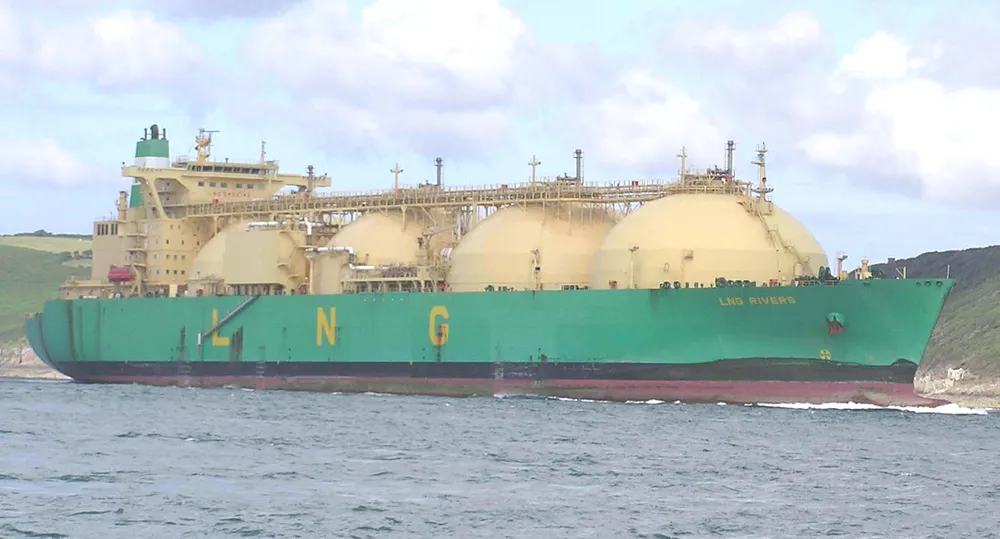
Two liquefied natural gas (LNG) cargo ships, the Marshall Islands-flagged "Bu Samra" and the Liberian-flagged "Patris," have safely navigated the Strait of Hormuz, a crucial waterway that connects the Persian Gulf and the Arabian Sea. The passage of these two vessels, which were once stranded due to the closure of the waterway, holds significant importance for the global energy market, particularly for the supply of LNG to the Far East region.
Liquefied natural gas is a type of fuel that is obtained by cooling natural gas to a liquid state. The primary component of LNG is methane (CH4), with smaller amounts of ethane (C2H6). The process of liquefying natural gas makes it easier to store and transport, as it reduces the volume to about 1/600 of the original volume at standard temperature and pressure. LNG is colorless, odorless, non-toxic and non-corrosive, but it does pose a fire risk when vaporized and can cause frostbite and asphyxiation. The liquefaction process requires the removal of impurities such as dust, carbon dioxide, helium, water, and heavy hydrocarbons, followed by cooling to approximately -162°C (-260°F) under conditions close to atmospheric pressure. The transportation pressure of LNG is set at around 127 kPa (18 psi), which is equivalent to 1.25 times the atmospheric pressure at sea level.
The production and transportation of LNG are complex processes that require precise equipment and technology. The design and construction of LNG carriers must also meet strict safety standards to ensure the safe transportation of LNG. Qatar is one of the world's largest LNG exporting countries, and its LNG carriers play a crucial role in the global energy market.
The passage of these two Qatari LNG carriers through the Strait of Hormuz indicates a gradual return to normalcy in the global energy supply chain. The Strait of Hormuz is one of the world's most important waterways, connecting the Persian Gulf and the Arabian Sea, and serving as the primary export channel for LNG and oil from the Middle East region. In recent years, tensions in the region have led to the closure of the waterway, affecting the global energy market.
The developments in the global energy market have a significant impact on the energy security of various countries and regions. As a clean and efficient energy source, LNG is increasingly becoming an important component of the global energy structure. With the continued growth in global energy demand, the supply and transportation of LNG will play a more critical role.
For Taiwan, LNG is an essential energy source, particularly in power generation and industrial applications. Taiwan relies heavily on imported LNG from various countries and regions, including Qatar. Therefore, changes in the global LNG market and the stability of the supply chain will have a significant impact on Taiwan's energy security. Moreover, Taiwan needs to pay close attention to the trends and changes in the global energy market, make preparations for its energy future, and ensure a stable energy supply and national defense security.
Produced by our editorial team, with AI assistance in editing.