
Twin‑engine plane disappears over Bahamas' Andros Island; four passengers search underway
A private twin‑engine Piper PA‑34‑200T Seneca, registered in the Bahamas, disappeared on Tuesday in the waters off Andros Island while carrying four passen
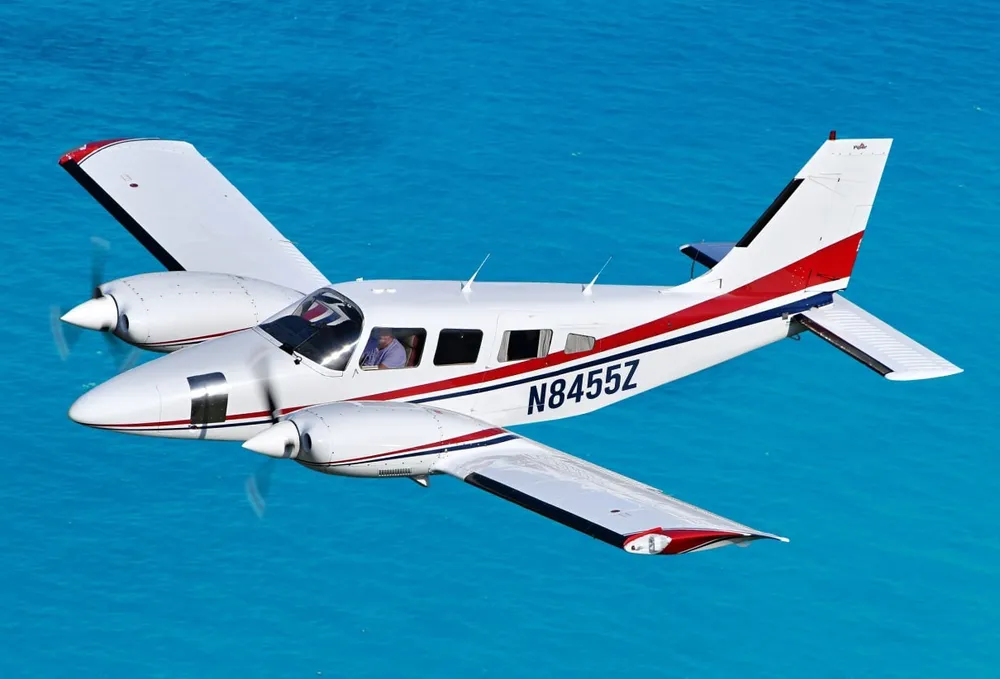
A private twin‑engine Piper PA‑34‑200T Seneca, registered in the Bahamas, disappeared on Tuesday in the waters off Andros Island while carrying four passengers and crew members. The Bahamian maritime authorities immediately launched a search and rescue operation, deploying coast‑guard vessels, helicopters and patrol boats, and requesting assistance from neighboring countries. The search area has been expanded to a radius of roughly 30 nautical miles around the estimated crash site.
The Seneca series has been produced intermittently by the United States‑based Piper Aircraft since 1971. It is a light twin‑engine model commonly used for personal or business travel and for multi‑engine flight training. The aircraft has a maximum range of about 1,300 nautical miles and a cruise speed of approximately 300 knots, combining speed and passenger capacity, and it holds a notable share of the private aviation market in North America and the Caribbean.
The Bahamas comprises more than 700 islands, and air traffic largely depends on small aircraft to connect remote locations. Local search‑and‑rescue resources are relatively limited, and the tropical climate, with its sudden storms and low visibility, adds difficulty to both flight operations and rescue efforts. In recent years, several incidents involving the disappearance or forced landing of small aircraft have occurred, prompting the government to strengthen navigation monitoring and flight‑plan filing procedures.
Currently, the Bahamian Coast Guard has deployed buoys and sonar equipment in the search area and is coordinating with United States Coast Guard rescue aircraft. Weather forecasts indicate that sea conditions will remain rough over the next 24 hours, presenting a significant challenge to the ongoing search. Authorities have also called on families and other parties to provide any possible last‑communication records to aid in locating the aircraft.
The incident underscores the need for private aviation operating far from major cities and large airports to rigorously adhere to flight‑plan filing, weather assessment and emergency‑communication protocols. The International Civil Aviation Organization (ICAO) continues to promote safety standards and cross‑border coordination mechanisms for small aircraft in order to reduce the likelihood of similar disappearances.
For Taiwan, the Bahamian search‑and‑rescue challenges are comparable to those faced in safeguarding offshore and island aviation. Taiwan’s outlying islands also rely on small commuter aircraft and helicopters to provide medical, logistical and tourism services; in the event of a similar disappearance, rapid response by the Coast Guard Administration and the Air Force, together with inter‑agency coordination, would be critical. This case can serve as a reference for reviewing Taiwan’s flight‑plan filing, weather‑information sharing and emergency‑rescue resource allocation for both the main island and its outlying islands, thereby enhancing safety and resilience in remote aviation operations.
Produced by our editorial team, with AI assistance in editing.